
For launch the STS uses 2 systems: the main engines in the orbiter
that burn hydrogen and oxygen from the external tank (the great big orange
cylinder that the orbiter is attached to for launch);
that burn hydrogen and oxygen from the external tank (the great big orange
cylinder that the orbiter is attached to for launch);
SEE ALSO :

Biological Reactors Make Hydrogen Fuel from Sewage
All kinds of biodegradable garbage—from sewage to leftover food—could yield valuable hydrogen fuel, an alternative to fossil fuels, with the aid of microbes cultivated in special reactors.
When hydrogen is burned, it yields just energy and water. That being an attractive sort of fuel, researchers globally are
investigating ways to generate hydrogen en masse in hopes of replacing fossil fuels, the burning of which releases the global warming gas carbon dioxide. Unfortunately, most of the hydrogen available today for use is actually generated from fossil fuels.
Now environmental engineers at Pennsylvania State University
"We could use all sorts of wastewaters, turning them into hydrogen instead of using energy to treat the wastewater," Penn State
These microbes do need a low voltage supplied by researchers to generate the hydrogen, which Logan and colleagues discovered in 2005. Still, burning some of the hydrogen the bacteria produce can help generate the electricity the germs require to make the gas. Back in 2005, the researchers envisioned the process largely as a way to cut down on the cost of dealing with sewage. Now, they say the reactors can prove significantly efficient as hydrogen producers.
For example, when given acetic acid—a common leftover of fermentation—the bacteria in the reactors generated hydrogen at up to nearly 99 percent of the theoretical maximum yield. The reactors also worked when stuffed with cellulose, found in plants.
"This could really make a hydrogen economy work from renewable energy sources," Logan
Future research will focus on improving the rates of hydrogen production and lowering the cost of reactor materials.
"We hope to see pilot tests of this soon," Logan
Logan and his colleague Shaoan Cheng detailed their findings online Nov. 12 in the Proceedings of the National Academy of Sciences.
- Whatever Happened to Fuel Cells?
- Top 10 Emerging Environmental Technologies
- Quiz: What's Your Environmental Footprint?
- Original Story: Biological Reactors Make Hydrogen Fuel from Sewage
Visit LiveScience.com for more daily news, views and scientific inquiry with an original, provocative point of view. LiveScience reports amazing, real world breakthroughs, made simple and stimulating for people on the go. Check out our collection of Science, Animal and Dinosaur Pictures, Science Videos, Hot Topics, Trivia, Top 10s, Voting, Amazing Images, Reader Favorites, and more. Get cool gadgets at the new LiveScience Store, sign up for our free daily email
newsletter and check out our RSS feeds today!
LOX H2 Engines at FULL Throttle
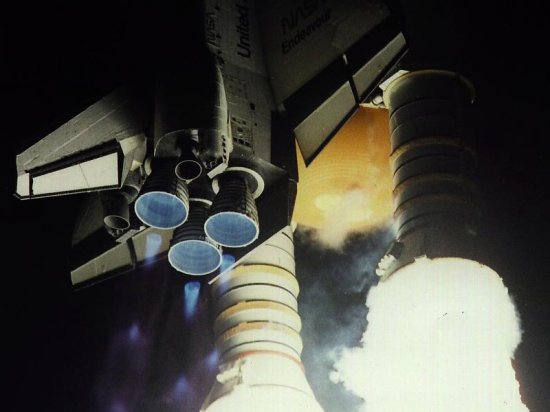
The SSME s burn LOX (Liquid Oxygen) and H2 (Liquid Hydrogen)
The largest and heaviest (when loaded) element of the space shuttle, the ET has three major components: the forward liquid oxygen tank, an unpressurized intertank that contains most of the electrical components, and the aft liquid hydrogen tank. The ET is 153.8 feet long and has a diameter of 27.6 feet.

Get easy, one-click access to your favorites. Make Yahoo! your homepage.