AUSTRALIA had looked to the future and had decided
the nation must move forward, Prime Minister-elect Kevin Rudd said last
night.
Claiming the election win he said Australia had decided to prepare and
plan to make the nation a better place – forging a new consensus that put
old battles aside and wrote ‘’a new page in Australia’s history’’.
"It is time for us to write this new page in our history – I thank the
nation.’’
He called on Australia to seize the opportunity of the future.
He said there was a great privilege and responsibility in assuming
leadership, thanking those who had voted for Labor for the first time.
"I will never take their sacred trust for granted,’’ he said.
Mr Rudd said he would be "a prime minister for all Australians’’.
He said he would be a leader for indigenous Australians, migrants, town and
country, farmers afflicted by drought and for men and women serving in
uniform.
"I will be prime minister for all Australians,’’ he said
"And I make this solemn pledge for the nation I will always govern in the
national interest.
"And I will always have my door open to men and women of good will who wish
to make this country better.’’
Mr Rudd said all that he had promised over the past year would be his work
agenda: an education revolution, boosting the funding of hospitals, tackling
climate change, building a first-class broadband network and getting the
balance right in the workplace.
He promised to keep the economy strong but ‘’to make sure it delivered for
working families as well".
He said he understood it would be a hard task but one he would pursue
with vigour.
Mr Rudd sent a message to allies around the world, particularly the United
States, as well as Asia and Europe, to work together on the great
challenges.
Mr Rudd started his speech by praising Mr Howard’s extensive contribution to
public service in Australia despite policy difference and his dignified
concession speech.
He said all should celebrate and honour the way that Australians exercised
democracy.
"I want to wish Mr and Mrs Howard and their family all the very best for
future,’’ he said.
Mr Rudd thanked the electors of Griffith and the Australian Labor Party,
which grasps the great mission of pursuing prosperity ‘’without every
throwing the fair go out the back door’’.
He praised the ALP for keeping the faith through many defeats.
Mr Rudd made a special thanks to asbestos diseases campaigner Bernie
Banton, praising the values he stood for and the support of the trade union
movement.
"You stand out as a beacon and clarion call to us all about what is decent
and important in life,’’ he said.
Mr Rudd also praised deputy leader Julia Gillard saying ‘’she has been
fantastic as the deputy leader of the Labor party she will be fantastic as
the deputy prime minister of Australia’’.
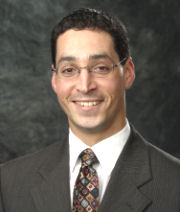
Chief of staff
 |
Others to be thanked were old school colleagues Wayne Swan, party
president John Faulkner, national secretary Tim Gartrell and NSW
secretary and now senator-elect Mark Arbib,
his chief of statff David
Epstein, his deputy Alister Jordan, the rest of the frontbench
and the candidates.
|
Mr Rudd concluded with a thank to his ‘’life partner’’, wife
Therese Rein, noting he was married 26 years ago and joined the party
25 years ago, and the rest of his family.
He also remembered his father who died when he young and his mother who died
the day before the last election.
"I salute them and the values they delivered their son,’’ he said.
Earlier flanked by his wife Janette and children, Mr Howard conceded defeat
and thanked Treasurer Peter Costello to whom he owed a "special debt".
He accepted full responsibility for the Coalition’s loss and all but
conceded the loss of his own seat.
Mr Howard wished Mr Rudd well on the task he had ahead and said the
Coalition bequeathed to him a nation that was "stronger and prouder and more
prosperous’’ than it was 11 years ago.
He said it was a privilege to have served as prime minister and he thanked
the Australian people for that privilege.
"The Australian people are the greatest people on earth and this is the
greatest country on earth’’.
He said he had led a government that had paid off debt and restored
prosperity, a government that had not shirked hard decisions and a
government that was the envy of the world.
He paid thanks to Nationals leader Mark Vaile and his predecessors.
But without conceding defeat in his own electorate he gave a strong
endorsement for Peter Costello, both as the fiscal steward of the past but
also for the future.
"The future of our party is very much tied up with Peter Costello; he is
very much our future,’’ he said.
He expressed regrets for those Coalition members who had lost their seats
particular Mal Brough the indigenous affairs minister who led the
intervention in the Northern Territory. He said he hoped Kevin Rudd would
continue to support the action.
Mr Howard thanked the Liberal Party saying it had given him much.
"I accept full responsibility for the Coalition campaign so I therefore
accept full responsibility for the Coalition’s defeat in this campaign,’’ he
said.
Mr Howard thanked his family particularly his wife Janette.
His daughter Melanie could not be there because she was a bridesmaid at a
wedding.
"She told me I had picked the wrong date for the election, I think she was
right,’’ he joked.
Mr Howard said he was saddened by the loss but was proud he had been the
beneficiary of so much support over many years.
"It has been a tremendous honour opportunity and privilege to have served
you,’’ he said.
Mr Howard concluded by saying Australia’s best years lay ahead and wish the
new government good fortune.
Peter Costello also conceded a change of government would happen
following a national swing of about 5 per cent.
Mr Costello said he believed the Liberal Party was the party which best
represented the entrepreneurial spirit and respect for the freedom of the
individual.
"I think the Liberal party will be very, very proud of what it has achieved
in government over the past 11 and a half years,’’ he said.
The Treasurer said he would be talking to his colleagues, particularly those
who had lost their seats.
"The highest form of service in any country is public service,’’ he said.
Mr Costello said he was expecting a swing to him in his seat of Higgins when
the postal votes are included, after a 1.9 per cent swing to Labor in the
votes lodged yesterday.
A tale of two speeches
John Howard and Kevin Rudd both made pleas last week to Australian Jews for
support come election day, but the Labor leader will have an uphill battle
winning over those Zionists who remain wary about the ALP’s true colours, writes
DAN GOLDBERG.
No hechsher required ... ALP Leader Kevin Rudd engages Brian
Sherman and Michael Danby MP at the Labor Friends of Israel in Sydney. Photo:
Ofer Levy
WITHIN 24 hours last week, the prime minister and his would-be successor
delivered speeches at Jewish functions.
It was coincidental, of course, but in this election year what was said – and,
equally, what was not said – reveals much about the posture and policy of both
men and their parties.
John Howard addressed more than 1200 people at the Australia-Israel Chamber of
Commerce in Melbourne Kevin Rudd spoke to about 100 people at the Labor Friends
of Israel (LFI) in Sydney.
Both Howard and Rudd spoke virtually off the cuff. But Howard’s speech was a
much wider appraisal of the state of the nation and the battle lines that will
be fought ahead of election day: the war on terror, the economy, industrial
relations, inflation, interest rates and fiscal policy.
Israeli support
Rudd didn’t mention any of those words.
Instead he spoke about Labor’s support for the Jewish State “from the jump”, of
which he said he was “personally immensely proud” about his own trips to Israel,
the “memories and deep impressions” they left on him, and the helicopter
flyovers that gave him a sense of the Jewish State’s size and security issues
his unwillingness to have anything to do with
Hamas
unless it undergoes “radical change” the “regrettable” rearming of Hezbollah and
the contribution of Australian Jews in all walks of life, which he said had been
a “continuing source of inspiration”.
Peppered with a hint of humour, Rudd was eloquent and engaging, polished and
precise. But he was preaching to the converted.
His audience was largely comprised of rank-and-file Labor Party supporters, the
sort of Jews who would abide by the words of one dyed-in-the-wool Jewish comrade
who told the Bulletin magazine back in 1992: “For me, not voting Labor would be
like eating ham.”
By contrast, Howard had a large number of non-Jews in his audience – and the
press gang to boot. His speech made headlines across the country.
Despite the presence of a small media contingent, Rudd’s address to the Jews –
albeit straight after his keynote address to the ALP’s national conference –
generated one headline: on this newspaper’s website.
John Howard, one of Israel's greatest friends, flanked by Sol nd Rosie Lew in
Melbourne. Photo: Peter Haskin
HOWARD, unsurprisingly, matched – and arguably trumped – Rudd on Israel. He
spoke of his “unwavering” support for the Jewish State of Israel’s “courageous
defence of her territorial integrity” since 1948 and of his “determination” to
oppose those “determined to deny Israel the right to exist”.
But here the two leaders parted company. Howard made clear why a withdrawal from
Iraq would be “a perceived defeat” for the coalition in Iraq, saying it would
deal a “devastating blow” to any hopes of peace.
A defeat in Iraq would “embolden” Iran, he said. “It would unsettle and
destabilise the more moderate elements amongst the Arab states in the region,
and it would represent a monumental victory for the cause of international
terrorism.”
Iran
Rudd, by contrast, only mentioned Iran
in passing – an apparent oversight, given that Tehran poses an existential
threat to Israel. He did say that Iran is “a supporter and financier and
provider for international terrorist
organisations”,
but not more.
But both agreed that the likelihood of a breakthrough in the peace process was
minimal.
Although Howard had addressed the chamber before – he was the recipient of its
highest honour in 2004 – it is curious, to say the least, that a prime minister
who will undoubtedly go down in history as one of Israel’s greatest friends last
visited there seven years ago. Rudd, for
the record, has visited Israel twice in that period.
But the Labor leader has at least two weaknesses vis-a-vis Israel and the Jews.
The first is the perception – true or false – that he will be more critical of
Israel than Howard or his minister for foreign affairs, Alexander Downer.
Those diehard Liberal Party supporters continuously point to Rudd’s statement in
2004 that Australia should have abstained from the United Nations (UN) vote on
Israel’s security barrier after it was criticised in The Hague as a case in
point.
But they rarely recall that Rudd condemned Palestinian suicide bombers and
supported the Howard Government’s legislation outlawing Hezbollah and Hamas.
The second weakness is not Rudd himself, but those who surround him.
On the one hand he has the indefatigable Michael Danby, and will likely have the
eminent and erudite Mark Dreyfus QC and possibly even
George
Newhouse
after the election, but on the other hand he still has some errant
backbenchers who belong to the left flank of the party and who appear to rail at
Israel’s very existence, let alone her government’s policies.
Jewess Gillard
![0k_Rud5.jpg]() |
Julia
Gillard, his deputy, remains an unknown quantity. She has barely spoken
publicly about the Jewish State or the Jews since her promotion, and is
rarely seen at any Jewish functions, although she did visit Israel in 2005.
|
Alongside her on Rudd’s front bench is Tanya Plibersek, who apologised for her
infamous 2002 slur on Ariel Sharon being a “war criminal” and Israel being a
“rogue state”, and appears to have reformed since she was elevated out of the
shadows of the back bench.
Robert McClelland, the shadow foreign affairs minister, is generally viewed as
supportive, but is light years away from Downer’s pro-Zionist stratosphere. But
still lurking there on Labor’s backbench is Julia Irwin, notorious for her 2002
tirade in parliament, during which she read out an email describing the Jewish
lobby as “the most implacable, arrogant, cruel and powerful lobby in the
country”.
Fortunately, Aboriginal activist and former ALP president Warren Mundine, who
was present at the LFI function, will challenge Irwin for the federal seat of
Fowler – and may become Labor’s first Aboriginal federal MP.
Of course, ALP apparatchiks are quick to remind Liberal spin masters of Tim
Fischer, the former National Party leader and deputy PM who has been a staunch
critic of Israel, and as recently as last year blamed civilian casualties in the
Lebanon war on a “rogue element in the military machine of Israel”.
Nonetheless, most Jews will have a distant memory of Fischer, and a far more
vivid recollection of the 2004 imbroglio when former Labor minister Barry Cohen
wrote an unsolicited article to the AJN charging the ALP with “rampant”
antisemitism.
It generated headlines across the country, hosed down by Danby and others –
including one Kevin Rudd. Writing in
Fairfax newspapers, Rudd blasted Cohen’s comments “as offensive ... inflammatory
and inaccurate”.
“Modern Labor supports the State of
Israel for three basic reasons: the legacy of the Holocaust, the central role of
the UN in the creation of the State of Israel as a construct of international
law and the fact that Israel is a vibrant, democratic state in a region where
democracy remains far from the norm,” Rudd wrote.
UNLIKE Rudd, Howard is buttressed by the likes of Downer and Treasurer Peter
Costello, both of whom give the PM a run for his money when it comes to courting
Israel and the Jews.
Zionists in this country can barely believe the almost unconditional support
Downer has given Israel, specifically at the UN, and Jerusalem is not only aware
of it, but increasingly appreciative of it.
Costello has also curried favour with the Jewish community on countless
occasions, and given his appetite for economic policy, he has great respect for
the contribution this community has made to Australia’s business and
philanthropic endeavours.
And we haven’t even mentioned Malcolm Turnbull, whose meteoric rise through the
Liberal Party may one day end at The Lodge itself – with the support of most
Australian Jews.
Although Rudd cannot match the Howard-Downer-Costello triad, he is, importantly,
neither Mark Latham nor Simon Crean, both of whom were incapable of wooing
considerable Jewish support because the former was combustible and the latter
weak.
And neither had a grasp of the nuances of the Israeli-Palestinian conflict that
Rudd has (or, for that matter, that his predecessor, Kim Beazley, had). What’s
more, Rudd appears to have the numbers (according to current polls, that is) to
beat Howard that neither Beazley nor Crean had.
Indeed, Latham’s virtual derision towards the US alliance worried Jews because
the road from Canberra to Jerusalem runs through Washington.
And while Rudd may not be a reincarnation of Bob Hawke, he does have an acute
understanding of international affairs, and is bereft of Latham’s
shoot-from-the-hip policy and Crean’s weak-at-the-knees posture.
In this sense, Rudd may win back some of
those swinging Jewish voters who were alienated by Latham and Crean and
were simply unconvinced that Beazley could ever beat Howard.
For Jews and for Israel then, this election campaign is much closer than the
last. Howard versus Latham was no match up – despite valiant attempts by the
ALP’s Jewish stalwarts to make “Biff” look kosher.
Rudd requires no such
hechshering.
He pressed the flesh last week, and made unequivocal his support for Israel “in
good times and bad”. But Howard has a much longer track record of support
– and many more trophies from Jews and Zionists in his cabinet.
There is, of course, one catch. The election will probably not be fought on
foreign policy, the war on terror, the US alliance or, for that matter, on
global warming or even industrial relations.
To borrow the now legendary catch phrase used by Bill Clinton in his 1992
presidential race against George H Bush, “It’s the economy, stupid!” – and that
still favours the Liberals.
But whichever way the political wind
blows come election day, one thing’s for sure: Rudd and Howard both know the
value – not in the number of ballots – of supporting Israel and the Jewish
community, and it was evident last week.
John Howard, a staunch ally of Israel and America, has been swept from power
after 11 years of conservative rule as Australians delivered a landslide victory
to Labor on Saturday night.
Australian Prime Minister John Howard walks past a campaign poster promoting his
opposition, Labor Party leader Kevin Rudd, outside a polling station before
casting his ballot at a suburban Sydney school on Saturday.
Photo: AP
The country's new Prime Minister, Kevin
Rudd, will lead a government that will include two Jewish MPs - the first Jews
to sit in government since 1990.
Labor needed to win 16 more seats in the 150-seat House of Representatives.
After 75% of the votes had been counted, Labor was registering a 6% swing,
giving it victory with an expected 20 extra seats in what Howard described in
his concession speech as an "emphatic victory" for Labor.
The Liberal Party's defeat will likely be compounded because Howard, Australia's
second longest-serving PM, appears to have lost his own seat in parliament after
33 years.
While Rudd has forged close ties to the
110,000-strong Jewish community in Australia since he became leader last
December, the 50-year-old from Queensland is not expected to be able to
replicate Howard's rock solid support for the Jewish state.
Rudd_jewish_blood
![0k_Rud6.jpg]() |
But at a private function for
Jewish leaders in Melbourne last weekend, Rudd said his support for Israel
is "in his DNA".
|
Rudd has visited Israel twice, in 2003
and 2005, and on both occasions was led by Albert
Dadon,
chair of the Australia Israel Cultural Exchange.
Dadon
was among the 500 guests at Rudd's party in Brisbane on Saturday night.
The two Jewish candidates who were
victorious were Michael Danby, who has sat in opposition since he was elected in
1998, and Mark Dreyfus QC, who was standing in his first election for the
seat of Isaacs, named after Australia's first Jewish governor-general, Sir Isaac
Isaacs.
Although Rudd is a strong supporter of the US alliance, Labor has pledged to
withdraw Australia's troops from Iraq and sign Kyoto, which may strain relations
with Washington.
Some analysts have speculated that Labor's support for Israel may waver at the
United Nations.
However, Rudd has declared that Iranian President Mahmoud Ahmadinejad should be
tried at the International Court of Justice for his genocidal declaration to
"wipe Israel off the map." He has also vowed not to negotiate with Hamas "unless
it undergoes radical change."
George Newhouse, a high-profile Jewish human rights lawyer, failed in his bid to
unseat Environment Minister Malcolm Turnbull in Wentworth, the nation's largest
Jewish electorate. Turnbull, a staunch supporter of Israel, is being tipped to
challenge for the Liberal leadership.
Also elected was Mike Kelly, a former colonel who served in Iraq and whose wife
is Israeli, and Nicola Roxon, whose father was a Polish Jew.
Rudd's chief-of-staff, David Epstein, is Jewish, and his senior media adviser,
Walt Secord, born in Canada to a North American Indian, is a former journalist
at the Australian Jewish News.
It is the first time in Australian history that all governments - six states,
two territories and at federal level - are held by Labor.
Voting in Australia is compulsory. More than 13.5 million people enrolled to
vote. Elections are held every three years.
John Howard, a staunch ally of Israel and America, has been swept from power
after 11 years of conservative rule as Australians delivered a landslide victory
to Labor on Saturday night.
Australian Prime Minister John Howard walks past a campaign poster promoting his
opposition, Labor Party leader Kevin Rudd, outside a polling station before
casting his ballot at a suburban Sydney school on Saturday.
Photo: AP
The country's new Prime Minister, Kevin Rudd, will lead a government that will
include two Jewish MPs - the first Jews to sit in government since 1990.
Labor needed to win 16 more seats in the 150-seat House of Representatives.
After 75% of the votes had been counted, Labor was registering a 6% swing,
giving it victory with an expected 20 extra seats in what Howard described in
his concession speech as an "emphatic victory" for Labor.
The Liberal Party's defeat will likely be compounded because Howard, Australia's
second longest-serving PM, appears to have lost his own seat in parliament after
33 years.
While Rudd has forged close ties to the 110,000-strong Jewish community in
Australia since he became leader last December, the 50-year-old from Queensland
is not expected to be able to replicate Howard's rock solid support for the
Jewish state.
Rudd has visited Israel twice, in 2003 and 2005, and on both occasions was led
by Albert Dadon, chair of the Australia Israel Cultural Exchange. Dadon was
among the 500 guests at Rudd's party in Brisbane on Saturday night.
The two Jewish candidates who were victorious were Michael Danby, who has sat in
opposition since he was elected in 1998, and Mark Dreyfus QC, who was standing
in his first election for the seat of Isaacs, named after Australia's first
Jewish governor-general, Sir Isaac Isaacs.
Although Rudd is a strong supporter of the US alliance, Labor has pledged to
withdraw Australia's troops from Iraq and sign Kyoto, which may strain relations
with Washington.
Some analysts have speculated that Labor's support for Israel may waver at the
United Nations.
George Newhouse, a high-profile Jewish human rights lawyer, failed in his bid to
unseat Environment Minister Malcolm Turnbull in Wentworth, the nation's largest
Jewish electorate. Turnbull, a staunch supporter of Israel, is being tipped to
challenge for the Liberal leadership.
Also elected was Mike Kelly, a former
colonel who served in Iraq and whose wife is Israeli, and Nicola Roxon, whose
father was a Polish Jew.
Rudd's chief-of-staff, David Epstein, is Jewish, and his senior media adviser,
Walt Secord,
born in Canada to a North American Indian, is a former journalist at the
Australian Jewish News.
It is the first time in Australian history that all governments - six states,
two territories and at federal level - are held by Labor.
Voting in Australia is compulsory. More than 13.5 million people enrolled to
vote. Elections are held every three years.
Print Subscribe
E-mail Toolbar
Shape public opinion:
What's this?
Jewess Rein