http://www.haruth.com/JewsNetherlands.html
[October 2000]
http://www.nik.nl [October
2000]
The more than 223
Jewish
cemeteries now are owned by a private organization that wishes to remain
anonymous. All burial information on the cemeteries is available in the
Joods
Cultureel
Centrum in Amsterdam and in
Hilversum. According to a member
of Beth Chaim,
over the years, the municipalities in the Netherlands did nothing to maintain
the cemeteries. Many of them are in a terrible condition. A small group of
volunteers named themselves "Beth
Chaim"
[House of the Living]: The Workgroup
Meppel"
in Meppel
gave guidance to more than 300 pupils and individuals in the summer of 1998 when
they started the restoration of the
Jewish
cemetery in Meppel.
In February 1999, the
Beth Chaim
Workgroup Meppel
became Beth Chaim
Foundation, working closely with a cemetery consultant responsible for all the
Jewish
cemeteries in the Netherlands. The Foundation cannot do anything without
permission of the anonymous organization that owns the cemeteries. In March
2000, the Beth Chaim
Foundation has restored two cemeteries and is working on more projects for the
future. The Beth Chaim
Foundation is an organization of
Jewish
people and people with a
Jewish
background with seven in the organization's management. Their goal is the
restoration of
Jewish cemeteries throughout The
Netherlands by all kinds of people: students, Christians, and Jews.
BCF
emphasizes education of the youth of the Netherlands.
BCF
management includes:
Mr.
Peter-Paul van
Broekhuizen-Chairman of
BCF
(Jewish
grandmother)
Mrs. Elsbeth
van der
Horst-vice-Chairman of BCF
(Jewish
grandmother and father)
Mrs. Roos
Tijssen-Treasurer
of BCF
(Jewish,
a child in several concentration camps)
Mr. Ron van Diejen-Secretary
of BCF
(Jewish
grandmother and father)
Mr. Max Turksma-Member
of the board (Jewish-survived
WWII)
Mr. Jan Kranendonk
jr.-Member of the board (Jewish
mother)
Mr. Jan Haasjes-Member
of the board (not
Jewish)

Richard Devos


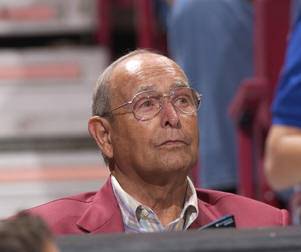
CHRIS HEDGES: Well,
DeVos,
a guy who founded Amway; Target; Sam's Club.
You know, they bring in -- a lot of these corporations like Wal-Mart and Sam's
Club and others bring in these sort of dominionist or evangelical ministers into
the plants as a way to mollify workers. Subscribing to this belief system is
essentially about disempowerment.
Old-line families plot the future in
New Orleans
Christopher Cooper
Wall Street Journal
Sept. 8, 2005 11:00 AM
NEW ORLEANS - On a sultry morning earlier this week, Ashton O'Dwyer
stepped out of his home on this city's grandest street and made a beeline
for his neighbor's pool. Wearing nothing but a pair of blue swim trunks and
carrying two milk jugs, he drew enough pool water to flush the toilet in his
home.
The mostly African-American neighborhoods of New Orleans are largely
underwater, and the people who lived there have scattered across the
country. But in many of the predominantly white and more affluent areas,
streets are dry and passable. Gracious homes are mostly intact and powered
by generators. Wednesday, officials reiterated that all residents must leave
New Orleans, but it's still unclear how far they will go to enforce the
order.
The green expanse of Audubon Park,
in the city's Uptown area, has doubled in recent days as a heliport for the
city's rich - and a terminus for the small armies of private security
guards who have been dispatched to keep the homes there safe and habitable.
O'Dwyer has cellphone service and ice cubes to cool off his highballs in the
evening. By Wednesday, the city water service even sprang to life, making
the daily trips to his neighbor's pool unnecessary. A pair of oil-company
engineers, dispatched by his son-in-law, delivered four cases of water, a
box of delicacies including herring with mustard sauce and 15 gallons of
generator gasoline.
Despite the disaster that has overwhelmed New Orleans, the city's monied,
mostly white elite is hanging on and
maneuvering to play a role in the recovery when the floodwaters of
Katrina are gone. "New Orleans is ready to be rebuilt. Let's start right
here," says Mr. O'Dwyer, standing in his expansive kitchen, next to a
counter covered with a jumble of weaponry and electric wires.
More than a few people in Uptown, the fashionable district surrounding St.
Charles Ave., have ancestors who arrived here in the 1700s.
High society is still
dominated by these old-line families, represented today by prominent figures
such as former New Orleans Board of Trade President
Thomas Westfeldt; Richard Freeman,
scion of the family that long owned the city's Coca-Cola bottling plant; and
William Boatner Reily, owner of a Louisiana coffee company. Their social
pecking order is dictated by the
mysterious hierarchy of "krewes," groups with hereditary membership
that participate in the annual carnival leading up to Mardi Gras. In recent
years, the city's most powerful business circles have expanded to include
some newcomers and non-whites, such as Mayor Ray Nagin, the former Cox
Communications executive elected in 2002.
Wealthy hire
Israelis
A few blocks from Mr. O'Dwyer, in an exclusive gated community known as
Audubon Place, is the home of James
Reiss, descendent of an old-line Uptown family. He fled Hurricane
Katrina just before the storm and returned soon afterward by private
helicopter. Mr. Reiss became wealthy as a supplier of electronic systems to
shipbuilders, and he serves in Mayor Nagin's administration as chairman of
the city's Regional Transit Authority. When New Orleans descended into a
spiral of looting and anarchy, Reiss
helicoptered in an Israeli security company to guard his Audubon
Place house and those of his neighbors.
He says he has been in contact with about 40 other New Orleans business
leaders since the storm. Tomorrow, he says, he and some of those leaders
plan to be in Dallas, meeting with Mr. Nagin to begin mapping out a future
for the city.
The power elite of New Orleans - whether they are still in the city or have
moved temporarily to enclaves such
as Destin, Fla., and Vail, Colo. - insist the remade city won't
simply restore the old order. New Orleans before the flood was burdened by a
teeming underclass, substandard schools and a high crime rate. The city has
few corporate headquarters.
New City to be white
The new city must be something very different, Mr. Reiss says, with better
services and fewer poor people. "Those who want to see this city rebuilt
want to see it done in a completely different way: demographically,
geographically and politically," he says. "I'm not just speaking for myself
here. The way we've been living is not going to happen again, or we're out."
Not every white business leader or prominent family supports that view. Some
black leaders and their allies in New Orleans fear that it boils down to
preventing large numbers of blacks from returning to the city and
eliminating the African-American voting majority. Rep. William Jefferson, a
sharecropper's son who was educated at Harvard and is currently serving his
eighth term in Congress, points out that the evacuees from New Orleans
already have been spread out across many states far from their old home and
won't be able to afford to return. "This is an example of poor people forced
to make choices because they don't have the money to do otherwise," Mr.
Jefferson says.
Calvin Fayard, a wealthy white plaintiffs' lawyer who lives near O'Dwyer,
says the mass evacuation could turn a Democratic stronghold into a
Republican one. Fayard, a prominent Democratic fund-raiser, says tampering
with the city's demographics means tampering with its unique culture and
shouldn't be done. "People can't survive a year temporarily - they'll go
somewhere, get a job and never come back," he says.
Reiss acknowledges that shrinking parts of the city occupied by hardscrabble
neighborhoods would inevitably result in fewer poor and African-American
residents. But he says the electoral balance of the city wouldn't change
significantly and that the business elite isn't trying to reverse the last
30 years of black political control. "We understand that African Americans
have had a great deal of influence on the history of New Orleans," he says.
A key question will be the position of Nagin, who was elected with the
support of the city's business leadership. He couldn't be reached Wednesday.
Reiss says the mayor suggested the Dallas meeting and will likely attend
when he goes there to visit his evacuated family
Nagin is Creole which ia Jamballa code
for Mulatto/Jewish
Black politicians have controlled City Hall here since the late 1970s, but
the wealthy white families of New Orleans have never been fully eclipsed.
Stuffing campaign coffers with donations, these families dominate the city's
professional and executive classes, including the white-shoe law firms,
engineering offices, and local shipping companies.
White voters often act as a swing
bloc, propelling blacks or Creoles into the city's top political jobs. That
was the case with Mr. Nagin, who defeated another African American to win
the mayoral election in 2002.
Creoles, as many mixed-race residents of New Orleans call themselves,
dominate the city's white-collar and government ranks and tend to ally
themselves with white voters on issues such as crime and education, while
sharing many of the same social concerns as African-American voters. Though
the flooding took a toll on many Creole neighborhoods, it's likely that
Creoles will return to the city in fairly large numbers, since many of them
have the means to do so.
---
Gary Fields and Ann Carrns contributed to this article.
Tulane
I have long grappled with the apparent contradiction of why Tulane treats
its Jewish professors so poorly while it caters to Jewish students with
attractive programs and campus activities. My conclusion is that a
bigoted
administration does not allow ideology to interfere with its business
decisions. Thus, Tulane appreciates that its Jewish students contribute a high
proportion of full tuitions and good SAT scores, while the generous philanthropy
of its Jewish alumni is always welcome.
Overkill: Feared
Blackwater Mercenaries
Deploy in New Orleans
By Jeremy Scahill and Daniela Crespo
NEW ORLEANS -- Heavily armed paramilitary mercenaries from the Blackwater
private security firm, infamous for their work in Iraq, are
openly patrolling the streets of New
Orleans. Some of the mercenaries say they have been "deputized" by the Louisiana
governor; indeed some are wearing gold Louisiana state law enforcement badges on
their chests and Blackwater photo identification cards on their arms. They say
they are on contract with the Department of Homeland Security and have been
given the authority to use lethal force. Several mercenaries we spoke
with said they had served in Iraq on the personal security details of the former
head of the US occupation, L. Paul Bremer and the former US ambassador to Iraq,
John Negroponte.
"This is a totally new thing to have guys like us working CONUS (Continental
United States)," a heavily armed Blackwater mercenary told us as we stood on
Bourbon Street in the French Quarter. "We're much better equipped to deal with
the situation in Iraq."
Blackwater mercenaries are some of the
most feared professional killers in the
world and they are accustomed to operating without worry of legal
consequences. Their presence on the streets of New Orleans should be a cause for
serious concern for the remaining residents of the city and raises alarming
questions about why the government would allow men trained to kill with impunity
in places like Iraq and Afghanistan to operate here. Some of the men now
patrolling the streets of New Orleans returned from Iraq as recently as 2 weeks
ago.
Louisiana authorized
What is most disturbing is the claim
of several Blackwater mercenaries we spoke with that they are here under
contract from the federal and Louisiana state governments.
Blackwater is one of the leading private "security" firms servicing the
occupations of Iraq and Afghanistan. It has several US government contracts and
has provided security for many senior US diplomats, foreign dignitaries and
corporations. The company rose to international prominence after 4 of its men
were killed in Fallujah and two of their charred bodies were hung from a bridge
in March 2004. Those killings sparked the massive US retaliation against the
civilian population of Fallujah that resulted in scores of deaths and tens of
thousands of refugees.
As the threat of forced evictions now looms in New Orleans and the city
confiscates even legally registered weapons from civilians, the private
mercenaries of Blackwater patrol the streets openly wielding M-16s and other
assault weapons. This despite Police Commissioner Eddie Compass' claim that
"Only law enforcement are allowed to have weapons."
Officially, Blackwater says it forces are in New Orleans to "join the
Hurricane Relief Effort." A statement on the company's website, dated September
1, advertises airlift services, security services and crowd control. The
company, according to news reports, has since begun taking private contracts to
guard hotels, businesses and other properties. But what has not been publicly
acknowledged is the claim, made to us by 2 Blackwater mercenaries, that they are
actually engaged in general law enforcement activities including "securing
neighborhoods" and "confronting criminals."
That raises a key question: under what authority are Blackwater's men
operating? A spokesperson for the Homeland Security Department, Russ Knocke,
told the Washington Post he knows of no federal plans to hire Blackwater or
other private security. "We believe we've got the right mix of personnel in law
enforcement for the federal government to meet the demands of public safety." he
said.
But in an hour-long conversation with several Blackwater mercenaries, we
heard a different story. The men we spoke with said they are indeed on contract
with the Department of Homeland Security and the Louisiana governor's office and
that some of them are sleeping in camps
organized by Homeland Security in New Orleans and Baton Rouge. One of
them wore a gold Louisiana state law enforcement badge and said he had been
"deputized" by the governor. They told us they not only
had authority to make arrests but also
to use lethal force. We encountered the Blackwater forces as we walked
through the streets of the largely deserted French Quarter. We were talking with
2 New York Police officers when an unmarked car without license plates sped up
next to us and stopped. Inside were 3 men, dressed in khaki uniforms, flak
jackets and wielding automatic weapons. "Y'all know where the Blackwater guys
are?" they asked. One of the police officers responded, "There are a bunch of
them around here," and pointed down the road.
"Blackwater?" we asked. "The guys who are in Iraq?"
"Yeah," said the officer. "They're all over the place."
A short while later, as we continued down Bourbon Street, we ran into the men
from the car. They wore Blackwater ID
badges on their arms.
"When they told me New Orleans, I said, 'What country is that in?,'" said one
of the Blackwater men. He was wearing his company ID around his neck in a
carrying case with the phrase "Operation Iraqi Freedom" printed on it. After
bragging about how he drives around Iraq in a "State Department issued level 5,
explosion proof BMW," he said he was "just trying to get back to Kirkuk (in the
north of Iraq) where the real action is." Later we overheard him on his cell
phone complaining that Blackwater was only paying
$350 a day plus per diem. That is
much less than the men make serving in more dangerous conditions in Iraq. Two
men we spoke with said they plan on returning to Iraq in October. But, as one
mercenary said, they've been told they could be in New Orleans for up to 6
months. "This is a trend," he told us. "You're going to see a lot more guys like
us in these situations."
If Blackwater's reputation and record in Iraq are any indication of the kind
of "services" the company offers, the people of New Orleans have much to fear.
Jeremy Scahill, a correspondent for the national radio and TV program
Democracy Now!, and Daniela Crespo are in New Orleans. Visit
www.democracynow.org for in-depth, independent, investigative reporting on
Hurricane Katrina. Email:
jeremy@democracynow.org
Chapter 4: A business gets a start
Erik Prince
thought he saw an opportunity as the U.S. military began to shrink. He was
right.
By
JOSEPH NEFF AND JAY PRICE, Staff Writers
Wesley Batalona and Jerry Zovko had
again gone looking for military contracting work, and this time they found
it with a relatively new company:
Blackwater
USA, based in Moyock, N.C.
Set on more than 6,000 acres in
the state's northeast corner,
Blackwater
was known as one of the best of the private military contractors. Its close
ties to the elite Navy SEALs grew from its owner,
Erik Prince.
Prince, 35, had been a White
House intern and was a billionaire's son,
yet he volunteered as a firefighter and for the Navy.
Prince, a widower and father of four, was a former member of the SEAL
commandos. He maintained the unit's
characteristic secrecy while positioning himself at the intersection of free
enterprise, activist Christianity, conservative politics and military
contracting. He made his first political contribution at 19 --
$15,000 to the Republican Party.

CHARACTERS
Erik Prince
Was very rich to
have served in the military
Andy Messing
Retired Special
Forces officer is a critic of private military contractors
but admires Prince |
|
|
|
Prince "is one of the richest
guys that ever served in the military," said Andy Messing Jr., a retired
Special Forces major and director of the National Defense Council
Foundation.
Every year, tens of thousands of
men and women join the military to get a leg up on life: a job, an
education, a career.
Erik Prince
didn't have to join to get ahead.
His father,
Edgar Prince, started his own
company in 1965. He hit it big by making sun visors
with lighted mirrors. Business grew,
and his factories churned out parts seen in most cars today: overhead
consoles, map lamps, headliners for roofs.
When Edgar Prince died in 1995,
Prince Automotive employed 4,500 workers in eight factories, including six
in Holland, Mich., where
Erik Prince
grew up.
Edgar Prince was Holland's
biggest employer. A tidy city just inland from Lake Michigan, Holland is
home to one of the nation's biggest pockets of Dutch-Americans. Nearby
Calvin College has one of the few departments of Dutch in the United States.
The area hews to the Dutch traditions of frugality and industry.
Edgar Prince ran his business in
line with the Calvinist values of the Christian Reformed Church, which
dominates western Michigan. Prince factories didn't run on Sundays;
corporate jets flew the sales staff home on weeknights for family time.
Edgar Prince and his wife, Elsa,
adopted downtown Holland, investing millions of dollars when suburban
shopping malls threatened the downtown shopping district. His "business was
an engine that generated cash that he could use to do good things,"
Erik Prince
told The Wall Street Journal in 2000.
The Princes spread their wealth
around the country as well, pumping tens of millions of dollars into the
Christian conservative movement, with big gifts and small grants.
Erik Prince's
sister, Betsy, is the chairwoman of Michigan's Republican Party, and married
into a family even more generous to the party and the Christian Right than
the Princes: the DeVos family, owners of the Amway home marketing company.
'A smart guy'
Erik Prince
molded himself after his father: a devout Christian,
astute businessman and family man
who shunned the limelight.
After Holland Christian School,
Prince attended Hillsdale College, a small liberal arts school that
champions free markets and individual freedom.
Erik Prince
fit in at what Gary Wolfram, a professor of political economy who taught
him, called a "Mecca of market economy."
"He was a smart guy, and pleasant
to be around, and he's well-spoken," Wolfram said. "What's good about him,
he understands the interrelationship between markets and the political
system."
As Prince studied free market
economics, the world was changing. The fall of the Berlin Wall in 1989
heralded the end of the Cold War. The U.S. military began getting smaller.
During the 1990s, the Pentagon would shed about 700,000 active-duty troops
and 300,000 civilian employees.
As the military shrunk, its tasks
grew: the first Persian Gulf War, then Somalia, Haiti, Bosnia and Kosovo. In
each conflict, the U.S. military used more contract employees to do jobs
once given to soldiers.
It wasn't just age-old tasks such
as cooking meals and cleaning latrines, but fulfilling the technological
needs of the modern military. Private contractors fix helicopters, run
computers and maintain high-tech systems such as Patriot missiles and radar
networks.
A business that barely existed at
the end of the Cold War was on its way to becoming a $100-billion-a-year
industry.
Education in politics
Prince didn't focus just on
economics while in college. A series of internships showed him how politics
worked in the nation's capital.
He was one of the first interns
at the Family Research Council in Washington. He worked as a defense analyst
on the staff of U.S. Rep. Dana Rohrabacher, a conservative Republican from
Orange County, Calif. And he interned in the White House of President George
H.W. Bush, father of current President George W. Bush. In 1992, he
campaigned for Patrick Buchanan.
"I interned with the Bush
administration for six months," Prince told The Grand Rapids Press in early
1992. "I saw a lot of things I didn't agree with -- homosexual groups being
invited in, the budget agreement, the Clean Air Act, those kind of bills. I
think the administration has been indifferent to a lot of conservative
concerns."
Back at school, Prince
volunteered on a more humble scale: He was the first college student to join
the Hillsdale Volunteer Fire Department. He'd be sitting in class when his
radio crackled. As amused classmates looked on, he'd dash out.
"When you've been on a fire an
hour and a half and the crowd's gone, some of the guys want to sit on
bumpers and have a soft drink," said Kevin Pauken, one of the squad's
full-timers. "Other guys will be rolling hoses and picking up equipment so
you can get out of there. That was Erik."
In 1992, Prince enlisted in the
Navy, was commissioned as an officer, and the next year joined the SEALs,
who get their acronym from the attack routes of sea, air and land. He spent
four years with Seal Team 8 in Norfolk, Va.
"Prince was a first-class SEAL,
he was the real deal," said Messing, the retired Special Forces officer.
Prince left the SEALs in 1996.
His father had died the previous year, and Erik took over the family
business. About this time, his wife, Joan, was diagnosed with cancer (she
died in 2003 at 36). Also in 1996, the
Prince family sold its automotive
business to S.C. Johnson Controls for $1.35 billion in cash.
Prince headed the Prince Group, which held several nonautomotive factories
and the company that developed downtown Holland.
Prince Judeo

Prince took up a variety of
causes. He sits on several boards, including Christian Solidarity
International, a human rights organization, and the
Institute of World Politics, a
fledgling foreign relations school in Washington that teaches would-be
diplomats from a Judeo-Christian perspective.
And he has continued to open his checkbook to the Republican Party and
conservative candidates, contributing at least $151,250 since 1989.

He shuns reporters and declined,
through a spokesman, to be interviewed for this story. Photos of him are
hard to find.
Opportunity knocks
Prince has been equally secretive
about his biggest venture since the SEALs: At 27, he founded
Blackwater
USA, buying an expanse of farmland in Camden and Currituck counties. He saw
an opportunity as the shrinking military closed some of its own training
centers, and he wanted to build the SEALs a good one just a short drive from
the unit's East Coast base at Little Creek, Va.
Former Navy SEALs form the
backbone of
Blackwater, which advertises
its Moyock compound -- now more than 6,000 acres -- as "the most
comprehensive private tactical training facility in the United States."
It puts many military ranges to
shame. One range is two-thirds of a mile long and perfect for sniper
training. There are computerized target systems and an entire mock town for
urban tactical training, and a track for tactical driving techniques.
Soldiers can shoot from boats or hovering helicopters into junk cars, trucks
and buses.
Blackwater boasts that it can
custom-design any sort of training a soldier wants.
Business was steady but
unremarkable for the first few years. SWAT teams and police trained there,
as well as soldiers from Fort Bragg and SEALs. The 2001 attacks on New York
and Washington changed the tempo.
"Before the events of Sept. 11, I
was getting pretty cynical about how people felt about training," Prince
told The Virginian-Pilot newspaper two weeks after the Twin Towers fell.
"Now the phone is ringing off the hook."
Blackwater
got its own air wing, with helicopters and small cargo planes. It began
training a SEAL-type unit for the navy of Azerbaijan and proposed setting up
a giant training center outside Baghdad, modeled on its Moyock facility.
Some private security companies
would take any job, unsavory client or not. Not
Blackwater.
Most of its work was for the
U.S. government. It worked only for foreign governments approved by the U.S.
State Department.
This month,
Blackwater
had 450 people in Iraq, company officials said. It guarded L. Paul Bremer,
the highest-profile American target in Iraq before the Iraqis took control
of their own government again June 28. And
Blackwater
won the job of guarding the new top American, Ambassador John Negroponte. In
2003, it was paid at least $18.9 million by the government.
Blackwater's
growth since 9/11 meant the company needed workers.
This past winter, in Oceanside,
Calif., a former SEAL and sometime Hollywood consultant and stuntman heard
about those high-paying jobs via the informal SEAL alumni e-mail network.
Scott Helvenston was recently
divorced and just two years earlier had declared bankruptcy, citing income
of just $14,000 a year. That wasn't much for a father with two children.
What's more, Helvenston liked the
idea of returning to military work. After a dozen years as a commando, he
missed the life, the missions, the camaraderie.
He would go to work for
Erik Prince.
(News researcher Brooke Cain
contributed to this report.)
|
| |
|
|
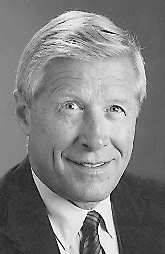
Prince
Edgar Prince
-[d.1995] CNP Vice-President 1988, Executive Committee 1994, member 1984;
founded Prince Corporation, a major supplier to the automotive industry;
former secretary of the board, Gospel Films, Gospel Film's Board Chairman
was
Richard M. DeVos;
During that same period, both the late
Edgar Prince and
Jay Van Andel, the co-founder of Amway with Richard Devos, were on the
bank's board of directors.
The men most responsible for
engineering the rendezvous between Reagan and the religious right were a
cabal of professional fund-raisers and PR flacks for ultra-right causes:
Richard Viguerie, Terry Dolan, Howard Phillips, and Ed McAteer. Between
them they had founded, chaired, or advised such lobbying groups as
Conservative Caucus, Religious Roundtable, National Conservative Political
Action Committee, Committee for the Survival of a Free Congress,
Christian
Voice, Young Americans for Freedom, and the now infamous Moral Majority.
It was these men who
actually created the Moral Majority, not Falwell, who was recruited by
them to front the organization.
|
The very term “Moral Majority”
was coined by either Weyrich or Phillips (it’s disputed) in 1979 when they
met with Falwell through McAteer, then director of the
Christian
Freedom Foundation, which was financed by Pew (Sunoco) and
DeVos
(Amway)
money. Weyrich, P.A.C. man and cofounder of many of the above groups as
well as the Coors and Scaiffe financed Heritage Foundation, and Phillips,
"Jerry Falwell, Pat Robertson,
Ralph Reed, Paul Weyrich, Donald Wildmon, Oliver North, and Howard
Phillips ... former Attorney General Ed Meese ... Howard Ahmanson ...
Richard DeVos
of Amway,
Pierre S. DuPont IV, and several members of the Coors clan,"
Miller writes, all are connected in varying degrees to the Christer Recon
movement.
|
Betsy DeVos
In addition to its support for Focus
on the Family and the Foundation for Traditional Values, the
Dick and
Betsy DeVos
Foundation also supports the
Acton Institute for the Study of
Religion and Liberty, where
Betsy DeVos
serves on the board. The Richard
and Helen DeVos
Foundation has supported the institute in the past. The Acton Institute for the
Study of Religion and Liberty attempts to link economics with religion and
traditional virtues and sponsors workshops for business executives, religious
leaders, professors and others involved in religion, business and economic
research. The institute also publishes a number of documents in order to
disseminate its view to the general public, policymakers and other leaders.
The Richard and Helen
DeVos
Foundation also contributes to the aforementioned Council for National Policy,
where Richard DeVos
has served on the executive committee and board of governors and which has been
described as "very dangerous and dangerously secretive"129
in the eyes of liberals. Because of its secretive nature, it is difficult to
fully ascertain the activities of the council. However, it is clearly a
conservative organization that works to effect public policy changes at the
national level. It was founded in part by the
Rev. Tim LaHaye, leader of the
Moral Majority,
and it strives to combat what it sees as liberal control over the country and
focuses on issues in domains ranging from social to economic.
ABC News reported that "it provided a forum for religiously engaged conservative
Christians to influence the geography of American political power."130
The council supports a strong national defense, Christian values, conservative
morals and limited government
Devos is a jew that owns 'Orlando Magic'
Blackwater-Washington Post
By Griff Witte
Washington Post Staff Writer
Thursday, September 8, 2005; Page A14
Companies in the Gulf Coast area hit by Hurricane Katrina are turning to
an unusual source to protect people and property rendered vulnerable by the
storm's damage -- private security contractors that specialize in supporting
military operations in war-torn countries such as Iraq and Afghanistan.
The mission is to guard against
looters, not fend off coordinated insurgent attacks. But the presence
of the highly trained specialists represents an unusual domestic assignment
for a set of companies that has chiefly developed in global hot spots where
war, not nature, has undermined the rule of law.
North Carolina-based Blackwater
USA, for example, has 150 security personnel in the Gulf Coast region.
The company, which provided personal security for the head of the Coalition
Provisional Authority and continues to have a large presence in Iraq, began by
donating the services of a helicopter crew to help the Coast Guard with rescue
efforts. But it since has added commercial clients that either have buildings
in the region, such as hotels, or are sending employees there to help with the
reconstruction.
"The calls came flooding in. It's not something that we went down and
tried to develop," said Chris Taylor, Blackwater's vice president for
strategic initiatives.
ArmorGroup International, a British company, has about 50 employees in
the Gulf Coast. Most of the work came from existing clients that wanted
security quickly as looters ran rampant through New Orleans last week,
according to George Connell, president of the firm's McLean-based North
American division.
Although it's not likely to become a major source of business,
private-sector firms that specialize in rapid response to dangerous situations
probably can have more of a role in a domestic disaster's wake, said Doug
Brooks, president of the International Peace Operations Association, a trade
group.
"I think a lot of people are complaining about how long it took the
federal government. But certainly these private companies are always ready to
go," he said.
Peter W. Singer, an expert on private military contractors at the
Brookings Institution, said he thinks the presence of such firms is "overkill"
when firms that perform more conventional security work are available.
"This is not a war zone. The potential threats that might be faced are
not insurgents armed with mortars and machine guns attacking convoys," he
said. "This was basically looters and a small number of ne'er-do-wells taking
potshots."
Blackwater's Taylor said local
authorities are notified when company employees move into an area. So far, he
said, none of his workers has had to take any action; the idea is that their
presence should be enough. "We're saying to potential looters, 'This is a
place you don't want to be right now,' " he said.
ArmorGroup's Connell said that so far, the most his employees have had
to do is advise a television crew to leave the convention center area after
the mood there turned ugly late last week.
Connell said that unlike in Iraq, where armed security is a necessity,
private security in the New Orleans area is mostly needed to make people "feel
better with a linebacker-sized guy with you."
He said the employees he has dispatched to the Gulf Coast are typically
Americans who have retired from law enforcement jobs. They are armed with
pistols and dressed in khaki pants and blue polo shirts. "They're licensed,
mature people," he said. "On balance, they're sort of an older crowd than
people we have in hotter spots around the world."
In Iraq, where private security contractors number about 20,000, they're
usually former military personnel, and most are equipped with heavy weaponry.
Homeland Security Department spokesman Russ Knocke said he knows of no
federal plans to hire private security, though he would not rule it out. "We
believe we've got the right mix of personnel in law enforcement for the
federal government to meet the demands of public safety," Knocke said.
BLACKWATER USA
ONWARD CHRISTIAN SOLDIERS
By: Al Cronkrite
Did you know that the United States
government is spending billions of dollars hiring paramilitary troops being used
in clandestine operations as well as in the War in Iraq and even on our own
soil?
It appears that the French Foreign Legion has had children as there are now
several organizations in the United States and overseas that provide both
trained soldiers and soldierly training. These private military companies (PMCs)
offer support for governments and armed forces and facilitate the conduct of a
broad range of activities that are often not public knowledge. The activities of
PMCs can be conducted with or without the cooperation of our armed forces and
when secrecy and lack of accountability are desired they are a convenient
vehicle. There are no questions about the legitimacy of the operation, no one is
concerned about casualties, the Geneva Convention can be forgotten,
international problems are alleviated, and the source of the operation itself
can be concealed.
According to an article by Laura Peterson “Since 1994, the U.S. Defense
Department has entered into 3,061 contracts with 12 of the 24 U.S.-based PMCs….
Pentagon records valued those contracts at more than $300 billion. More than
2,700 of those contracts were held by just two companies: Kellogg Brown & Root
and Booz Allen Hamilton. Because of the limited information the Pentagon
provides and the breadth of services offered by some of the larger companies, it
was impossible to determine what percentage of these contracts was for training,
security or logistical services.”
U. S. supported mercenaries have been involved in Africa, Bosnia, and South
America. They are being used in Iraq where 48,000 mercenaries working for 181
different firms are currently deployed. They were surreptitiously used along
with Mexican troops to confiscate firearms in New Orleans after the devastation
of Hurricane Katrina. Mercenaries have no inhibitions about depriving citizens
of their Constitutional rights and, armed with AK 47s, they can be used by
tyrannical governments for any selected oppression.
Most people in the United States have never heard of these organizations and are
not aware that our government is conducting paramilitary activities that are not
subject to the rules of conduct for normal overt operations.
Of the dozens of organizations that provide military type training and support,
this article will concentrate on one that is of particular interest.
“Blackwater USA” is a multifaceted
PMC
with extensive training facilities in Northeastern North Carolina. They
advertise their services as “the most comprehensive professional
military, law enforcement, security, peacekeeping, and stability operations
company in the world.” Their Website is here. It was founded in 1996 by Erik
Prince who is the wealthy son of Michigan auto parts manufacturer Edgar Prince
and a former Navy Seal with extensive personal contacts in Washington. Edgar
Prince helped Gary Bauer form the Family Research Council and his daughter,
Betsey, (Eric’s sister) is married to Dick DeVos the son of Amway founder
Richard DeVos. She is Chairperson of the Michigan Republican Party. The family
is reported to have extensive personal relationships with James Dobson, D. James
Kennedy, Edwin Meese III, Pat Roberson, Richard Viguerie, Paul Weyrich and
others.
According to an article in The Nation, since June 2004 Blackwater USA has
received $320 million from the Bush Administration to provide security services
around the world. Blackwater
flew mercenaries into New Orleans immediately after Hurricane Katrina before
contracts had been formalized. Ultimately, the Bush Administration paid them $30
million.
Christian theology provides the platform for much of the tragedy that is
involved when followers of The Prince Of Peace involve themselves in aiding an
imperialistic government in illegal conquests.
Former New York Times Middle East Bureau Chief, Chris Hedges, has published a
new book “American Fascists: The Christian Right and the War on America” . He
spent two years traveling around the country seeking the tenor of Christendom.
He quickly dredges up the demon of the theocratic state and expresses concern
that the evils involved with the hiring of mercenaries could result in the
imposition of Christianity on the nation. He goes on to describe Christian
vigilantes that occupy high level positions in the Bush II Administration, Army
Generals who claim their Faith is their first priority and who cherish the
opportunity to evangelize men and women involved with our defense policy. “I
think it’s a huge impact.... You have many men and women who are seeking God’s
counsel and wisdom as they advise the chairman [of the Joint Chiefs] and the
secretary of defense.”
Of the many Evangelical churches he
attended Hedges writes, “They painted the war in Iraq not as an occupation but
as an apocalyptic battle by Christians against Islam, a religion they regularly
branded as ‘satanic.’ All this befits a movement whose final aesthetic is
violence. It also befits a movement that, in the end, would need the military
and police forces to seize power in American society“.
Chris Hedges is a far left, anti-Christian, Liberal working for a newspaper that
holds the same sentiments. His motivations are horrid but some of his
descriptions are both accurate and deplorable.
Implicit in the zeal to evangelize is the erroneous assumption that conversion
involves “making a decision for Christ“. This Arminian heresy has distorted the
Christian ethic and created the impression that Christians are something akin to
eccentric used car salesmen and must be avoided at all costs. All through the
Biblical narrative God selected His servants. God chooses whom He chooses; we do
not choose God, that is humanism! Jesus Himself said that no man would become a
Christian unless the Father drew him. Evangelism should never involve planting
but only gently harvesting the fruit that God has planted and nurtured.
When the present nation of Israel was
created by the Balfour Agreement and sustained by the United Nations, the
land occupied by Palestinian Arabs for centuries was overrun by illegal aliens
and expropriated by a secular government that has established a nation taken
from their ancestors by God as a result of an apostasy that has never been
forsaken. This huge injustice supported by theologically challenged Christians
is in direct opposition to the God of Abraham, Isaac, and Jacob, Who ordered the
Diaspora which removed the mantle from those that had broken His covenant and
placed it on those who accepted His Son as their Savior. Now, many of these
Christians have broken this precious Covenant by supporting what God has
rejected.
Consider the strife and turmoil the creation of this illegitimate nation has
created. Prior to 1948, Jews and Arabs had been living peacefully in Palestine
for centuries. When Jewish immigrants began to arrive in the area in
overwhelming numbers Arab resistance was justly strident and has remained so.
Terrorism was unheard of before this affront to God and the clandestine
partisanship that has divided Jewish loyalty to their present domiciles was non
existent. This was a crime against the established government of the Middle East
and against the Jewish people as well. Injustice can be forceably maintained by
coercion but it never brings lasting peace.
We now have Christians who worship a
peaceful God engaged in overt military action against over 200 million Arabs who
instead of annihilation should be awarded the Justice our Christian God
represents. It is an anarchic, confusing, unjust situation that only Satan could
create
What a tragedy that highly placed military personnel are spreading this
pernicious heresy throughout the upper echelons of our government and that
wealthy Christians have fallen victim to this same “kill’em all” doctrine and
are busy aiding it and making money from it.
Much of this aberration can be traced to the blasphemy Dispensationalism has
created. It is not only a paralyzing doctrine but has succeeded in neutering
Christianity by channeling Christian zeal into supporting what God hates while
failing to support what He loves.
If United States Evangelical leaders would begin to understand the injustice
Israel represents and join with The Creator in bringing both Jew and Gentile
under the jurisdiction of God’s Laws hope could be returned to the world.
Chistian Zionists

BGovernment support of settlement building accelerated dramatically in 1977 when
Menachem Begin became Prime Minister. Begin's ultranationalist notions had made
him a figure on the fringe for the first three decades of Israel's existence,
but his Likud Party had finally come to power.
Ironically, Begin won a Nobel Peace Prize in 1978, along with President Anwar
Sadat of Egypt, for signing the Camp David Accords. Thanks to skillfully managed
negotiations on the part of U.S. President Jimmy Carter, Begin agreed to return
the Sinai desert to Egypt, but refused to discuss the Jewish settlements in the
West Bank and Gaza. And this is where our story begins - the same year that the
Camp David Accords were signed.
That year, 1978, Begin invited The
Reverend Jerry Falwell
for his first official visit to Israel, and the following year, 1979, his
government gave Falwell
a gift -- a Lear Jet.
Begin's
timing was perfect. He began working seriously with Christian Zionists at the
precise moment that Christian fundamentalists in America were discovering their
political voice.
The same year that
Falwell
received his Lear Jet, 1979, he formed the Moral Majority, an
organization that changed the political landscape in the United States. What was
Falwell's interest in Israel? He was a Dispensationalist. Dispensationalism is a
system of theology that believes the Jews must return to Israel as part of God's
plan for Christ to return. To read more about the history of Dispensationalism,
click here.
Van Adel

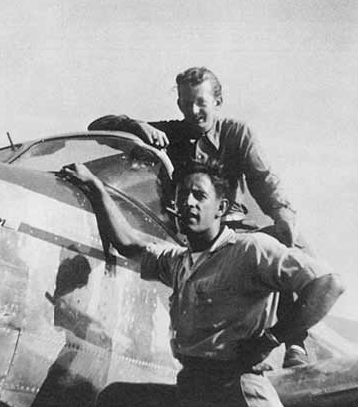
Investigative journalist Jeremy Scahill joins us to talk about
his new book, "Blackwater: The Rise of the World's Most Powerful Mercenary
Army." Scahill writes, "Blackwater is the elite Praetorian Guard for the
'global war on terror,' with its own military base, a fleet of twenty aircraft,
and 20,000 private contractors at the ready. Run by a multimillionaire Christian
conservative who bankrolls President Bush and his allies, its forces are capable
of overthrowing governments." From Iraq to New Orleans, Blackwater has continued
to pull in multi-million-dollar government contracts, mostly without
accountability and in near-secrecy. [includes rush transcript]
--------------------------------------------------------------------------------
Four years ago today, the US invasion of Iraq was in its opening hours. Hundreds
of thousands of deaths and injuries later, another date marked later this month
has taken on nearly as much significance. March 31st, 2004. Four employees of
the private U.S. security firm Blackwater USA are ambushed as they drive through
the center of Fallujah. In images broadcast around the world, their burnt
corpses are dragged through the streets. Two of them are strung up from a
bridge. This is an excerpt of the PBS documentary, "Private Warriors", going
back to that day.
"Private Warriors" - excerpt of PBS documentary.
The U.S. military followed with the first of two major attacks that ended up
virtually destroying Fallujah -- and setting off a new wave of Iraqi resistance
that continues to this day. Meanwhile, instead of curbing the reliance on
contractors in Iraq, the Bush administration has expanded the privatization of
war. Blackwater has been one of the biggest recipients. From Iraq to New
Orleans, it has continued to pull in multi-million-dollar government contracts,
mostly without accountability and in near-secrecy.
Today, an in-depth look at Blackwater with investigative journalist Jeremy
Scahill. He"s just come out with his first book: "Blackwater: The Rise of the
World's Most Powerful Mercenary Army." Jeremy is a Democracy Now! correspondent
and a Puffin Foundation Writing Fellow at The Nation Institute. He joins us in
the firehouse studio.
Jeremy Scahill, Democracy Now! correspondent and a Puffin Foundation Writing
Fellow at The Nation Institute. He is the author of the new book, "Blackwater:
The Rise of the World's Most Powerful Mercenary Army."
More information at Blackwaterbook.com
--------------------------------------------------------------------------------
RUSH TRANSCRIPT
This transcript is available free of charge. However, donations help us provide
closed captioning for the deaf and hard of hearing on our TV broadcast. Thank
you for your generous contribution.
Donate - $25, $50, $100, more...
AMY GOODMAN: Four years ago today, the US invasion of Iraq was in its opening
hours. Hundreds of thousands of deaths and injuries later, another date marked
later this month has taken on nearly as much significance. It was March 31,
2004. Four employees of the private US security firm Blackwater USA were
ambushed as they drive through the center of Fallujah. In images broadcast
around the world, their burnt corpses were dragged through the streets. Two of
them were strung up from a bridge. This is an excerpt of the PBS documentary,
Private Warriors, going back to that day.
NARRATOR: Contractually, Blackwater was to supply two SUVs with three guards per
vehicle. Instead, the men set out at 8:30 in the morning with just two men per
car, each short a rear gunner. They were escorting three empty trucks on their
way to pick up some kitchen equipment at a base west of Fallujah. They were
vulnerable and obvious. The commander responsible for Fallujah was Marine
Colonel John Toolan.
COL. JOHN TOOLAN: Contractors were easily identified on the roads, because they
were all in brand new SUVs, 2004 SUV, tinted windows, so they were easy to pick
out. And the insurgents knew that it was a fairly easy mark.
NARRATOR: Around 9:30 a.m., they approached the center of town. Insurgents would
ambush them from behind. All four guards were shot and killed. The insurgents
made their own video of the aftermath.
UNIDENTIFIED MAN: The first thing that came up was the camera bouncing toward
this SUV, and it went right into the car. It was -- I knew it was him from his
looks, everything, clear as day. You know, at least I know he wasn't burned
alive. He was dead.
NARRATOR: By the time the press arrived, a mob had set the cars on fire.
COL. JOHN TOOLAN: Unfortunately, it was going out on CNN, and we knew that this
was a key component of the insurgents’ strategy: get the pictures out, make it
look like they're winning. It was clear.
AMY GOODMAN: An excerpt of the Frontline documentary, Private Warriors. The US
military followed with the first of two major attacks that ended up virtually
destroying Fallujah and setting off a new wave of Iraqi resistance that
continues to this day.
Meanwhile, instead of curbing the reliance on contractors in Iraq, the Bush
administration has expanded the privatization of war. Blackwater has been one of
the biggest recipients. From Iraq to New Orleans, it's continued to pull in
multimillion-dollar government contracts, mostly without accountability and in
near secrecy. Today, an in-depth look at Blackwater with investigative
journalist Jeremy Scahill. He has just come out with his first book, its title,
Blackwater: The Rise of the World's Most Powerful Mercenary Army. Jeremy will
join us after this break.
[break]
AMY GOODMAN: Our guest, Jeremy Scahill, Democracy Now! correspondent and Puffin
Foundation Writing Fellow at the Nation Institute. His first book is now out. It
is called Blackwater: The Rise of the World's Most Powerful Mercenary Army.
Welcome to Democracy Now!, Jeremy.
JEREMY SCAHILL: Thanks, Amy.
AMY GOODMAN: Welcome back.
JEREMY SCAHILL: Thanks.
AMY GOODMAN: We just saw this excerpt of what happened in Fallujah, the end of
March 2004. Describe what happened and why you took this on and expanded it into
a book.
JEREMY SCAHILL: Well, I first went to Iraq as a reporter for Democracy Now! in
late 1998, when the Clinton administration was gearing up to bomb Iraq, and, in
fact, Clinton did hammer Iraq for four days in December of 1998. And it was the
first of what would be many trips that I would take to Iraq from 1998 until
2003, when the US occupation began. And I spent a fair bit of time going in and
out of Fallujah, among the cities that I visited in Iraq.
In fact, in the summer of 2002, I camped out in the desert right near Fallujah
and walked through the center of the city. And my recollection of conversations
with people in Fallujah was always of a massacre. But this was before the Iraq
war had officially begun in 2003. During the 1991 Gulf War, Allied war planes
bombed a crowded marketplace and hit a residential complex and killed some
seventy-eight people in Fallujah. And so, I always thought of that as the
Fallujah massacre.
And you have to understand that when the US troops first rolled into Baghdad,
Fallujans sort of organized themselves and sort of were taking stock of these
earth-moving events that had happened in the country when the occupation began.
And so, when US troops came to the outskirts of Fallujah in April of 2003,
Fallujans essentially told the US military, “We're fine. We don't need you
here.” And there was some back-and-forthing going on with local officials, and
Fallujans were really trying to organize their lives and have their kids going
to school. And this was happening around Iraq. Despite the fact that there was
an occupation underway, people were still trying to live somewhat normal lives.
And eventually the US came in and took Fallujah by force. They, in fact, took
over a primary school called the Leader’s School in April of 2003, and Iraqis
began protesting, and that resulted in what Fallujans remember as a massacre.
About a dozen people were killed, seventy people were injured one night as
Fallujans protested. And that really sparked a series of conflicts between the
people of Fallujah and the US military, in which scores of US soldiers were
killed and many Fallujans were killed.
And then another event happened before the Fallujah ambush of the Blackwater
contractors. On March 22, the Israeli military killed Sheikh Ahmed Yassin, who
was a cleric bound in a wheelchair, as he was coming out of morning prayers,
killed him and about a half a dozen people in his entourage. And in Fallujah,
there was a massive protest against that. And already people believed that the
Israelis and the US were working hand-in-hand during the occupation of Iraq. So
that was the context leading up to the Fallujah ambush, and it's almost never
talked about.
So the people of Fallujah -- I think, rightly -- were very outraged at their
treatment at the hands of the US and its allies and saw this sort of
relationship between the US and Israel as one of conquest in the Middle East and
certainly in Iraq. In fact, many people in Iraq believed that private military
contractors, like Blackwater, were either CIA or Mossad. So it’s very likely
that when those guys rolled into Fallujah that morning, that people thought they
were attacking a CIA convoy or a Mossad convoy.
AMY GOODMAN: And so, four -- I was about to say soldiers, but they weren't --
four people, military contractors, were killed, brutally dragged through the
streets of Fallujah and then hung up. Tell us who they were.
JEREMY SCAHILL: Well, these guys were all Special Forces veterans. Scott
Helvenston was one of the youngest people ever to serve in the US Navy Seals. He
became a US Navy Seal trainer and served in the Navy Seals for twelve years and
was a world-class athlete. He won, I think, a gold medal and several other
medals at international competitions. Jerry Zovko also had served in the US
Special Forces. Mike Teague was a veteran of several US wars, including
Afghanistan, and was a highly decorated soldier. And Wes Batalona was a US Army
Ranger who had served in Somalia. So these guys were all Special Forces
veterans. They all considered themselves to be patriotic Americans.
And, you know, I’ve gotten to know their families very well over these years.
All of them believed that their loved ones were doing what they had always done,
serving their country. And the fact that they were working for Blackwater was no
different than serving in the Navy Seals. They all that thought their loved ones
were going over there to protect Paul Bremer, because that's what Blackwater was
doing in Iraq at the time. I don't think any of their families knew that their
loved ones would end up dying for empty flatbed trucks going to pick up kitchen
equipment.
AMY GOODMAN: And so, they've sued.
JEREMY SCAHILL: And so, after those guys were killed, I don't think any of the
families immediately assumed any malice on the part of Blackwater, and they, I
think, did what anyone would do. They started calling the company and saying,
“What happened? What were they doing in Fallujah? Why were they escorting these
trucks? Why were there only two men in each vehicle that day? Why weren’t the
vehicles armored?” And instead of getting answers, the families say that they
got the runaround from Blackwater.
And so, Blackwater flies these families out in October of 2004, several months
after the ambush happened, and while they're at the Blackwater compound in
Moyock, North Carolina, the families say they felt like they were being
monitored, that Blackwater officials were attempting to not have them speak
about the incident. And, really, they got the impression that Blackwater didn't
want them to really be talking to each other. And the event was billed sort of
as a memorial for their loved ones, and there were some other people whose loved
ones had died in Iraq, but also a moment for the families to ask questions of
what happened.
And so, Donna Zovko, Jerry Zovko's mother, and her son and her husband were in a
meeting with Blackwater executives, and she says that she asked to see the
incident report on the ambush and to have her son's belongings returned to her.
And she said that a Blackwater representative stood up from the table and said
that “that’s a classified document, and you'll have to sue us to get it.” And
so, the families got to know each other in the ensuing months, and Katy
Helvenston, Scott Helvenston's mother, and Donna Zovko really sort of
spearheaded it. And in January of 2005, those four families filed a
groundbreaking wrongful death lawsuit against Blackwater, saying that the
company had defrauded their loved ones by not providing them with their
contractually obligated safeguards for their mission that day. And, yes, the men
signed contracts saying that they would not hold Blackwater accountable if they
died or were injured. But the families say that the contracts became null and
void the moment that Blackwater sent them on that mission unprepared.
AMY GOODMAN: That's one of the suits against this company, Blackwater. Talk
about this company, who founded it, how large it is.
JEREMY SCAHILL: Blackwater was founded -- it was actually incorporated in late
1996 and really started to build up its operations in 1997. Originally, it was a
5,000-acre plot near the Great Dismal Swamp of North Carolina, and the personal
private fortune of its founder, Erik Prince. He's believed to be, if not the
wealthiest, one of the wealthiest people ever to serve in the elite US Navy
Seals.
Maybe we should talk for a moment about who he is and his background, because it
has everything to do with the success of the company. Erik Prince comes from a
very wealthy rightwing Christian dynasty in the town of Holland, Michigan. His
father was a man named Edgar Prince, who was a sort of
pull-yourself-up-by-your-bootstraps capitalist. He built up an empire called the
Prince Manufacturing Corp., and they manufactured auto parts, serviced the auto
industry. And, in fact, what the company is perhaps best known for was for
creating the now-ubiquitous lighted sun visor. So when you pull down the visor
in your car and it lights up, that's the Prince family's invention. And it was a
very profitable business.
And so, young Erik Prince grew up in this very heady atmosphere that mixed the
sort of free-market gospel with the literal Christian gospel. His family, they
were strict Calvinists. And Erik Prince was political at a very early age and
watched as his father used his company as a cash-generating engine to fuel the
rise of what we now know as the religious right in this country, as well as the
Republican Revolution of 1994. His father gave the seed money to Gary Bauer to
found the Family Research Council. Young Erik Prince was in the first crop of
interns to serve at the Family Research Council. They gave significant funding
to James Dobson and his group Focus on the Family, which is now sort of the
premier evangelical organizing network in this country, the “prayer warriors.”
And what’s interesting is that Erik
Prince’s sister Betsy married into another powerhouse Michigan family, perhaps
the single greatest bankroller of the Republican Revolution: Dick
DeVos’s
Amway Corporation. Erik Prince's sister married Dick
DeVos,
the heir to the Amway fortune. And Amway was a company that sold home services
products and sort of was accused of running the operation like a cult and using
their marketers to not only sell their products, but to sell their
political agenda, the rise of the sort of Christian right and Republican
Revolution. And so, this marriage of these two families was sort of typical of
the merging of the monarchist families in old Europe.
And so, Erik Prince grew up in this atmosphere, where his family was a real
power player in what would become the Republican Revolution of 1994. Erik Prince
interned in George H.W. Bush's White House, but he complained that it wasn't
conservative enough for him on gay issues, on the balanced budget, on the
environment. He also was an intern for the conservative
California Congressman Dana Rohrabacher,
a man who, after leaving Reagan’s staff as an advisor and speechwriter, went
over to join the Mujahideen in Afghanistan before beginning his congressional
term. And so, Erik Prince --
AMY GOODMAN: To fight the Soviets.
JEREMY SCAHILL: To fight the Soviets, and he -- you know, he bragged of having
gone over there to stand alongside the freedom fighters, those very freedom
fighters now being the ones who have declared war on the Bush administration
and, you know, that the Bush administration claims to be at the center of the
so-called war on terror. So those were the early days of young Erik Prince.
And then he went on to join the US Navy Seals. And I don't think he wanted to
leave the Navy Seals, but his father died in 1995, and his wife had cancer, and
it became no longer an option to be a Navy Seal. Prince had been in Bosnia. He
had been in Haiti. He had served in the Mediterranean. And so,
he sort of came home in the mid-’90s to help the family sort through its
affairs and to also take care of his ailing wife.
And the family ended up, after much deliberation, selling Prince Manufacturing
for a little less than $1.5 billion in cash, and Erik Prince took his political
experience, his religious commitment and the experience he gained from watching
his father become a major operator in politics and business, and opened
Blackwater. And he teamed up with several other former Special Forces guys, and
Blackwater was founded on the principle of anticipating accelerated government
outsourcing of training and firearms-related training, and so that's how
Blackwater began. It was supposed to be like a sportsman's paradise/training
center in the wilderness of North Carolina.
AMY GOODMAN: You begin your book about talking about a speech of Donald
Rumsfeld’s the day before the September 11 attacks.
JEREMY SCAHILL: Right. On September 10, 2001, Donald Rumsfeld gave one of his
first major addresses as Defense Secretary, and gathered before him was the
gaggle of corporate executives that had been tapped by the Bush administration
to make up the senior civilian leadership at the Pentagon. There was a sort of
mixture of people at the Pentagon. On the one hand, you had people from
corporate America, from all the defense and weapons manufacturers that were
brought in, and then you also had the neoconservative ideologues, people like
Paul Wolfowitz. And so, Rumsfeld gives a speech in which he literally declared
war on the Pentagon bureaucracy. And he said, “I’ve come not to destroy the
Pentagon, but to liberate it. We need to save it from itself.”
And then literally the next day the Pentagon would be attacked. But the vision
that Rumsfeld sort of laid out that day would become known as the Rumsfeld
Doctrine, where you use high technology, small footprint forces and an increased
and accelerated use of private contractors in fighting the wars. It also, at the
center of the Rumsfeld Doctrine, became regime change in central strategic
nations. Rumsfeld and Cheney both had been signers of the Project for a New
American Century, that envisioned a new Pearl Harbor as accelerating the agenda,
the neoconservative agenda. And, indeed, the day after Rumsfeld laid out that
plan, the Pentagon was attacked, and all of a sudden the world became a blank
canvas on which Rumsfeld and Cheney and Bush could sort of paint their vision.
AMY GOODMAN: Jeremy Scahill, you devote a whole chapter to another official
within Blackwater,
Cofer
Black.
JEREMY SCAHILL: Right. I mean, Blackwater is really stacked to the deck. The
deck is really stacked in Blackwater's favor. In the times that we live in right
now, they have several former senior officials from the Bush administration, not
from like the Reagan administration, but from the current Bush administration.
Among the most prominent, perhaps the biggest power player in Blackwater's
arsenal, is J. Cofer Black, who is a thirty-year veteran of the Central
Intelligence Agency, began his career in the 1970s in Africa, as the US -- well,
some would say supported the apartheid regime, others would say did nothing to
stop it. So Cofer Black was one of the key CIA people in Africa throughout the
’70s and ’80s. And he arrived in Sudan in the early 1990s, and he came under
diplomatic cover. As a sort of diplomat, he was there, but he actually was CIA.
And as Black was there, a young Saudi billionaire named Osama bin Laden was
building up his international network. And by the time Black would leave Sudan a
few years later, the CIA would refer to it as the Ford Foundation of Islamic
terrorism. And so, Cofer Black and Osama bin Laden are both operating
simultaneously in Khartoum in Sudan in the 1990s. And at one point, there was a
plot to kill Cofer Black once bin Laden's group had learned that he was actually
CIA. And so, they were sort of monitoring each other. And one of Black's
operatives in Sudan actually cooked up a plot to kill bin Laden and toss his
body over the fence at the Iranian embassy to make it seem like the Iranians had
killed bin Laden. But at the time, bin Laden wasn’t considered a big fish. The
big fish in Sudan was Carlos the Jackal, the famed international terrorist. And
so, Cofer Black's claim to fame in the 1990s had nothing to do with Osama bin
Laden, but had to do with the fact that he was seen as
the man who caught Carlos the Jackal.
And Black would go on then to serve in Latin America, and just before 9/11 he
was tapped to head up the CIA's counterterrorism center. And so when the 9/11
attacks happened, Cofer Black was called to the Situation Room in the White
House on September 13, 2001, to lay out for President Bush the CIA plan to go
after bin Laden. And he was said to be throwing papers on the ground as he
described how they were going to insert Special Forces into Afghanistan. And he
told President Bush that he would bring back Osama bin Laden's head in a box on
dry ice. And, in fact, those were the orders he gave to his CIA operatives that
went in with the Jawbreaker team into Afghanistan after 9/11. And one of them
said to Cofer Black, you know, “I don't know what we're going to do about dry
ice in the field, but we certainly can get a cardboard box.”
Cofer Black became known in the administration as the flies-on-the-eyeballs guy,
because he would talk in these sort of messianic terms about the mission that
they were about to undertake and said, “When we're through with them, they'll
have flies crawling across their eyeballs.” He told Russian diplomats, “We’re
going to stick their heads on pikes in the field.” So this is now the guy who
went on after 9/11 to really accelerate the use of extraordinary renditions, the
capturing of people, putting hoods on them, putting diapers on them, sending
them on these long flights to third countries where they're asked a series of
questions provided by US interrogators and where they're tortured and humiliated
and broken down -- people like Maher Arar, who you've covered extensively on
this show.
AMY GOODMAN: Cofer Black is now part of a new Blackwater effort, a new company
called Total Intelligence Solutions.
JEREMY SCAHILL: Right. This is really the next sort of generation of
privatization, is the privatization of intelligence. And they’re marketing their
services to Fortune 500 companies. And so, it's not just Cofer Black.
It's another CIA guy who went on to work at
Blackwater,
Robert Richer, who was a Deputy Director of Operations at the CIA. So those two
are really the sort of leaders behind this new initiative.
But, really, the man behind all of it is Erik Prince, the head of Blackwater.
He's rapidly buying up, for instance, a think tank, the Terrorism Research
Center, and other intelligence entities and sort of cobbling them together.
Blackwater's big push now is not just for government contracts, but it’s also
for corporate contracts. And so, it's part of this radical privatization agenda.
And to have a man heading this who told Congress openly, “There was a before
9/11 and an after 9/11, and after 9/11 the gloves come off” -- this is a guy who
ran essentially the extraordinary rendition program, now is working as the vice
chairman of Blackwater and starting his own private intelligence company.
Blackwater has a fleet of more than twenty aircraft, many of them sort of fit
the patterns of planes used in extraordinary rendition. Now, we don't have any
direct evidence to suggest that Blackwater’s planes have been used in
extraordinary renditions, but the types of planes that they have and the flight
patterns that they engage in are very similar to some that have been documented
to be engaged in extraordinary rendition. So this raises a lot of serious
questions about the extent of Blackwater's involvement.
AMY GOODMAN: When we come back from break, I want to ask you under whose laws do
they operate, these, what you call, mercenaries, Blackwater. We're talking to
Jeremy Scahill. He is author of the new book, Blackwater. Stay with us.
[break]
AMY GOODMAN: We're talking to Jeremy Scahill. He is a Democracy Now!
correspondent. He’s the Puffin Foundation Writing Fellow at the Nation
Institute. And he has written his first book. It's called Blackwater: The Rise
of the World's Most Powerful Mercenary Army.
Jeremy, as we speak, it's number two on the Amazon list for nonfiction
bestsellers. This seems to be a problem, well, perhaps for Blackwater, who --
well, you have a website called blackwaterbook.com?
JEREMY SCAHILL: Yes.
AMY GOODMAN: What's happened with your website?
JEREMY SCAHILL: Well, I actually got a letter from Blackwater's -- one of
Blackwater's many lawyers. They have an army of lawyers. Their counsel of record
is Ken Starr, the man who led the impeachment charge against President Clinton.
And their previous lawyer was Fred Fielding, who now is President Bush's White
House counsel, defending him against the attorney purge scandal. So they have
powerhouse law firms, many law firms working for them. We got a letter from
their law firm saying that they respect my First Amendment rights to criticize
Blackwater, but take down your website. And they said that I’m violating the
Lanham Act, which has to do with like corporate competition and trademark. And,
I mean, this is intimidation tactics. And we're not going to back down. The
website is going to remain up.
AMY GOODMAN: Well, let's talk about the lawsuits against Blackwater. One is the
lawsuit around the men who died in Fallujah, their families have brought it.
Another one is for Afghanistan; what happened?
JEREMY SCAHILL: Right. This stems from a plane crash that happened in
Afghanistan in November of 2004. I mean, this really sort of tells the story of
the reach of Blackwater. Blackwater -- I was talking about its aviation division
before. Blackwater
has a contract in Afghanistan to provide a sort of ferry service for the US
military, where Blackwater
aircraft take personnel, in some cases active-duty US troops, from point A to
point B inside of Afghanistan. They also transport supplies and equipment and
other things.
And so, in November of 2004, Blackwater was operating an aircraft taking a
number of US troops from one point to another. They were riding through a
mountain range, and we were able to get the cockpit data recording transcripts,
and the pilots sort of appeared to be messing around, saying, you know, “You're
an x-wing fighter man, Star Wars,” and they were kind of joking with each other.
And the plane ends up crashing into the side of the mountain. And what’s
different from Fallujah is that in this case active-duty US soldiers were
killed, one of them being a fairly senior military official. And so, the
families, not of the Blackwater contractors, but of the soldiers, are suing
Blackwater. And this could also be a precedent-setting case.
Now, Blackwater has argued in its legal briefings that it can't be sued in
civilian courts and that it's entitled to the same immunity enjoyed by the
military from civilian litigation inside of the United States. And the reason
that Blackwater says this, or among the top reasons, is that Donald Rumsfeld in
February of 2006 classified contractors as an official part of the US total
force, making up an effective part of the US war machine. So Blackwater has
turned around and taken Rumsfeld's designation of their company as an official
part of the US total force and said, “This means we're part of the US military,
and you can't sue us.” At the same time, Blackwater, since 2004, has been
lobbying against having its forces placed under the Uniform Code of Military
Justice, commonly known as the court-martial system.
So
Blackwater
is essentially saying, “We're above the law. We can't be prosecuted in military
courts. We can't be sued in civilian courts.”
AMY GOODMAN: And what are the laws that congress members and senators are trying
to pass now?
JEREMY SCAHILL: Well, it's interesting, because one of the reasons, I think,
that the Bush administration uses companies like Blackwater is it provides an
extraordinary amount of political cover. We know that at least 780 contractors
have been killed in Iraq. I think the number is actually probably much higher,
but those are people whose families have applied for death benefits under the
federal insurance program provided to contractors.
AMY GOODMAN: Which would mean, by the way, that we're talking about more than
4,000 Americans who have died in Iraq.
JEREMY SCAHILL: There are 4,000, yes, people who are -- well, not all of those
780 are actually Americans, but they're working for American companies or on
behalf of the occupation. But, again, these are only people who are eligible for
federal death benefits in the United States. Over 7,600 of them have been
injured in Iraq. There are 100,000 private contractors in Iraq. We know from the
Government Accountability Office that there are 48,000 employees of private
military firms, mercenary companies operating in Iraq. 180 separate firms are
registered operating in Iraq, Blackwater sort of being the industry leader. And
they operate in a climate of total impunity. There is no effective law that
governs these mercenary forces in Iraq.
Technically, the law of the land is something called the Military
Extraterritorial Jurisdiction Act -- it's a mouthful -- that was passed in 2000,
that said that anyone, any contractor working for or accompanying the armed
forces could be subjected to prosecution under US law for crimes committed on
the battlefield. Now, one of the major flaws of that -- I mean, there's a much
bigger flaw, which I’ll explain in a second -- one of the major flaws of that is
that Blackwater, for instance, isn't working for the military. It has a State
Department contract in Iraq. So it's not technically working under the
Department of Defense. So it could argue it's not really subjected to that law.
Blackwater
has been paid since June of 2004 $750 million by the State Department alone.
That's just one of Blackwater's
contracts.
And so, what's happening right now is that Representative David Price, who
happens to be from Blackwater's home state of North Carolina -- he's a Democrat
-- is putting forth legislation to expand that act, that I referred to before,
to include all contractors, so it technically would cover Blackwater.
But the bigger problem is not how good it looks on paper. The bigger problem is
-- you have 100,000 private forces operating in Iraq right now -- who is going
to go do the investigations? Because according to this law, it would be US
prosecutors. So a US prosecutor would go from Virginia over to Baquba? And who's
going to protect them? And who's going to interview the Iraqi victims? And how
would any of this work? And when I put that question to Representative David
Price, he said, “Well, that's a good question. I didn't say it was a simple
matter.” But the fact is that the mercenary industry is endorsing this
legislation because it is not enforceable. And so, it looks great on paper. The
mercenaries can go in front of Congress and say, “Well, there's this law. We can
be prosecuted.” But the fact is only one person has been indicted, one
contractor has been indicted, in these years of occupation in Iraq, and he
wasn't even an armed military contractor.
AMY GOODMAN: And other laws that that congress members and senators are trying
to put forward?
JEREMY SCAHILL: A very interesting thing happened late last year. The
conservative South Carolina Senator Lindsey Graham, himself a former JAG officer
in the Air Force and currently a reservist lawyer for the Air Force, slipped in
language to the 2007 defense authorization that President Bush signed into law
that said that contractors will be placed under the UCMJ, the Uniform Code of
Military Justice, the court-martial system. They went bonkers with this. And
it’s actually one instance where --
AMY GOODMAN: This was passed.
JEREMY SCAHILL: It was passed. Bush signed it into law. So now, Barack Obama,
for instance, put forth this sweeping legislation that also seeks to expand that
domestic prosecution of contractors on the battlefield, but also calls for the
Pentagon to clarify how it's going to implement Lindsey Graham's change, because
the law of the land right now actually is that contractors could be put in the
court-martial system. And I think that we're going to see serious constitutional
challenges. This is going to play out for years and years. I mean, contractors
are here to stay. I mean, they are not going anywhere. And they're only going to
be on the rise with the surge and the British pulling out, you know, some of its
troops.
AMY GOODMAN: Jeremy Scahill, who is Blackwater's man in Latin America?
JEREMY SCAHILL: Blackwater’s man in Latin -- well, he's no longer their man in
Latin America, but the man who has been working for Blackwater in Latin America
is a guy named Jose Miguel Pizarro, and he’s a dual citizen of the US and Chile.
And I actually got him to go on record with me and interviewed him for several
hours. And Mr. Pizarro grew up in Pinochet’s Chile with dreams of serving in the
Chilean military. And he's a major defender of Augusto Pinochet and a defender
of Pinochet’s record and says he lived in the military government for seventeen
years and didn't see any dictatorship and, you know, goes on and on. And I
explain it in detail in the book how much of a fan he is of Pinochet.
So he did fulfill his dreams. He served in the Chilean military and got to know
-- because he was bilingual and also was a citizen of the US -- got to know
people from the US military and really admired them and looked up to them. And
so, he left the Chilean military, joined the US military and worked as a
translator for US Southern Command. And he traveled all around Latin America and
met all of these military officials.
And then he, in 1999, offered his services to General Dynamics, essentially
marketing General Dynamics military products to Latin American governments. And
he became so successful at it that in 2001 he left General Dynamics and started
his own consulting firm and went around and introduced himself to all of the
military attaches of Latin American nations and began selling them what he
called “business intelligence.” He says, “I wasn’t an arms dealer.” And so, what
Pizarro would do is he would go to the military attaches of almost every Latin
American nation and say, “I can put you in touch with people that can service
your military with new equipment and weapons, etc.” So he was going around and
sort of was the middle man between US weapons manufacturers and Latin American
governments. And he built up a very successful operation.
When the Iraq war began in 2003, Pizarro was hired on by CNN en Espanol to be a
commentator on the war, and he struck up a friendship with Wesley Clark, and he
said that he would go down into the cafeteria -- both he and Clark were based in
Atlanta -- and if he didn't know what to say about a particular question, he
would ask Wesley Clark, “What should I say about this?” And General Clark would
say, “Well, Jose, let me tell you,” and then he would just say exactly in
Spanish what Clark had told him in English. And so, Pizarro was working, still
doing his military consultancy.
He met a Blackwater representative, who he described as an attractive woman, at
a trade show in 2003. And he approached them. He had never really heard of
Blackwater. And his initial idea was that he wanted to help Blackwater market
their target systems in Latin America, as he had been doing for all of these
other companies. And so, he ended up going to the Blackwater compound, and he
said it was like walking onto a movie set, a private military base. He was
absolutely blown away by the 7,000-acre property in Moyock, North Carolina. And,
you know, he talked about it in these terms like a kid seeing his first movie on
the big screen.
And so he immediately got this vision that “I’m not going to market their target
systems. I want to get them some Chile troops.” And so, he began lobbying
Blackwater officials, and saying, you know, Chileans are really well trained,
and, you know, there was the US system, and we have great special forces. And,
of course, he's talking about the military built up with US support in
Pinochet’s Chile, you know, this murderous regime, this brutal regime in Chile.
And so, Blackwater's president, Gary Jackson, Pizarro says, was not at all on
board with it. And it took weeks and months of sort of building toward a real
proposal.
Pizarro gets a meeting with Erik Prince and goes in and says, “You know, Mr.
Prince, I’d like five minutes of your time.” Prince, he says, told him, “You've
got three minutes.” It turns out, according to Pizarro, that Erik Prince had
served with the Navy Seals in Chile and had this great respect for the Chilean
forces. So he essentially says to Pizarro, “If you can get me just one Navy Seal
from Chile, it's worth it for me. So go ahead, and you go down there, and you
put your guys together. And give me a call when you're ready.”
Pizarro goes down to Chile, begins talking to people, former military people,
etc. He puts an ad in the paper, is inundated with applications from former
special forces Chilean forces. And they set up a camp, where they begin
evaluating. He says, “We weren't training. We were evaluating soldiers.” And
they used dummy rifles, etc., in rural Chile.
And to make a long story short,
Blackwater
sends evaluators down. Three evaluators come down in November of 2003 to Chile,
and they look over Pizarro’s forces. And eventually in February of 2004, Pizarro
is up in Moyock, North Carolina, with his first batch of Chileans. And he says
that he provided some 750 Chilean forces to
Blackwater
and other private military firms operating in Iraq. Those were the first
international forces Blackwater
admits to using. Gary Jackson, the guy who originally opposed it, was quoted
then, after his Chileans arrived in Iraq, as saying, “We scoured the ends of the
earth for professionals, and the Chileans fit well within the
Blackwater
system.”
AMY GOODMAN: Other internationals who are now employed by Blackwater?
JEREMY SCAHILL: Well, there was a big scandal several months ago.
Blackwater
had hired up Colombian forces, but they were only paying them $34 a day.
And so, the Colombians that Blackwater had hired and brought over to Iraq staged
a strike of sorts at the Blackwater compound and demanded to be paid what
everyone else was being paid.
AMY GOODMAN: And you're also writing about Blackwater actually being in charge
of US troops. We only have a minute to go, but talk about Najaf.
JEREMY SCAHILL: One of the most disturbing incidents that happened in Iraq with
mercenaries was on April 4, 2004. 4/4/04. Muqtada al-Sadr's forces from the
Mahdi Army were in an uprising, because Paul Bremer had ordered the arrest of
one of his top deputies, and there was a massive protest that hit the city of
Najaf. Blackwater was guarding the occupation office there. They also had some
Salvadoran troops, part of the Coalition of the Willing, as well as some
active-duty US Marines.
And one of those Marines, Corporal
Lonnie Young -- I got the official Marine account of that day. As the protest
was happening, Lonnie Young, this active-duty Marine, has his weapon aimed into
the crowd at a guy he says was carrying an AK-47. And he's thinking to himself,
you know, “I need to ask for orders to open fire,” but there were no commanding
officers on scene. So he asked permission from
Blackwater
to open fire. And he said, “Sir, I’ve acquired a target with your permission.”
And he says Blackwater
gave the order.
So Blackwater
took active command of an active-duty US Marine in a battle that
Muqtada
al-Sadr’s
forces recall as a massacre on April 4, 2004.
Blackwater
guys refer to it as their Alamo. It's unclear how many people were killed that
day, but they were firing off so many rounds, the
Blackwater
guys and this Marine, that they had to stop every fifteen minutes to let their
weapons cool. Lonnie Young, that Marine, says hundreds of people were killed
that day. The US government would say that there were about twenty to thirty.
AMY GOODMAN: Back home, New Orleans.
JEREMY SCAHILL: Blackwater showed up in New Orleans without a contract right
after Hurricane Katrina hit, beat most federal agencies to the hurricane zone,
within days was hired up by the Department of Homeland Security. Blackwater paid
its men, they told me, $350 a day. They billed the federal government $950 a day
per Blackwater man. At one point, they had 600 men stretched from Texas all the
way to Mississippi through the Gulf.
Blackwater was raking in
sometimes $240,000 a day.
In an act of extraordinary cynicism, Blackwater in November of 2005 held a
fundraiser, a Hurricane Katrina fundraiser. Paul Bremer was the keynote speaker,
and they pulled in $138,000 and gave it to the Red Cross. I didn't see the Red
Cross at all when I was in New Orleans in the aftermath of Hurricane Katrina.
But the point is they gave $138,000, but they were pulling in $240,000 a day.
AMY GOODMAN: Jeremy, we have to leave it there, but I want to ask if you can
come back tomorrow and also join Naomi Klein, who will be joining us. Tomorrow
night, you and Naomi Klein will be having a discussion -- I’ll be moderating it
-- at the Ethical Culture Society here in New York, about Blackwater: The Rise
of the World's Most Powerful Mercenary Army, the name of your first book. And
congratulations on this investigative masterpiece. We will talk tomorrow about
New Orleans, about Blackwater expanding on the home front, and we'll go abroad
to the Caspian Sea. What are their plans for the Caspian Basin?
To purchase an audio or video copy of this entire program, click here for our
new online ordering or call 1 (888) 999-3877.
DN! is hiring
Published on Thursday, October 10, 2002 by the Inter Press Service
Conservative Christians Biggest Backers of Iraq War
by Jim Lobe
WASHINGTON - Of the major religious groups in the United States, evangelical
Christians are the biggest backers of Israel and Washington's planned war
against Iraq, says a new survey released here Wednesday by a politically potent
group of fundamentalist Christians and Jews.
Some 69 percent of conservative
Christians favor military action against Baghdad; 10 percentage points
more than the U.S. adult population as a whole.
And almost two-thirds of evangelical
Christians say they support Israeli actions towards ''Palestinian terrorism'',
compared with 54 percent of the general population, according to the
survey, which was released by Stand For Israel, a six-month-old spin-off of the
International Fellowship of Christians and Jews (IFCJ).
''The single strongest group for Israel
in the United States, apart from Jews, is conservative Christians,''
declared Ralph Reed, co-chairman of Stand for Israel and former executive
director of the Christian Coalition. He also noted that 80 percent of
self-identified Republicans also favor military action against Baghdad.
Reed, who was widely regarded as the wunderkind of the Christian Right during
the 1990s, said the poll results might have important political implications in
upcoming U.S. elections, particularly for the Jewish vote, which has
traditionally gone overwhelmingly to Democrats. In 2000, for example, only 18
percent of Jewish voters cast ballots for President George W. Bush.
''There is a new openness among Jewish voters to support this president and
other Republicans who strongly support Israel,'' Reed said, adding that he
believes Bush in 2004 may reap close to the 38 percent of the Jewish vote
harvested by Ronald Reagan in 1984, the highest percentage ever received by a
Republican presidential candidate.
Some 81 percent of Jewish respondents said they see Bush as a strong supporter
of Israel, and 46 percent said they were more likely to vote for him based on
his handling of the ''war on terrorism''. The poll also found that two-thirds of
Republicans said they supported Israel in the current conflict, compared to 46
percent of Democrats.
''The bottom line is that Bush appears to be making some significant inroads
with this heavily Democratic group, something that could have an impact on the
next two election cycles,'' said Ed Goeas, head of the Tarrance Group, which
carried out the poll.
The survey, which included 1,200 respondents contacted last week, tends to
confirm the findings of similar polls over the last several years that have
shown strong support for Israel on the part of evangelical Christians, who
together make up about one third of the U.S. adult population.
Historically apolitical, the group first came to the attention of the political
elite in 1976 when large numbers of them helped elect Jimmy Carter, a
''born-again'' Christian. Disillusioned by Carter's liberal politics and social
attitudes, they became a major recruiting ground for the ''New Right'' that in
turn paved the way for the election in 1980 of former president Ronald Reagan.
At the same time, Christian
fundamentalists were also avidly courted by the right-wing
Likud
government in Israel, which saw in them a promising new constituency that, for
theological reasons, could be persuaded to oppose the return of Jerusalem and
the West Bank to Arab rule.
In 1979, the government of Israel reportedly gave Jerry
Falwell,
head of the ''Moral Majority'' and the leading Christian Right figure of the
time, his first private jet.
The Israeli government has also arranged special tours for evangelical Christian
groups that have contributed tens of millions of dollars to Jewish and Israeli
agencies involved in resettling Jews to Israel and in building Israeli
settlements on the occupied territories.
With offices in Chicago and Jerusalem, the IFCJ has acted as a key forum for
promoting the relationship between conservative U.S. Jews and evangelical
Christians since 1983. As violence between Israelis and Palestinians intensified
last spring, the group created ''Stand for Israel'', which it called ''an effort
to strategically mobilize leadership and grassroots support in the Christian
community for the State of Israel''.
''Jews are only now beginning to understand the depth of support they have among
conservative Christians,'' said IFCJ's founder-director and Stand for Israel
co-chairman, Rabbi Yechiel Eckstein, at the time.
''Once the potential of this immense reservoir of good will is fully
comprehended by the Jewish people and strategically tapped by the Stand for
Israel campaign, you will see support for Israel in the United States swell
dramatically.''
The new survey's results appear to bear out that prediction, at least in part.
Two thirds of conservative Christians queried in the poll said that they
believed they shared the same or similar perspective as Jews when it comes to
the issue of ''Israel and its current struggle against Palestine''.
Reed and Eckstein also claimed that the survey effectively debunked the notion
that evangelical Christian support for Israel was based on New Testament
prophecy that the reconstruction of the ancient Jewish kingdom of David would
usher in the ''end times'' and the second coming of Christ.
Asked which was the most important of four possible reasons why they supported
Israel, 56 percent of fundamentalist Christian respondents chose political
reasons, particularly Israel's democratic values, its alliance with the United
States in the war against terrorism, and its role as a safe haven for persecuted
Jews elsewhere. Thirty-five percent opted for the ''end-times'' option.
But when given a choice of four religious alternatives, only 28 percent cited
the end-times alternative. Almost two thirds said that God had given the Jews
the land of Israel as the main theological reason for backing the Jewish state.
''This survey bears out my view that Christians are trustworthy and vital
allies,'' said Eckstein. ''I've seen more positive changes (in Jewish and
conservative Christian relations) in the past six months than I have for the
past 25 years,'' he added.
Along with announcing the survey results, Eckstein, who co-chairs Stand for
Israel with Reed, unveiled a one-minute video which will be run in ''tens of
thousands'' of churches with combined memberships of 3.2 million people on
Sunday, Oct. 20, exhorting Christians to pray for Israel whose enemies, it says,
''are on the attack again''.
''God has promised that those who bless Israel will themselves be blessed,''
says the video, which is filled with recent images of violence in Israel and the
West Bank.
Reed conceded that not all conservative Christians were as supportive of Israel
as those involved in the ''Stand for Israel'' campaign.
Indeed, some 50 evangelical ministers recently issued a statement opposing
unilateral military action against Iraq, and at least one national evangelical
group has urged a more-balanced policy toward Israel and the Palestinians. But
Reed insisted that his views represented those of a ''very, very large
majority'' of evangelical Christians.
Copyright 2002 IPS
Go to Complete Coverage »
Audio
Back Story With The Times’s John M. Broder (mp3)
Timeline
The report describes Blackwater’s role in Iraqi casualties and property damage:
Mr. Prince disputed a Congressional staff report that detailed several instances
of Blackwater employees killing Iraqis, fleeing the scene and then the company
trying to cover up the violent episodes by whisking the Blackwater employees out
of the country and quietly paying off the families of the victims.
He accused Congress and the news media of a “rush to judgment” about Blackwater
episodes that left civilians dead, including a chaotic confrontation in a
Baghdad square on Sept. 16 that killed at least 17 Iraqis. He said it was too
soon to pass judgment on that episode, which is under investigation by the State
Department, the F.B.I. and the Iraqi government.
“We have 1,000 guys out in the field,” he said. “People make mistakes; they do
stupid things sometimes.” But he added that the company dismissed or disciplined
those who broke its rules and that many of the episodes that led to Iraqi deaths
came to light only because Blackwater personnel reported them to the State
Department.
Mr. Prince’s appearance before the House Committee on Oversight and Government
Reform was his first extended turn in public. The company he founded 10 years
ago has come under fire from critics in Congress and the military who portray
its employees, many of them former military special forces operators, as
unaccountable soldiers of fortune who are undermining the American mission in
Iraq by alienating the Iraqi public.
The hearing also included testimony from two senior State Department officials
who offered extensive praise for Blackwater’s professionalism in Iraq and
insisted that the department had acted properly in investigating cases in which
the company’s employees were accused of illegal acts.
Representative Henry A. Waxman, the California Democrat who is the committee’s
chairman, citing evidence of State Department efforts to protect Blackwater
employees from investigations by Iraqi officials and to help the company
compensate victims of shootings, said it appeared that the department was acting
as Blackwater’s “enabler.”
Mr. Prince, 38, a former Navy Seal, appeared before the committee and its openly
skeptical chairman in a trim dark blue suit with his blond hair in a fresh cut.
He was accompanied by a handful of Blackwater executives and lawyers.
In the audience were family members of the four Blackwater guards who were
killed and whose bodies were burned in an ambush in Falluja in 2004 that marked
a turning point in the war.
Mr. Prince said he welcomed additional oversight and new regulations from
Congress to clarify the company’s roles and legal responsibilities overseas. He
said the company was providing a needed service at a reasonable cost. Many
Democrats on the committee disputed that, citing the $1,222 that the company
charged the government for each day of work by one of its security guards.
Near the end of his more than three hours at the witness table, Mr. Prince said,
“If the government doesn’t want us to do this, we’ll go do something else.”
Mr. Prince answered most questions directly, although he demurred on specific
questions on Blackwater’s government contracts and on the number of Iraqi
civilians it had compensated for killing family members or destroying private
property.
By agreement with Mr. Waxman and
Representative Tom Davis of Virginia, the ranking Republican on the committee,
Mr. Prince was not asked questions about the Sept. 16 shootings in Baghdad to
avoid prejudicing the current criminal inquiry.
But in prepared testimony, Mr. Prince defended his employees’ actions in Baghdad
that day. “I stress to the committee and to the American public,” he said, “that
based on everything we currently know, the Blackwater team acted appropriately
while operating in a very complex war zone on Sept. 16.”
Mr. Prince, who comes from a wealthy and prominent Republican family in
Michigan, said his company’s phenomenal rise came from competence, not
connections. He said he had not personally lobbied the White House or Congress
to get federal contracts.
Asked if his sister-in-law, Betsy DeVos, a major Bush fund-raiser, former
Michigan Republican Party chairwoman and wife of the party’s 2006 nominee for
governor, had interceded on Blackwater’s behalf, he smiled and shook his head.
“No,” he said.
In_2006_$600million
The company had less than $1 million of federal government contracts in 2001.
Last year, the company took in nearly
$600 million in federal money, most of it under contract with the State
Department to provide bodyguards for diplomats and visiting dignitaries,
including the dozens of members of Congress who travel to Iraq each year.
Mr. Prince said he was proud of his employees, who have conducted thousands of
escort missions in the most dangerous parts of central Iraq without death or
serious injury to any of the people they are assigned to protect. Thirty
Blackwater workers have been killed in Iraq, he said.
He said Blackwater guards strictly followed rules of engagement set by the State
Department, which call for gradual escalation of force before any shots are
fired.
The House committee staff found that Blackwater employees had fired their
weapons 195 times since early 2005 and in a vast majority of incidents used
their weapons before taking any hostile fire. The report also said that in most
cases Blackwater guards fired from fast-moving vehicles and immediately fled the
scene of any confrontation.
“Our job is to get them off the X — the preplanned ambush site where the bad
guys have planned to kill you,” Mr. Prince said. “We can’t stay and secure the
terrorist crime scene investigation.”
He forcefully rejected the characterization of Blackwater from some members of
the committee as a mercenary army. He said that contractors had served with the
United States military since Revolutionary times and that mercenaries were
soldiers who fought with foreign armies for money.
“They call us mercenaries,” he said. “But we’re Americans working for America
protecting Americans.”
State Department officials who testified after Mr. Prince did largely defended
the government’s use of security employees from Blackwater and other firms that
handle diplomatic security in Iraq, saying the armed guards performed a critical
service.
“Without private security details, we would not be able to interface with Iraqi
government officials, institutions and other Iraqi civilians critical to our
mission there,” said David M. Satterfield, the State Department’s coordinator
for Iraq and a senior adviser to Secretary of State Condoleezza Rice.
James Risen contributed reporting
1992
According to The News & Observer,
Prince was among the
first interns at the Family Research Council and interned for President
George H.W. Bush for six months. (It is reasonable to suggest that, through
his father’s Reagan-era connections, he was able to get the position.)
He campaign for Patrick Buchanan’s
Republican primary challenge to Bush in 1992, possibly because he “saw a lot
of things I didn’t agree with — homosexual groups being invited in, the
budget agreement, the Clean Air Act, those kind of bills. I think the
administration has been indifferent to a lot of conservative concerns,” he
told the Grand Rapids Press in early 1992.
That far-left lefty leftist Bush really showed his true colors, didn’t
he? Actually talking with gays in the White House? Heavens to Betsy!
It should also be noted that Erik
served as a defense analyst for tainted Rep. Dana Rohrabacher
(R-California). Rohrabacher was a special assistant to Reagan before being
elected to Congress in 1988, and has a chronicled involvement in the scandal
of disgraced Republican lobbyist, Jack Abramoff.
Erik was a volunteer firefighter and
enlisted in the U.S. Navy in 1992,
joining the elite SEALs
and operating with the
SEAL
Team 8 in Norfolk, Virginia. Due to personal reasons, his military career
was cut short, bowing out in 1996. At the age of twenty-seven, he
founded Blackwater USA.
He is a board member of the Christian Freedom International, “a nonprofit
group dedicated to helping persecuted Christians around the world,” reported
the Virginian-Pilot on July 24, 2006. As of April 2005, among the list of
“directors” for CFI is Robert Reilly, the former director of the Voice of
America (VOA), who was criticized for being “too ideological.” (The New York
Times reported on the ideological bent in October 2001. Subscription
required.) After Reilly resigned “abruptly” from the VOA, the April 21, 2003
edition of the Christian Science Monitor, it was reported that he now heads
the Pentagon’s broadcasting efforts in Iraq.
Prince is
associated with a number of other companies. In addition to Blackwater, he
is affiliated with Bering Truck Distribution, Phase One Ltd., the
Prince Group (who
hired the former Defense Department Inspector General, Joseph E. Schmitz)
and Prince Household
L.L.C. He has associations with the Christian Solidarity International (CSI)
and Institute of World Politics,
a national security organization that teaches graduate diplomats and offers
two Masters degree programs. He is also listed among the forty Board of
Trustees for the Intrepid Sea, Air & Space Museum with Senator John McCain.
Presidential Airways, whose
parent company Presidential Airways, Inc. and its sister company, Aviation
Worldwide Services (AWS),
are owned by Blackwater,
and based in Melbourne, Florida. It received a $2.43 million contract
from the Department of Defense to provide “aircraft supports,” in February
2006. Late last year, Washington Post reporter Dana Priest revealed a
network of secret CIA prisons in Eastern Europe; she received a Pulitzer
Prize for her work. It turns out, according to independent media sources,
AWS and Presidential were both involved in the chartered flights.
Erik and his politically-active extended family are enablers of the
Republican political elite and are reaping the benefits in return.
Specifically, Erik is a war profiteer through his private security company’s
paid warriors. Beholden to nobody but the almighty dollar, these mercenaries
are increasingly tasked with operations that were formerly conducted by
uniformed U.S. military personnel.
Which do you trust?
Erik is notorious for his
media-shy demeanor and preference to stay out of the lime light. What
better way to send him a message about his company’s practices in Iraq than
by casting him under the spotlight he seeks to avoid. Please contact us with
any insights into this otherwise secretive and reclusive war whore.
Blackwater USA Headquarters
850 Puddin Ridge Road
Moyock, North Carolina 27958 [source: British American Security Information
Council (BASIC) Research Report, September 2004: Part 3, Appendix 2]
© July 24, 2006
Emilie Wierda marries a Craig Weida, Othewer sister marries Devos
Erik Prince, the founder of Blackwater USA, is famously media-shy. But the
former Navy SEAL agreed to an e-mail interview with The Virginian-Pilot. Here’s
the complete text:
Q. Can you tell me a little about your personal history? I know you were a SEAL.
When was that? Is that what brought you to the Hampton Roads area? How long did
you live in Virginia Beach?
A. I was raised in Holland, Mich.
My dad was a very successful entrepreneur. From scratch he started a company
that first produced high pressure die-cast machines and grew into a world-class
automotive parts supplier in west Michigan. They developed and patented the
first lighted car sun visor, developed the car digital compass/thermometer and
the programmable garage door opener.
Inside America's
Private Army
Latest Videos
A $1.35 million homearama home with a $92 energy bill
The DOT: Local guys on reality show, 82-year-old weds 24-year-old
Guinea's watermen are last of a dying breed
Testing the theory that ANYONE can learn to line dance
Not all their ideas were winners. Things like a sock-drawer light, an automated
ham de-boning machine and a propeller driven snowmobile didn’t work out so well
for the company. My dad used them as examples of the need for perseverance and
determination.
I earned my pilot’s license at 17 and entered the Naval Academy after high
school intending to be a Navy pilot. I didn’t like the academy but loved the
Navy. This is where I was first exposed to the SEAL teams.
I resigned after three semesters at the
academy and attended Hillsdale College in Michigan, where I graduated in 1992. I
re-entered the Navy through Officer Candidate School and was commissioned a
naval officer. I then joined the
SEALs, where I served as an
officer at SEAL Team 8. I deployed to Haiti, the Middle East and the
Mediterranean, including Bosnia.
As I trained all over the world, I realized how difficult it was for units to
get the cutting-edge training they needed to ensure success. In a letter home
while I was deployed, I outlined the vision that is today Blackwater.
I lived in Virginia Beach for about five years.
Q. Can you tell me a little about the genesis of Blackwater? What was your
motivation in starting the company? Did you have any inkling that it would come
so far so fast?
A. Just prior to a deployment, my dad unexpectedly died. My family’s business
had grown to great success and I left
the Navy earlier than I had intended to assist with family matters. I
wanted to stay connected to the military so I built a facility to provide a
world-class venue for U. S. and friendly foreign military, law enforcement,
commercial, and government organizations to prepare to go into harm’s way. Many
special operations guys I know had the same thoughts about the need for private
advanced training facilities. A few of them joined me when I formed Blackwater.
I was in the unusual position after the sale of the family business to self-fund
this endeavor.
Q. How do you account for the phenomenal growth of Blackwater and the private
security industry? Do you expect this growth to continue?
A. Blackwater's growth is due to a few simple, but important facts:
We have always delivered our services
complete, correct, and on time, and we continue to attract committed
professionals who value service over self and who want to have an
immediate positive impact for our customers.
Growth in this industry is not restricted to Iraq alone. Because of the demand,
the companies who have continually invested for the long-term will be the
companies who are looked at to provide services whenever they are needed. As I
said before, when Blackwater got started there was little focus on training and
readiness in individual skills.
We have a very long-term view to our work. We see ourselves assisting in the
transformation of the DoD into a faster more nimble organization. The private
sector has always led innovation in our country. If the government sees some of
the things we are doing, and chooses to utilize us or to adopt and adapt some of
our innovations in the defense of the nation, then all the better.
Q. Can you discuss the role played by Blackwater and other contractors in the
Pentagon’s “total force,” as referenced in the latest Quadrennial Defense
Review? What is its significance for Blackwater?
A. The "total force" refers to all resources available to be used in the
nation's defense. Blackwater considers itself a partner to the DoD and all
government agencies, and we stand ready to provide surge capacity, training,
security and operational services in various areas at their request. We are
honored to contribute in some small way.
American history details the
contributions of private contractors in the development of our Nation. Examples
include the Jamestown, Plymouth, and Massachusetts Bay colonies; all started as
private investment endeavors whose security was provided by PMCs.
Across the street from the White House is Lafayette Park; on its four
corners stand statues of Lafayette, Von Steuben, Rochambeau, and Kosciusko. All
were foreign professional military officers that came here to help build and
develop the capacity of the Continental Army. The base of one of the statues
bears the inscription: “He gave military training and discipline to the citizen
soldiers who achieved the independence of the United States.” Lewis and Clark’s
expedition to explore the American West consisted of some active duty soldiers
but their “Corps of Discovery” crew also consisted of what would now be
considered contractors.
Q. What are the economics of this industry? How is it cost-effective for the
government to outsource these functions?
A. Blackwater and the private sector are able rapidly to tailor a custom
solution to solve the customer’s problem. Our ability to quickly react with a
right-sized solution whose entire cost is only associated with the duration of
the contract is cost-effective because there are no subsequent carrying costs
like salary, medical care, retirement, etc.
My family’s business was automotive supply, one of the most efficient and
globally competitive in the world. You wake up in the morning having to drive
efficiency throughout the organization or you will be driven under. We strive
for that level efficiency in what we do today. In very competitive industries,
the purchasing/contract officers understand your business as well as you do.
The government can ensure good value for
the taxpayer by pushing that level of competence and accountability to its
purchasing agents and contracting officers too.
Q. There have been calls for more regulation of this industry. Do you agree that
any further regulation is needed? If so, what could you support?
A. Given the sensational tone of the media coverage our industry receives, it is
understandable that there are calls for more regulation. We certainly agree that
our industry should be accountable and transparent, but we should carefully
analyze the domestic and international regulations that already exist so that
further conversations can be had from a common foundation of accurate
information. There are already many tools at the disposal of purchasing agents,
government contracting officers and law enforcement officials to ensure proper
behavior of PMC’s. For example, early privateers (the forbearers of the U.S.
Navy) would post a significant performance bond to receive their Letter of
Marque. We fully support high standards with high enforcement that drive
unethical, immoral players from our industry.
Q. Some contractors have been involved in financial or abuse scandals. How can
that kind of thing be avoided?
A. Those companies or individuals who disregard the moral, ethical, and legal
high ground are not long for this industry. Closely working together with
contracting agencies, contracting officers, and policy makers can only reduce
the opportunities for financial and other abuses. The key to success is
leadership and balance; strong corporate governance, and operational and "field”
leadership at all levels carries the day always. We want to reduce opportunities
for abuse without constraining the flexibility that makes our industry so
valuable.
| |
|

|
Prince
Edgar Prince
-[d.1995] CNP Vice-President 1988, Executive Committee 1994, member 1984;
founded Prince Corporation, a major supplier to the automotive industry;
former secretary of the board, Gospel Films, Gospel Film's Board Chairman
was
Richard M. DeVos;
During that same period, both the late
Edgar Prince and
Jay Van Andel, the co-founder of Amway with Richard Devos, were on the
bank's board of directors.
The men most responsible for
engineering the rendezvous between Reagan and the religious right were a
cabal of professional fund-raisers and PR flacks for ultra-right causes:
Richard Viguerie, Terry Dolan, Howard Phillips, and Ed McAteer. Between
them they had founded, chaired, or advised such lobbying groups as
Conservative Caucus, Religious Roundtable, National Conservative Political
Action Committee, Committee for the Survival of a Free Congress,
Christian
Voice, Young Americans for Freedom, and the now infamous Moral Majority.
It was these men who
actually created the Moral Majority, not Falwell, who was recruited by
them to front the organization.
|
The very term “Moral Majority”
was coined by either Weyrich or Phillips (it’s disputed) in 1979 when they
met with Falwell through McAteer, then director of the
Christian
Freedom Foundation, which was financed by Pew (Sunoco) and
DeVos
(Amway)
money. Weyrich, P.A.C. man and cofounder of many of the above groups as
well as the Coors and Scaiffe financed Heritage Foundation, and Phillips,
"Jerry Falwell, Pat Robertson,
Ralph Reed, Paul Weyrich, Donald Wildmon, Oliver North, and Howard
Phillips ... former Attorney General Ed Meese ... Howard Ahmanson ...
Richard DeVos
of Amway,
Pierre S. DuPont IV, and several members of the Coors clan,"
Miller writes, all are connected in varying degrees to the Christer Recon
movement.
|
Betsy DeVos
In addition to its support for Focus
on the Family and the Foundation for Traditional Values, the
Dick and
Betsy DeVos
Foundation also supports the
Acton Institute for the Study of
Religion and Liberty, where
Betsy DeVos
serves on the board. The Richard
and Helen DeVos
Foundation has supported the institute in the past. The Acton Institute for the
Study of Religion and Liberty attempts to link economics with religion and
traditional virtues and sponsors workshops for business executives, religious
leaders, professors and others involved in religion, business and economic
research. The institute also publishes a number of documents in order to
disseminate its view to the general public, policymakers and other leaders.
The Richard and Helen
DeVos
Foundation also contributes to the aforementioned Council for National Policy,
where Richard DeVos
has served on the executive committee and board of governors and which has been
described as "very dangerous and dangerously secretive"129
in the eyes of liberals. Because of its secretive nature, it is difficult to
fully ascertain the activities of the council. However, it is clearly a
conservative organization that works to effect public policy changes at the
national level. It was founded in part by the
Rev. Tim LaHaye, leader of the
Moral Majority,
and it strives to combat what it sees as liberal control over the country and
focuses on issues in domains ranging from social to economic.
ABC News reported that "it provided a forum for religiously engaged conservative
Christians to influence the geography of American political power."130
The council supports a strong national defense, Christian values, conservative
morals and limited government
Blackwater-Washington Post
By Griff Witte
Washington Post Staff Writer
Thursday, September 8, 2005; Page A14
Companies in the Gulf Coast area hit by Hurricane Katrina are turning to
an unusual source to protect people and property rendered vulnerable by the
storm's damage -- private security contractors that specialize in supporting
military operations in war-torn countries such as Iraq and Afghanistan.
The mission is to guard against
looters, not fend off coordinated insurgent attacks. But the presence
of the highly trained specialists represents an unusual domestic assignment
for a set of companies that has chiefly developed in global hot spots where
war, not nature, has undermined the rule of law.
North Carolina-based Blackwater
USA, for example, has 150 security personnel in the Gulf Coast region.
The company, which provided personal security for the head of the Coalition
Provisional Authority and continues to have a large presence in Iraq, began by
donating the services of a helicopter crew to help the Coast Guard with rescue
efforts. But it since has added commercial clients that either have buildings
in the region, such as hotels, or are sending employees there to help with the
reconstruction.
"The calls came flooding in. It's not something that we went down and
tried to develop," said Chris Taylor, Blackwater's vice president for
strategic initiatives.
ArmorGroup International, a British company, has about 50 employees in
the Gulf Coast. Most of the work came from existing clients that wanted
security quickly as looters ran rampant through New Orleans last week,
according to George Connell, president of the firm's McLean-based North
American division.
Although it's not likely to become a major source of business,
private-sector firms that specialize in rapid response to dangerous situations
probably can have more of a role in a domestic disaster's wake, said Doug
Brooks, president of the International Peace Operations Association, a trade
group.
"I think a lot of people are complaining about how long it took the
federal government. But certainly these private companies are always ready to
go," he said.
Peter W. Singer, an expert on private military contractors at the
Brookings Institution, said he thinks the presence of such firms is "overkill"
when firms that perform more conventional security work are available.
"This is not a war zone. The potential threats that might be faced are
not insurgents armed with mortars and machine guns attacking convoys," he
said. "This was basically looters and a small number of ne'er-do-wells taking
potshots."
Blackwater's Taylor said local
authorities are notified when company employees move into an area. So far, he
said, none of his workers has had to take any action; the idea is that their
presence should be enough. "We're saying to potential looters, 'This is a
place you don't want to be right now,' " he said.
ArmorGroup's Connell said that so far, the most his employees have had
to do is advise a television crew to leave the convention center area after
the mood there turned ugly late last week.
Connell said that unlike in Iraq, where armed security is a necessity,
private security in the New Orleans area is mostly needed to make people "feel
better with a linebacker-sized guy with you."
He said the employees he has dispatched to the Gulf Coast are typically
Americans who have retired from law enforcement jobs. They are armed with
pistols and dressed in khaki pants and blue polo shirts. "They're licensed,
mature people," he said. "On balance, they're sort of an older crowd than
people we have in hotter spots around the world."
In Iraq, where private security contractors number about 20,000, they're
usually former military personnel, and most are equipped with heavy weaponry.
Homeland Security Department spokesman Russ Knocke said he knows of no
federal plans to hire private security, though he would not rule it out. "We
believe we've got the right mix of personnel in law enforcement for the
federal government to meet the demands of public safety," Knocke said.

| |
|
Erik
Prince
 AKA
Erik D. Prince AKA
Erik D. Prince
Born:
1970
Birthplace:
Holland, MI
Gender: Male
Religion:
Born-Again Christian
Race or Ethnicity:
White
Sexual orientation: Straight
Occupation: Business,
Military
Party Affiliation: Republican
Nationality: United States
Executive summary: Blackwater USA mercenary firm
Military service: Navy SEAL Team Officer (1993-96, Bosnia,
Haiti)
Erik Prince is a multi-millionaire right-wing fundamentalist
Christian from a powerful Michigan Republican family. His wealth came
from his father,
Edgar Prince, who headed Prince Automotive, an auto parts and
machinery manufacturer.
A major Republican campaign contributor, he interned in the
White
House of
President George H.W.
Bush and campaigned for
Pat Buchanan in
1992, finding time to
intern for conservative congressman
Dana Rohrabacher
as well. Prince founded the mercenary firm
Blackwater USA
in 1997 with Gary Jackson, another former Navy SEAL.
Prince's sister
Betsy DeVos is a powerful conservative in her own right. Married to
the son of Richard
DeVos (Republican bankroller and co-founder of
Amway), she
served as chair of Michigan Republican Party in the 1990s.
Father:
Edgar Prince (d. 1995, billionaire, started Family Research Council
with Gary Bauer)
Mother: Elsa Prince Broekhuizen (Republican Party funder,
remarried)
Sister: Betsy
DeVos (former chair, Michigan Republican Party, m.
Dick DeVos,
Amway scion)
Sister: Emilie Prince
Sister: Eileen Prince
Wife: Joan (four children, d. 2003, cancer)
Daughter: Sophia
High School:
Holland Christian High School, Holland, MI
University:
Hillsdale College, Hillsdale, MI
Blackwater
USA Co-Founder and CEO (1997)
Family Research
Council College
intern
DeVos Family
by sister's marriage
|
|
The_christain_right
[edit] History
Jerome Himmelstein writes that:
"The term New Religious Right refers to
a set of organizations that emerged in the late 1970s, the Moral Majority (later
renamed the Liberty Federation), the Religious Roundtable, and the Christian
Voice; their leaders, including Robert Grant, Pat Robertson, Jerry
Falwell,
and Ed McAteer;
and the movement that these leaders and organizations fostered. Though this
movement made a broad, religiously based conservative appeal, its deepest roots
and most lasting impact were among white evangelicals and fundamentalist
Christians" (p. 97).
The contemporary "Christian Right" as a
nascent political movement began when evangelicals began organizing
against a series of Supreme Court decisions, notably Roe v. Wade and also
engaged in local battles over pornography, obscenity, taxation of private
Christian schools, school prayer, textbook contents (concerning evolution),
homosexuality and abortion.
One early effort to institutionalize the Christian Right as a politically-active
social movement began in 1974 when Dr. Robert Grant, an early movement leader,
founded American Christian Cause to advocate Christian moral teachings in
Southern California. Concerned that Christians overwhelmingly voted in favor of
President Jimmy Carter in 1976, Grant founded Christian Voice to mobilize
Christian voters in favor of candidates who share their values.
The birth of the New Christian Right,
however, is usually traced to a 1979 meeting where televangelist Jerry
Falwell
was urged to create a "Moral Majority" organization.[9][10]
In the US in 1980 Christian leaders and members of the religious right rallied
in Washington DC on April 29th and 30th, for an event called Washington for
Jesus. Pat Robertson, Jerry
Falwell,
Dr. William Bright, Benson Idahosa from Africa, and many other
high-profile Christians marched on Washington DC, in an effort to get Ronald
Reagan, the opposing republican candidate to oust then-Democratic candidate
Jimmy Carter out of office. Many of the beliefs of the religious right were
outlined and solidified in speeches and statements made by leaders during the
event. Other Washington for Jesus rallies were held in Washington in 1998, 1996,
and 2004. Washington for Jesus was founded by [John Giminez], the pastor of Rock
Church in Virginia Beach, Virginia.
People
Howard Ahmanson, Jr, philanthropist[12]
Mother Angelica, Roman Catholic nun, EWTN founder
Gary Bauer, activist[9][10][12]
Anita Bryant, singer, chairwoman of the Save Our Children campaign
Archbishop Raymond Leo Burke
George W. Bush, Current President
of the United States
Jack Chick comic strip artist
Charles Colson, former White House advisor under President Nixon, ex-con founder
of Prison Fellowship International[9]
Gary DeMar, President of American Vision
James Dobson, Psychologist, radio
show host, and founder of Focus on the Family[9]
William A. Donohue, chairman of the Catholic League
Tony Evans, Urban activist minister, radio preacher, Promise Keeper[9]
Jerry
Falwell, deceased, Baptist pastor
and conservative activist[9][10]
Maggie Gallagher, Journalist and pundit
Hutton Gibson, Sedevacantist author and Holocaust denier; father of actor Mel
Gibson
Franklin Graham, Humanitarian and missionary; son of Billy Graham
Robert Grant, Chairman of Christian Voice and the American Freedom Coalition[9]
John
Hagee,
pastor and author
D. James Kennedy, deceased, Founder of Coral Ridge Ministries[9]
Russell Kirk, author, The Conservative Mind
Tim
LaHaye, Writer and author of the
"Left Behind" novel series[9]
Beverly LaHaye, Conservative activist and founder of Concerned Women for
America[9]
Alan Keyes, Conservative black talk show host
Stephen Mansfield, author
R. Albert Mohler, Jr., President of Southern Baptist Theological Seminary
Roy Moore, jurist
Marilyn Musgrave, Colorado State Senator
Father Richard John Neuhaus, founder and editor of First Things
Gary North, Christian Reconstructionist[9]
Michael Novak, Roman Catholic philosopher and Diplomat
Tony Perkins, political activist
Ralph E. Reed, Jr., Georgia politician [9]
Pat Robertson, Conservative
political activist, businessman, and televangelist[9][12]
Rousas John Rushdoony, (1916–2001) Reconstructionist[9][12]
Rick Santorum, former Republican U.S. Senator
Francis Schaeffer, deceased; theologian[9]
Phyllis Schlafly, founder of Eagle Forum[9]
Bishop Michael J. Sheridan
Randall Terry, anti-abortion activist[9]
Jack Thompson, attorney protesting violence in the media
Jerry Vines, Preacher, former president of Southern Baptist Convention
Donald Wildmon, leads American Family Association [9]