
Banking Crisis of 1819
Panic of 1819
In 1819, the United States' economy was in a serious economic downturn. This
event was known as the Panic of 1819.
It partially resulted from the Bank of the United States, as well as state
and local banks, extending credit to too many of people. These people primarily
used the loans to purchase federal land in the American West. As the economic
downturn worsened, the Bank of the
United States continued to demand repayment for loans. The various banks'
actions resulted in the Banking Crisis of 1819.
As a result of the Bank of the United
States' actions, money became scarce, making it even more difficult for people
to pay their debts. Several states, including Maryland and Ohio,
implemented taxes on the Bank of the United States. These states hoped that, by
taxing the banks, money would then enter the grasp of state governments. The
state governments could then make loans to their citizens, thus relieving the
money shortage. In 1819, the case of McCulloch v. Maryland reached the United
States Supreme Court. Maryland had created a tax on the Bank of the United
States' branch in Baltimore, Maryland. Although the federal government had the
power to tax state and private banks, the federal government contended that
states could not tax the Bank of the United States. The Supreme Court agreed
with the federal government's position, contending that the federal government
and its institutions were superior to the state governments. Chief Justice John
Marshall believed that "The power to tax is the power to destroy." In other
words, if the states could tax the federal government, the states had the power
to destroy the federal government.
Ohio implemented its own tax against the Bank of the United States in 1819. In
1819, there were two branches of the Bank of the United States in Ohio -- one at
Cincinnati and the other at Chillicothe. The tax law authorized the State of
Ohio to seize fifty thousand dollars from each branch. On September 17, 1819,
the Ohio Auditor, Ralph Osborn, authorized the seizure of 100,000 dollars from
the Chillicothe branch. The tax agents actually seized 120,000 dollars from the
bank. Osborn promptly returned the extra twenty thousand dollars.
The Bank of the United States sued Osborn for the return of the additional
100,000 dollars. The federal government contended that Osborn violated a court
order prohibiting him from taxing the Bank of the United States. Osborn claimed
that he was not properly served with the court order. The federal circuit court
ruled in favor of the Bank of the United States, and federal marshals
immediately seized 98,000 dollars from the Ohio treasury. Osborn had paid his
tax agents two thousand dollars for collecting the tax, and this money still
remained in dispute. In 1824, the case reached the United States Supreme Court.
In Osborn v. Bank of the United States, the Supreme Court ruled in favor of the
Bank and of the United States. Ohio returned the two thousand dollars still in
dispute.
The Panic of 1819 and the Banking Crisis
left many Ohioans destitute. Thousands of people lost their land due to
their inability to pay off their mortgages. United States factory owners also
had a difficult time competing with earlier-established factories in Europe.
Many American people could not afford the factories' goods due to the lack of
money in circulation. The United States did not fully recover from the Banking
Crisis and the Panic of 1819 until the mid 1820s. These economic problems
contributed immensely to the rise of Andrew Jackson. Many Americans viewed
Jackson as one of them. He argued against the Bank of the United States, a
message many Americans and Ohioans wanted to hear.
Crisis has been very good to government growth. It happens this way: the central
government never does wrong, yet the evil that lurks in the world will on
occasion strike us. Sometimes the evil is external, as in 9-11, other times it
is internal, as in the case of certain economic upheavals. When the crisis is
mostly economic, the culprit is always the private sector, and the guilty
parties are usually big shots who got swept away with avarice. With a lapdog
media clamoring for "reform," politicians pass more laws and flood the airwaves
with rhetoric about how their new legislation will crush the forces of greed.
Most of us then go about our business, hoping that causality is not an avenging
angel.
In the era following the War of
Secession, the
federal government aggressively
promoted development of the West through huge subsidies and other favors to
business cronies. Corruption flourished, and overextended banks occasionally
failed, causing panics in 1873, 1884, 1893, and 1907. Throughout this era there
was growing opposition to sound money, eloquently expressed by railroad
speculator Jay Cooke in 1869: "Why," he asked, "should this Grand and Glorious
country be stunted and dwarfed--its activities chilled and its very life blood
curdled by these miserable 'hard coin' theories--the musty theories of a bygone
age." [1]
The
Panic of 1907 is especially significant because it led to
government-directed banking "reform."
The panic got underway when United
Copper's stock price collapsed.
Knickerbocker Trust of New York
had invested heavily in United Copper, and depositors made a run on the bank to
get their money out. When
Knickerbocker failed, depositors
at other banks got nervous and demanded their money, igniting the panic. [2]
J. P. Morgan got together with other banking leaders and met virtually nonstop
for three weeks to solve the crisis. They secured credit from foreign investors,
redirected funds from strong banks to weak ones, and bought stock in foundering
but still promising companies. [3] The panic died a few weeks later.
For the New York bankers, there remained a much more serious problem. The growth
of state banks over the previous 20 years had slowly eroded their power. By
1896, state and other nonnational
banks constituted 61% of the total, and by 1913, 71%. More significantly,
nonnationals
commanded 57% of banking resources by 1913. [4]
With such a troubling trend, what did the New York bankers do? They turned to
their pals in Washington. As we've seen, from the time of Lincoln's
administration government sought to partner with business, delivering special
favors in return for political support. This is mercantilism, the system we
rejected in 1776. By the early 20th century, we were neck-deep in Progressive
propaganda, and there was no viable group opposing government takeover of our
lives. The once laissez-faire, sound-money Democratic Party died with the
nomination of William Jennings Bryant for president in 1896. From that point on,
both Republicans and Democrats were promoting more
statism
as the miracle cure for ills it had
breeded.
Both Congress and the American Banking Association had been pushing for central
banking since the 1890s. The Panic of 1907 gave them another excuse to go after
it. Amid all the maneuvering and proposals, Morgan banker Henry Davison
organized a duck hunting trip at
Jekyll
Island,
Georgia in December, 1910. The ducks they took aim at were not the web-footed
kind, but the unsuspecting American citizen who had always thought of money as
gold.
The hunters were major players in American mercantilism: Senator Nelson Aldrich
(R., R.I.), who had headed up the National Monetary Commission, a congressional
committee dedicated to developing ideas for central banking; Frank
Vanderlip
of Rockefeller's National City Bank; Paul Warburg of the investment firm of
Kuhn, Loeb, & Co., who was there to promote the German central bank of Bismarck;
Charles Norton of First National Bank of New York, a Morgan company; and
Davison, a partner of J.P. Morgan's. [5]
They devised a plan whereby a board of commercial bankers would supervise
regional reserve
banks. When Aldrich later introduced it to Congress, Democrats blocked it.
In 1913, Carter Glass, a
Democratic congressman from Virginia, used the
Jekyll
Island
scheme as the basis for the
Federal
Reserve
Act. [6]
The Act created 12 regional
reserve
banks ruled by a board of Washington bureaucrats, including the Treasury
secretary and presidential appointees. Though the 12
reserve
banks are officially "private" institutions, they're little different than
government agencies, as Murray
Rothbard noted.
In this manner government seized what
Rothbard
called "a crucial command post" of the economy, and therefore of the American
society. [7] It used crisis -- repeated panics created by government meddling --
and the economic illiteracy and trust of the public to achieve its purpose.
And what has it sown from its command post? A subtle means of wealth transfer. A
method of taxing us without legislation. A way of counterfeiting money legally.
"Through the purchase of [usually government] debt by a bank, fiat money is
injected into the economy," Gary North writes. [8] "Wealth then moves to those
market participants who gain early access to this newly created fiat money," who
are usually politically connected. The ones on fixed incomes or without close
government connections bear the cost of higher prices later, as the money
injection passes through the economy.
As most people know by now, the Fed greatly reduced
reserve
requirements during the 1920s, expanding credit recklessly and generating a
false prosperity that ended in the crash of 1929. People understood that the Fed
was manufacturing dollars out of thin air and started to pull their money out of
banks, converting them to gold. Roosevelt closed the banks, then announced it
was illegal to own gold. He forced people to give back to the Fed what was
rightfully theirs. In 1933 Roosevelt made the dollar fiat currency domestically,
but backed by gold internationally.
Roosevelt also created the
Federal
Deposit Insurance Corporation (FDIC) in 1933, providing
federal
guarantee of bank deposits. Bank runs and the threat thereof have vanished, and
most people believe this is good. But as
Lew
Rockwell observes, "The government-banking cartel regards the bank run--the
threat of which used to keep wanton investing at bay--as against the national
interest. As a result, the industry is perpetually shaky, and the largest banks
are a menace to public life itself." [9]
Mr. Griffin is a graduate of the University of Michigan where he majored in
Speech Communication. He is the recipient of the Telly Award for Excellence in
TV Production. He is the founder of the Cancer Cure Foundation and has served on
the board of directors of the National Health Federation and the International
Association of Cancer Victims and Friends. He is a contributing editor for the
New American Magazine and is President of American Media, a publishing and video
production company in southern California.
Edward Griffin:
We'll start way back in history to give some kind of historical perspective to
this; we'll go back to the first century BC and the tiny kingdom of Phrygia.
There was a philosopher by the name of Epictetus and it was Epictetus who said
"Appearances are of four kinds: things either are as they appear to be; or they
neither are nor appear to be; or they are but do not appear to be; or they are
not and yet appear to be." When I read that statement for the first time, I had
a big chuckle over it and I thought for sure that if Epictetus were alive today
he would probably be a Harvard professor of money and banking; it sounds like so
many explanations that I have read about various aspects of the Federal Reserve
System. What he did was he took a fairly simple concept but by the time that he
was through explaining it, we didn't have any idea what he was talking about.
All Epictetus said was that appearances can sometimes be deceiving. That's all
he said but by the time he was through explaining the four different ways in
which they can be deceiving, we were left back at the switch somewhere.
Nevertheless, I thought, accidentally perhaps, Epictetus had given me a track to
run on so-to-speak. Actually it could be the theme since if there's anything in
the world that is deceiving it is the Federal Reserve System. In fact, it is one
of those appearances of the fourth kind which are those appearances which are
not and yet appear to be. I'm going to use that as sort of a hook on the topic.
We'll come back to it from time-to-time and punctuate it if I can remember to do
that because it tells us something at the most fundamental level about the
Federal Reserve System and that is that appearances can be deceiving.
When I did my research on this topic I came to the startling conclusion that the
Federal Reserve System does not need to be audited, it needs to be abolished.
This is very intriguing to think we should audit the Fed but I discovered that
probably if they audited the Fed it would get a clean bill because it's
undoubtedly doing exactly what it's supposed to do according to the law. What it
is supposed to do according to the law is justification for abolishing it so all
we have to do is understand what the Federal Reserve System is supposed to do
and we'll be pretty upset about it. The fact of the matter is that most people
haven't the foggiest idea of what it is in fact supposed to do.
I came to the conclusion that the Federal Reserve needed to be abolished for
seven reasons. I'd like to read them to you now just so that you get an idea of
where I'm coming from, as they say. I put these into the most concise phrasing
that I can to make them somewhat shocking and maybe you'll remember them:
The Federal Reserve is incapable of accomplishing its stated objectives.
It is a cartel operating against the public interest.
It's the supreme instrument of usury.
It generates our most unfair tax.
It encourages war.
It destabilizes the economy.
I don't know what you think about those seven points. I know a lot of you folks
agree with them right off the bat, but I presume that there are some skeptics
here tonight and I hope there are otherwise I am the minister talking to the
choir. I know in fact that there are always quite a few skeptics that come to
these meetings and frankly you are the folks I'm talking to tonight because
once, not too long ago, I was in that same frame of mind. I would've thought to
myself those are rather extreme statements, I don't think they can be supported
by fact. Though time doesn't permit me to cover all of those seven points here
tonight, I would like to splash around on the first four topics for a little
while and show you that there is in fact quite a bit of reason for a rational
person to conclude that those statements are true.
I think the best place to begin is with the formation of the "creature
from Jekyll Island"; the creation of the Federal Reserve. It takes me
back to the title of the book "The Creature from Jekyll Island" and anybody
that's here thinking that we're going to show a movie which is a sequel to
Jurassic Park, you're in the wrong place. The title was designed, of course, to
attract attention but it does have a great deal of significance to it. For those
of you who have not yet had a chance to delve into this, I should explain to you
that Jekyll Island is a real island that's off the coast of Georgia. It was on
that island back in 1910 that the Federal Reserve System was created at a highly
secret meeting that took place there. What I'd like to do is illustrate to you
that the meeting did in fact take place and I'll show some of the documentation
that is available for that to prove that the secrecy was extreme and then we'll
come face-to-face with the question "why the secrecy"? When things are done in
secret quite often there's something to hide and we'll explore what it was that
they wanted to hide. Once we've come to an understanding of that, then we'll
finally understand a very important aspect of the Federal Reserve System which
is not generally understood.
Back in 1910, Jekyll Island was
completely privately owned by a small group of millionaires from New York. We're
talking about people such as J. P. Morgan, William Rockefeller and their
associates. This was a social club and it was called "The Jekyll Island Club."
They owned the island and it was where their families came to spend the winter
months. There was a magnificent structure there, the clubhouse, which was the
center of their social activities. That clubhouse is still there, by-the-way.
The island has since been purchased by the state of Georgia, converted into a
state park and the clubhouse has been restored and you can visit it. I think
you'd be very impressed by it. As you walk through the downstairs corridors
you'll come to a door and on the door there is a brass plaque and it says: "In
this room the Federal Reserve System was created." This is not a secret anymore;
it's a matter of public record. Around the clubhouse there were some cottages as
they were called which were built by some of the families to quarter themselves.
They're attractive little things; they were magnificent examples of the
architecture of the turn of the century. One of the cottages through which they
take tours if you're interested in doing that, as I recall the guide told us
that there were 14 bathrooms in that cottage--not exactly what we would call a
cottage.
The clubhouse is where the Federal Reserve System was created. Let's retell that
story in detail and see how it came about. The
year was 1910, that was three
years before the Federal Reserve Act was finally passed into law. It was
November of that year when Senator
Nelson Aldrich sent his private railroad car to the railroad station in
New Jersey and there it was in readiness for the arrival of himself and six
other men who were told to come under conditions of great secrecy. For example,
they were told to arrive one at a time and not to dine with each other on the
night of their departure. They were told that should they arrive at the station
at the same time they should pretend like they didn't even know each other. They
were instructed to avoid newspaper reporters at all cost because they were
well-known people and had they been seen by a reporter they would've asked
questions. Especially if two or three of them had been spotted together, this
would've raised eyebrows and they would've asked a lot of questions. One of the
men carried a shotgun in a big black case so that if he had been stopped and
asked where he was going he was prepared to say that he was going on a duck
hunting trip. The interesting thing about that part of the story is that we find
out later from his biographer that this man never fired a gun in his life, in
fact he borrowed that shotgun just to carry with him on this trip as part of the
deception.
Once they got on board the private railroad car this pattern continued. They
were told to use first names only, not to use their last names at all. A couple
of the men even adopted code-names. The reason for that is so that the servants
on board the train would not know who these people were. They were afraid that
if the servants would talk about it then the word would leak out and it might
get into the press. They traveled for two nights and a day on board this car and
they arrived after a 1,000 mile journey to Brunswick, Georgia. From there they
took a ferry across the inland straits and they ended up on Jekyll Island in the
clubhouse where for the next nine days they sat around the table and hammered
out all the important details of what eventually became the Federal Reserve
System. When they were done they went back to New York.
For quite a few years thereafter these men denied that any such meeting took
place. It wasn't until after the Federal Reserve System was firmly established
that they then began to talk openly about their journey and what they
accomplished. Several of them wrote books on the topic, one of them wrote a
magazine article and they gave interviews to newspaper reporters so now it's
possible to go into the public record and document quite clearly and in detail
what happened there.
Jekyll Island
| Warburg | Vanderlip | Strong | Aldrich |
|
|
|
|
Who were these seven men? The
first one I have already mentioned,
Senator Nelson Aldrich
was the Republican whip in the Senate, he was the chairman of the National
Monetary Commission which was the special committee of Congress created for the
purpose of making a recommendation to Congress for proposed legislation to
reform banking. The public was quite concerned in those days over what was going
on in the banking industry; a lot of banks were folding, people were losing
their investments in banks, they had broken their promise to guard the
depositors assets, there were runs on the bank, banks couldn't give the people
their money back. In particular they were concerned over the concentration of
wealth in the hands of a few large banks in New York on Wall Street. This is
what they called the "money trust" in those days. The money trust was a common
phrase. Quite a few politicians had been elected to office on their campaign
promise to break the grip of the money trust. President Wilson was one of those
politicians that campaigned on that even though Wilson was himself hand-picked
by the money trust and financed by the money trust and surrounded by the money
trust--all of his advisors and politic cronies. The public didn't know that at
the time and it was a popular issue. If you campaigned against the money trust
you were quite apt to be elected and that was what I call "the people you love
to hate" money trust.
That was one of the purposes of the National Monetary Commission which was to
propose legislation to break the grip of the money trust and Aldrich was
chairman of that committee. He was also the very important business associate of
J. P. Morgan. He was the
father-in-law of John D. Rockefeller,
Jr. which means that eventually he became the grandfather of Nelson Rockefeller,
our former vice-president. You remember his full name was Nelson Aldrich
Rockefeller; his middle name being derived from his famous grandfather.
The second important person there was
Abraham Andrew who was Assistant Secretary of the Treasury. He
later became a Congressman and he was very important in banking circles.
Frank
Vanderlip
was there. He was the President of the National City Bank of New York
which was the largest of all of the banks in America representing the financial
interests of William Rockefeller and the international investment firm of Kuhn,
Loeb & Company.
Henry Davison was there, the
senior partner of the J. P. Morgan Company.
Charles Norton was there; he was
the President of the First National Bank of New York which was another
one of the giants. Benjamin Strong was at the meeting; he was the head of
J. P. Morgan's Banker's Trust Company
and Benjamin Strong three years later would become the first head
of the Federal Reserve System.
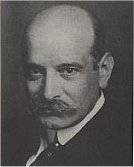
Finally, there was Paul Warburg
who was probably the most important at the meeting because of his knowledge of
banking as it was practiced in Europe. Paul Warburg was born in Germany and
eventually became a naturalized American citizen. He was a partner in Kuhn, Loeb
& Company and was a representative of the Rothschild banking dynasty in England
and France where he maintained very close working relationships throughout his
entire career with his brother, Max Warburg, who was the head of the Warburg
banking consortium in Germany and the Netherlands. Paul Warburg was one of the
wealthiest men in the world. In fact, those of you who are Little Orphan Annie
fans will remember Daddy Warbucks. Daddy Warbucks was the characterization of
Paul Warburg and everyone at the time was well aware of that fact. I have his
photograph in my book and if you compare the photograph to the cartoon drawing
you'll see the resemblance between Paul WARburg and Daddy WARbucks. And while
we're on the topic of cartoon characters, if you played Monopoly, you remember
the drawing of the capitalist with the handle-bar mustache and the cigar? That's
J. P. Morgan.
These were the seven men aboard that railroad car who were at Jekyll Island.
Amazing as it may seem, they represented approximately 1/4 of the wealth of the
entire world. These are the men that sat around the table and created the
Federal Reserve System. For the skeptic who's wondering it didn't happen that
way surely Griffin is exaggerating to make some kind of a point. Let me put your
mind at ease that it did happen that way (perhaps not at ease but in a state of
tension).
How do we know? For example, Frank Vanderlip who was at the meeting wrote an
article that appeared in the Saturday Evening Post on February 9, 1935 and I'd
like to read for you just a short excerpt from that article. This is what
Vanderlip said: "I do not feel it is any exaggeration to speak of our secret
expedition to Jekyll Island as the occasion of the actual conception of what
eventually became the Federal Reserve System. We were told to leave our last
names behind us. We were told further that we should avoid dining together on
the night of our departure. We were instructed to come one at a time and as
unobtrusively as possible to the railroad terminal on the New Jersey littoral of
the Hudson where Senator Aldrich's private car would be in readiness attached to
the rear-end of a train to the south. Once aboard the private car we began to
observe the taboo that had been fixed on last names. We addressed one another as
Ben, Paul, Nelson and Abe. Davison and I adopted even deeper disguises
abandoning our first names. On the theory that we were always right, he became
Wilbur and I became Orville after those two aviation pioneers the Wright
brothers. The servants and train crew may have known the identities of one or
two of us, but they did not know all and it was the names of all printed
together that would've made our mysterious journey significant in Washington, in
Wall Street, even in London. Discovery we knew simply must not happen."
Why not? why the secrecy? what's the big deal about a group of bankers getting
together in private and talking about banking or even banking legislation. And
the answer is provided by Vanderlip himself in the same article. He said: "If it
were to be exposed publicly that our particular group had gotten together and
written a banking bill, that bill would have no chance whatever of passage by
Congress." Why not? Because the purpose of the bill was to break the grip of the
money trust and it was written by the money trust. And had that fact been known
at the get-go, we would never have had a Federal Reserve System because as
Vanderlip said it would have had no chance of passage at all by Congress. So it
was essential to keep that whole thing a secret as it has remained a secret even
to this day. Not exactly a secret that you couldn't discover because anybody can
go to the library and dig this out, but it is certainly not taught in textbooks.
We don't know any of this in the official literature from the Federal Reserve
System because that was like asking the fox to build the henhouse and install
the security system.
That was the reason for the secrecy at the meeting. Now we know something very
important about the Federal Reserve that we didn't know before, but there's much
more to it than that. Consider the composition of this group. Here we had the
Morgans, the Rockefellers, Kuhn, Loeb & Company, the Rothschilds and the
Warburgs. Anything strange about that mixture? These were competitors. These
were the major competitors in the field of investment and banking in those days;
these were the giants. Prior to this period they were beating their heads
against each other, blood all over the battlefield fighting for dominance in the
financial markets of the world. Not only in New York but London, Paris and
everywhere. And here they are sitting around a table coming to an agreement of
some kind. What's going on here? We need to ask a few questions.
This is extremely significant because it happened precisely at that point in
American history where business was undergoing a major and fundamental change in
ideology. Prior to this point, American business had been operating under the
principles of private enterprise--free enterprise competition is what made
American great, what caused it to surpass all of the other nations of the world.
Once we had achieved that pinnacle of performance, however, this was the point
in history where the shift was going away from competition toward monopoly. This
has been described in many textbooks as the dawning of the era of the cartel and
this was what was happening. For the fifteen year period prior to the meeting on
Jekyll Island, the very investment groups about which we are speaking were
coming together more and more and engaging in joint ventures rather than
competing with each other. The meeting on Jekyll Island was merely the
culmination of that trend where they came together completely and decided not to
compete--they formed a cartel.
I need to define that word so that you will know what I mean when I use the word
cartel. It is a group of independently owned businesses which come together for
the purpose of reducing or eliminating competition between themselves to enhance
their profit margin or to secure their positions in the market. They do this by
various means one of which is price fixing--no competition on price. There are
other means. If we were forming a cartel here I might insist that I get the
north and you can have the south and we won't compete. Or I would say I'll
produce the gizmo and you can have the widget and we won't compete or we'll
share patents and processes and whatever we do we agree to eliminate competition
between ourselves. The more layers of agreement that we put one on top of the
other, the more we become encased in this cartel structure and we become as one
insofar as the market is concerned even though within that grouping we are
separately owned.
This is just as true with a banking cartel as it is with any other industry. We
come to the conclusion when we analyze the nature of the Federal Reserve System
how it operates, read the Federal Reserve Act, place it against the context of
the historical background and we come smack to the realization that the Federal
Reserve System although it parades around looking as though it's a government
operation of some kind, is merely a cartel of banks right under our noses and it
is protected by law. I sometimes get the impression that it's been there
dangerously operating all these years and we didn't even know it. I saw a video
some years ago about the lava tubes in Hawaii. They are very impressive because
apparently once in a while the ground will just break out, a hole will fall down
and you can look into the hole and you see that there's a river of lava actually
flowing just a few feet under your feet and you don't even know it's down there
unless something breaks through and you hope you're not on the piece that breaks
through. I got the feeling that this is how the Federal Reserve has been
operating right under our feet; this cartel has been running and we didn't even
know it because that fact has been carefully concealed from us.
Conclusion number 2 about the Federal Reserve System, a very important thing
that we didn't know is the cartel. There's even more to it than that. Perhaps
the third ingredient is the most important of all and that is the realization
that this cartel went into partnership with the government. Now we have hold of
something extremely significant. Cartels often go into partnership with
governments because they need the force of law to enforce their cartel agreement
but in this case they did it in spades.
Whenever a partnership is formed there has to be a benefit to the partners
otherwise they don't form it. So we need to ask the question what is the
benefit, the payoff, for these two partners? Why did they go into it? Why did
the government go into a partnership like this and why does the banking cartel?
In answering those questions we finally come to grips with the reality of what
this creature from Jekyll Island is. Let's take a look at that; what's the
payoff to these two partners? In order to see that we'll have to examine in some
detail the mechanism by which the Federal Reserve System creates money. This is
a real interesting study. I call it the "Mandrake Mechanism" named after that
comic-book character of the 40s, Mandrake the Magician, who could create
something out of nothing and then wave his cape and it was back into the void
again. That's a pretty descriptive phrase for the way the Federal Reserve System
does it.
Let's take a look at it and see how they create money through the Mandrake
Mechanism. I am going to do this in a very simplified form. I want to warn you
that it's going to sound like it's too simple. It's not. I'm going to strip out
all the banking terminology, all the banker language, all the accounting phrases
that need to be defined and speak in very plain English that anybody can
understand. It may sound to you as though I've simplified it too much and I want
to assure you that in spite of the simple language everything I'm going to tell
you is absolutely 100% technically accurate. The other thing I want to warn you
about is don't try and make sense out of this because it can't be done; this
does not make sense and you'll blow a fuse trying to make it make sense. Just
remember that it is a scam and if you keep that fact in mind then you'll have no
trouble comprehending what's going on.
Here's how it works. It starts with the government side of the partnership, it
starts in Congress which is spending money like crazy. It spends far more money
than it takes in. It is spending way beyond its income. How can it do that?
Basically this is what happens. Let's say Congress needs an extra billion
dollars today so it goes to the treasury and says "we want a billion dollars"
and the treasury official says "you guys have got to be kidding, we don't have
any money here, you spent it all a long time ago, everything that we've taken in
taxes you fellows have spent by March." Congress says "we thought that was true
but we thought we'd stop by just in case somebody sent some more in." They get
together and they go down the street and they get the idea that we'll borrow the
money. So they stop at the printing office and they don't print money at the
printing office, they print certificates and they're very fancy things with
borders on the edge with an eagle across the top and a seal at the bottom and it
says "US Government Bond" or "Note" or "Bill" depending on the length of the
maturity of it. If you hold it up to the light it really says "IOU" because
that's what it is. They print these things up and it looks very impressive and
then they offer them to the private sector; they're hoping that people will come
up and loan money to the federal government and a lot of people do and are
anxious to lend money to their government. Why? Because they've been told by
their investment advisors that that's the most sound investment that you can
make. Why? We've all heard that these loans are backed by the full faith and
credit of the US government. They're not quite sure what that means but it sure
sounds good. I'd like to explain for you who are in doubt what that means. The
full faith and credit of the US government means that the government solemnly
promises to pay back that loan plus interest if it has to take everything you
and I have in the form of taxes in order to do it, it's going to do it. It will
take everything we have if necessary to hold its pledge. People don't realize
that they're putting themselves on the line, they're going to get their own
money back minus a substantial handling fee.
Plenty of money is loaned to the government but never enough. Congress needs
more money than that. They say not to worry. They go further down the street to
the Federal Reserve building. The Fed has been waiting for them, that's one of
the reasons it was created. By the time they get inside the Federal Reserve
building the officer of the Fed is opening his desk drawer. He knows they're
going to be there and he's ready and he pulls out his checkbook and he writes a
check to the US Treasury for one billion dollars or whatever the amount is that
they need. He signs the check and gives it to the treasury official.
We need to stop here for a minute and ask a question. Where did they get a
billion dollars to give to the treasury? who put that money into the account at
the Federal Reserve System? The amazing answer is there is no money in the
account at the Federal Reserve System. In fact, technically, there isn't even an
account, there is only a checkbook. That's all. That billion dollars springs
into being at precisely the instant the officer signs that check and that is
called "monetizing the debt," that's the phrase they throw at you. That means
they just wrote a check, a big rubber check. If you and I were to do that we
would go to jail but they can do it because Congress wants them to do it. In
fact, this is the payoff, this is the benefit to the government side of this
partnership, this is how the government gets its instant access to any amount of
money at any time without having to go to the taxpayer directly and justify it
or ask for it. Otherwise, they would have to come to the taxpayer and say we're
going to raise your taxes another $3,000 this year and of course if they did
that, they would be voted out of office real fast. They like the Mandrake
Mechanism because it's a no questions asked source of money. You may have
noticed that it's been many years since Congress has even discussed what
anything costs, it's not an issue. It doesn't make any difference what the cost
is because regardless of the overrun they know they can go down the street to
the Federal Reserve and by law the officer has to write that big check and give
it to them and they're off and running.
There in a nutshell is the reason the government likes the Mandrake
Mechanism--easy instant access to any amount of money of any kind without the
taxpayer being involved directly in the loop. But what about the banking side?
This is where it really gets interesting. Let's go back to that billion dollar
check. The treasury official deposits the check into the government's checking
account and all of a sudden the computers start to click and it shows that the
government has a billion dollar deposit meaning that it can now write a billion
dollars in checks against that deposit which it starts to do real fast. For the
sake of our analysis, let's just follow $100 out of that billion in a check that
for some reason they write to the fellow that delivers the mail to our door. The
postal worker gets a check for $100 and he looks at this thing and he can't
imagine in his wildest dreams that that money didn't exist two days ago anywhere
in the universe. It's spendable so he wouldn't even care if you told him. He
deposits it now into his personal checking account. Now we're finally out of the
Federal Reserve and out of the government's check and we're into the private
banking system. We're in finally to that part of the partnership which is
involved in the cartel. A $100 deposit has now been made in the local bank and
the banker sees that and runs over to the loan window and opens it up and says
"attention, everybody, we have money to loan, someone just deposited $100."
Everyone is overjoyed at that because that's one of the reasons they come to the
bank, they come to borrow money. That's a sign of national health if you're in
debt so they're anxious to know that the bank has money to loan, they line up
for these loans. They heard the banker and they say $100 that's not very much
and he says not to worry we can loan up to $900 based on that $100 deposit. How
can that be done? It gets complicated the way they do it and I'll tell you in
very simple terms. The Federal Reserve System requires that the banks hold no
less than 10% of their deposits in reserve. The bank holds 10% of that $100 in
reserve, $10, and it loans this first fellow in line $90. What does he do with
it? He wants to spend it so he puts it into his checking account. In fact it
probably goes directly into his checking account. Let's assume that they gave it
to him and he puts it back, when he puts it back it's a deposit isn't it?
Only a $100 deposit but $900 in loans and that deposit is still there. Where did
the $900 come from and the answer is the same--there was no money. This springs
into existence precisely at the point at which the loan is made. Notice the
difference, an important distinction is when the money is created out of nothing
for the government it is spent by the government. On the banking side, however,
when it's created out of nothing it's not spent by the banks it is loaned by the
banks to you and to me and we spend it. Notice that when they loan it to us we
have to pay them interest on it. Think about this for a minute. This money was
created out of nothing and yet they collect interest on it which means that they
collect interest on nothing. Not too shabby! What a concept, why didn't I think
of that! I wish I had a magic checkbook like that where I could just write
checks all day long and didn't have to have any money any place just checks,
loan it to you folks and you're silly enough to pay me interest on it. That's
how it works.
Now you see what the benefit is to the banking cartel for being involved in this
Federal Reserve System, interest on nothing. The process doesn't end there,
however. It has consequences to you and to me. I've heard some people say "isn't
that interesting, these fellows are sure smart, I guess they deserve to be
rich." It's as though we're out of the loop, it doesn't affect us any, they got
rich but we're ok. Well no, they got rich alright but they got it by taking it
from us. How does that work? Let's follow this.
This newly created money goes out into the economy and it dilutes down the value
of the dollars that were already out there. It's like pouring water into a pot
of soup, it dilutes the soup. So by throwing more and more money into the
economic soup out there the money gets weaker and weaker and weaker and we have
the phenomenon called inflation which is the appearance of rising prices. I
emphasis the word "appearance" because in reality prices are not rising at all.
What we're seeing is that the value of the dollar is going down, that's the real
side of the equation. If we had real money based on gold or silver or anything
tangible that couldn't just be created out of thin air, it could be based on
microphones, that they couldn't just create with the stroke of a pen, you would
see then that prices would remain stable over a long period of time.
To illustrate that point, it's interesting to know that if we had lived in
ancient Rome with a one ounce gold coin we would've been able to buy a very fine
toga, a hand-crafted belt and a pair of sandals--that was the price in Rome.
Today, if we have a one ounce gold coin what can we buy with it? We can go into
any men's store and buy a very fine suit, a hand-crafted belt and a pair of
shoes. The price of these items hasn't changed in thousands of years when
expressed in terms of real money but when expressed in terms of these things we
carry around in our pockets called Federal Reserve notes which is not really
money at all, fiat money anyway, the prices keep going up and up and up because
the value of those units keeps going down and down and down because they keep
making more and more and more of them and dumping them into the economic soup.
That's still not the end of the process. We lost some purchasing power through
this process called inflation. We lost something and very few people ask the
question "who got it"? It's as though nobody got it, we all lost it, it's like
it evaporated and went up to heaven somewhere. No, somebody got it. For every
loser there's a winner. Or I should say for every fifty losers there's one
winner that gets it all. Somebody got it. Who? Those people that got our lost
purchasing power are the ones who were right up at the point where the fresh
money was injected into the economic pot of soup. The ones that got the money
first gained because they had full purchasing power at that instant when the
money was created. By the time they spent it and gave it to you and you spent it
on something and gave it to him and by the time that it got out to the edge of
the pot where most of us are it's diluted. The ones that were right up at the
nozzle got our lost purchasing power. Who are they? Obviously the government was
up there first. Remember the billion dollar check, the very beginning of this
process went to the government and they spent it instantly and that money went
out into the economy and that was the beginning of this ripple effect. Who else?
The next ones were the people who were up at the loan window. They got the money
that was freshly created by the banking system because they were the borrowers.
We all know that in times of inflation borrowers gain, this is no mystery. We've
been told and advised to borrow money and stay up to the hilt in debt because
you borrow in dollars but because of inflation you can pay back with 50 cent
pieces.
So everybody knows about this part of it. What they forget is that the alleged
benefits of doing this are surrendered to the bank in the form of interest
payments. They're really not gaining that much. The gain that they are getting
through the inflation process they're having to give to the bank in the form of
interest on nothing. And it seems that they're gaining because they have these
paper profits. The value of this real estate is going up and up and up or the
value of my stock is going up and up and up but it's all paper. As far as
purchasing power is concerned it's not going up, up, up at all. Nevertheless
they're still having to pay for that illusion in the form of interest payments
on nothing.
Then comes the inevitable contraction of the economy. People don't realize that
the economy moves traditionally like a sawtooth--it goes up gradually for a long
period of time and seems like forever it's going to go up, you can plan on it
forever and don't worry about it and then clunk! it falls down very quickly and
then it starts the next long climb and people forget that every once in a while
it comes down very abruptly. When it contracts people are extended out there and
they can't service their debt and make the payments and they lose their assets.
Another interesting thing about this is that when the bank loans you money which
it created out of nothing, it costed nothing to make it, it wants something from
you. It wants you to sign on the dotted line and pledge your house, your car,
your inventory, your assets so that in case for any reason you cannot continue
to make your payments they get your marbles, they get all of your assets.
They're not going to lose anything on this. Whether it's expansion or
contraction, inflation or deflation the banks are covered and we like sheep go
right along with it because we haven't figured it out, we don't know that this
is a scam. Of course we have no choice either right now because it's all
enforced by law. We have no escape. We have no choice but it's even better that
we don't understand it because we can't complain about it either. There you have
it.
The two groups that got our lost purchasing power--is anyone surprised?--the two
members of the partnership, the government and the banking cartel. The two
groups that comprise the Federal Reserve System.
This lost purchasing power which is going from us to them is a tax. We don't
think of it as a tax but it is. We have no escape from it. In fact, it's more a
tax than the income tax or the excise tax which you can escape in one way or
another. You can't escape this one. There are no deductions, no exemptions,
everyone pays it and it is the most cruel, unfair tax of all because it falls
most heavily on those who can least afford to pay it. It falls on those on fixed
incomes, those who are retired. Anyone who has saved their money is paying this
tax in direct proportion to the degree to which they have been frugal. It's a
tax even though we don't think of it as that and it's time to think of it as
that. It's a tax that goes from us to the government and to the banking cartel.
Let's summarize. What is the benefit to the members of the partnership? The
government benefits because it is able to tax the American people any amount it
wishes through a process which the people do not understand called inflation.
They don't realize they're being taxed which makes it real handy when you're
going for re-election. On the banking side they're able to earn perpetual
interest on nothing. I emphasis the word "perpetual" because remember when the
loan is paid back it's turned around and loaned out to somebody else. Once that
money is created the object of the bank is to stay "loaned up" as they say. In
reality the banks can never stay 100% loaned up and that ratio varies a lot but
the objective is to stay loaned up to whatever extent is possible. Generally
speaking once this money is created in the loan process it is out there in the
economy forever, perpetually earning interest for one of the members of the
banking cartel which created that money.
There you have in a condensed form a crash course on the Federal Reserve System
and I can assure you that you know more about the Federal Reserve than you would
probably if you enrolled in a four year course in economics because they don't
teach this reality in school.
So what, they say? Can you imagine that? I knew when I wrote this book and it
got out that there would be some objection to it but I never dreamed what it
would be. I couldn't think of any objection to it, I thought what are they going
to say, what are the defenders of the Federal Reserve System going to say to me?
I figured they were going to try and pick some error that I had made in some
technical issue and try and make me look like a buffoon. But I never dreamed
that the only opposition, at least that I've run into so far, is the question
"so what"?
I was on the Pat Buchanan radio show about a month ago and they have a cohost
which is usually a representative of the opposing point of view and this day
they had a fellow by the name of Barry Lind(?) who was an ACLU type high-powered
intellectual and I was kind of nervous thinking here it comes, I'm going to get
it now and I'm going to be made a fool of right in front of all these millions
of people out there in radio land. I was really worried. It's kind of hard on
these radio shows to get your point across as they don't let you speak like you
folks let me do here. The lion's share of the time goes to Buchanan and then the
cohost gets his shot and then the commercials come in and you've got three
minutes to say your whole thing and they're always interrupting you. I made my
little shot as best I could and it was Barry Lind's turn and he looked at me and
he said: "Well, what you say is true, but so what?" I couldn't believe it. And
then he capped it with, which is the real argument: "We're living well aren't
we?"
This is an interesting question and I have run into that repeatedly since then.
What are you complaining about? we're living well aren't we? And the implication
is that without this scam we couldn't be living well, without this scam somehow
we'd be still crawling around in caves. We wouldn't have society with a high
standard of living, we wouldn't have any of the things that we cherish without
this scam, that's the whole implication. So how do you answer that? So what?
First of all, we are not living that well. People like Barry Lind are
undoubtedly living very well and there are plenty of people in the system who
are living very well. Generally those are the ones who are up at the nozzle
where this new money is coming into the system or they're involved in the
government or they have government subsidies of they're close to the nozzle. For
most people, away from the nozzle, it's not going so well, we're not living that
well. It is a matter of fact that the only reason that America has been able to
maintain the appearance of a high standard of living since the Federal Reserve
System has gotten into full swing, especially after WWII, is because of the
shift towards two family incomes. It now takes two working people to just
maintain the semblance of where we used to be with one person working in the
family. And in spite of the two family income real wages are down for the common
man today, real wages in terms of the number of hours a person must work in
order to acquire the necessities of life. Young couples who are living on a
single income now have a lower standard of living than their parents did. The
net worth of the average household is falling. The leisure time for the average
American is shrinking. The percentage of families who own their own homes is
dropping. The age at which a family acquires its first home is rising. The
number of families that are counted in the middle class is falling. The number
of people below the poverty line is rising. Personal bankruptcies today are
about three times what they were in the 1960s and over 90% of Americans are
broke at the age of 65. So we're not living well at all as a result of this
creature.
Furthermore, there's another thing wrong with it. That is that when you have a
money supply based upon thin air it not only expands but it contracts. If it
were based on gold or silver or microphones, the money supply couldn't expand
and contract because there they are but when it's politically motivated it can
contract and that is the core cause of all of the booms and busts that have
plagued America for so many years. In other words, this is the concept behind
the recession and the depression and that is another thing that's wrong with it.
The third thing that's wrong with it is that it is dishonest. You don't really
need anything more than that do you? Even if it were the element that was
creating our prosperity, even if it didn't cause recessions and depressions the
fact that it is fraud, the fact that it is deception, it's dishonest and theft
is really a good enough reason in my opinion to get rid of it. That's what's
wrong with this scam.
Let's go back to Jekyll Island. They had an interesting problem there which was
what to call their creature. This partnership between government and banks which
we've been discussing was not new with the Federal Reserve System. In fact, it
was a concept that was created in Europe in the 16th century. It was perfected
with the formation of the Bank of England in 1694 and from that point forward
all of the governments of Europe had used this Mandrake Mechanism. They didn't
call it the Mandrake Mechanism, of course, they called it a "central bank,"
that's the technical phrase for this partnership. If you want to look it up in a
textbook or encyclopedia you'll find it under the heading "Central Bank."
From the Bank of England forward all the governments of Europe had central banks
for a very good reason. The kings and princes of Europe had learned from hard
experience that they could raise the taxes of their subjects only so high and
then they had a revolt on their hands and they tended to lose their jobs (and
heads). It appears that that natural level was about 40-43%; people will
tolerate taxes up to about 40-43% and then they start digging in their heels and
they just won't allow it to go any further. But with the central bank mechanism
in place the lid was off. Now these governments could tax their people 50%, 60%,
70% and in some cases 80% of everything they produced and they did not have a
revolt on their hands. They did not have resentment because the people didn't
know that they were paying a tax. They knew that prices were going up, but they
didn't understand why, they didn't know who was getting their lost purchasing
power.
It was a nifty arrangement for these governments. It was at that point in
history that governments' wars began to heat up. They always had wars but they
were relatively small things because wars are expensive and the people won't pay
more than 40% for everything including wars. But now that they had a way to tax
higher than that, they could engage in very expensive wars. It's at that point
in history that Europe plunged headlong into continuous war and big, very, very
expensive wars. The people paid for them uncomplainingly through the process of
inflation.
So when it came time to transplant this concept to America these seven men on
Jekyll Island knew very well that they were creating a central bank; that was
the reason that Paul Warburg was so valuable because he was the man with the
intense knowledge, the detailed technical knowledge of how central banks
operate. But they had a problem. How could they conceal that from the American
people because Congress was already on record as saying they did not want a
central bank in America. I don't think they knew what that phrase really meant,
but they knew that Europe had them, whatever they were, and we didn't want any.
They said in America if we're going to have banking reform we don't want what
they do over in Europe, we want something that is unique for America and its
principles and economy.
The problem before these men on Jekyll Island is what to call the central bank
so that nobody would know it was a central bank. And they theorized over this
and this was their strategy: they said first let's give it a name and we'll add
the word "Federal" to it to make it sound like it's government. Then we'll add
the word "Reserve" to make it seem like there are reserves somewhere, like it
was a banking concept. We'll add the word "System," a very important word even
though it may seem obscure now because remember in those days the concern was
the concentration of financial power in New York so they had to sell the idea of
a system of regional banks which would diffuse that power all over the nation.
First they talked about ten regions and then they said that wasn't enough,
twelve regions, we'll have twelve banks. And we'll build big buildings out there
in all of those regions so the local yokels can go and look at the building and
say "golly we've got one of those out here." Diffusion of power away from New
York; you can go and touch the building. The word "System" was very important.
When you look at it you realize that what they created there was not federal,
there are no reserves, it's not a system at all in the sense of diffusion of
power and these Federal Reserve banks aren't even banks. On all four words we're
dealing with appearances of the fourth kind. It was brilliant strategy.
The next thing was to sell this creature to the public. The first draft of the
Federal Reserve Act as it was presented to Congress was called the Aldrich Bill
named after the sponsor, Senator Nelson Aldrich. This was against the good
advice of Paul Warburg. He said: "Nelson, don't put your name on that bill
because you are so identified with big business interests that Congress will
vote it down; the people will not accept it." And apparently Aldrich's ego was
too big. He must've said: "Well no, after all I'm highly respected in the Senate
and I am the Chairman of the National Monetary Commission" and for whatever
reason he insisted that his name be on the bill. It appears that he wanted to go
down in history as the originator of the Federal Reserve System. Warburg was
right. When the bill was introduced Congress put thumbs-down on it. "The Bill of
Big Business."
They took the bill back for it was just a minor setback, they scrambled the
paragraphs around a little bit, took Aldrich's name off real fast and they found
a couple of Democrats to sponsor the bill. This was different. Everybody knew
that the Republicans represented big business but they also knew that Democrats
represented the common man, the little guy, the fellow on the assembly line
(like Ted Kennedy). They found a couple of millionaire Democrats to sponsor the
bill. They found Carter Glass in the House and Senator Robert Owen who himself
was a banker. Now it was the Glass-Owen bill and it was totally different and
acceptable.
The next thing, Aldrich and Vanderlip began to give speeches and interviews to
newspaper reporters condemning the bill. They said: "This bill will be ruinous
to banking. It will be terrible for the country." By the time the common man
read that in his newspaper he said: "Oh golly, I guess these big bankers don't
like the bill very much so it must be pretty good."
These fellows were not stupid. You have to give them credit. They didn't get to
be where they were by being country bumpkins. They understood politics, they
understood mass psychology and they played their cards exceedingly well.
Meanwhile these same individuals out of their own pockets were paying the price
for the costs of bringing up what they called grassroots study clubs all over
the country. They sponsored these clubs and they held public meetings and
printed brochures and pamphlets extolling the virtues of the Federal Reserve
System. They gave large amounts of money to some of the better known
universities in America; they created newly formed departments of economics with
that money; they hand picked their own people to be the professors to head up
those departments and then those professors with all of their academic
credentials gave speeches and wrote scholarly essays extolling the virtues of
the Federal Reserve System. And then at the insistence of Paul Warburg who was
forever the master strategist, they added several very sound provisions to the
Federal Reserve Bill. By that I mean they added some provisions which seriously
restricted the ability of the Federal Reserve to create money out of nothing.
Warburg's associates said, "Paul, what are you doing? We don't want those in
there this is our bill." And his response was this, he said, "Relax fellas,
don't you get it? Our object is to get the bill passed. We can fix it up later."
Those were his exact words. "We can fix it up later." He was so right. It was
because of those provisions that they won over the support of William Jennings
Bryan the head of the Populist Movement, the last hold-out against the bill.
Bryan was concerned that this would be an instrument for ruining the nation's
money supply but when he saw those provisions he said, "Oh well, those are good
provisions, I guess I can support the bill now" never dreaming that this was
temporary. Everything is temporary in politics. When people go to sleep things
can get changed.
Warburg was right and they fixed it up later. The Federal Reserve Act since it
was passed has been amended over 100 times. Every one of those provisions were
long ago removed and many more have been added which greatly expand the power
and reach of the Federal Reserve System to create money out of nothing. With
this kind of professional strategy and deception these people were real
professionals and the public didn't stand a chance. It is no surprise that
popular support was finally gained for the bill and on December 22, 1913 the
bill was passed by Congress and the following day was signed into law by
President Wilson and the creature from Jekyll Island finally moved into
Washington, DC.
Let's stand back from the creature a few paces and take a look at its general
form and shape and see what it is we got. We got a corporation chartered by
Congress which was given an exclusive franchise to create our nation's money
supply. We got a mechanism whereby Congress has been able to raise unlimited
taxes from the American people without them even knowing that they're paying a
tax and we got a mechanism whereby the banks can earn perpetual interest on
nothing. That is the shape and form of the creature from Jekyll Island.
Here's an interesting question, Who owns the Federal Reserve System? You hear a
lot of discussion on this particularly on talk radio nowadays. When the subject
of money comes up somebody calls in and says, "Did you know the Federal Reserve
is completely owned by the private banks? It's a private corporation. What we
need to do," they say "is abolish the Fed and turn it over to the government so
they can operate it for the benefit of the people." Some of you are laughing and
I'm sure there are some people here thinking what's wrong with that so let's
analyze it.
First of all it is a half-truth and it is a non-solution. Let's deal with the
half-truth first. It is true that the Federal Reserve System is not an agency of
the federal government in any shape or form. As I mentioned before, it is a
corporation that is chartered by Congress and like all corporations it has stock
certificates and those stock certificates in this case are held by the banks
within the Federal Reserve System. Every bank that's in the system is an owner
of the Federal Reserve--remember this is a cartel. They own it in one sense of
the word, in the sense that they have stock certificates but up to that point it
looks as though it has all the attributes of a privately held corporation. But
that's as far as it goes because those stock certificates do not carry with them
any of the attributes of private ownership. For example, the holders of these
certificates cannot sell them. If you can't sell something then you don't really
own it, that's one of the tests of ownership, your ability to dispose of it. You
cannot sell it. Furthermore the larger banks put up more money than the smaller
banks, it's a ratio to their assets, so the larger banks have more stock
certificates in the system than the small ones and yet regardless of the number
that they hold, every bank has just one vote. There's another violation of the
principle of private ownership. Furthermore that vote doesn't buy them anything.
They can't vote for anything of substance; they cannot vote for their national
management which is the most important thing, isn't it? The board of directors
and chairman of the Federal Reserve System are appointed by the President,
they're not elected by the banks that are part of the system, the President does
that.
All that the local banks can vote for with their vote are the boards of
directors of the regional banks, so-called, which are subdivisions within the
system. They can't even vote for the leadership in their local subdivisions
because the chairman and the vice-chairman of those 12 regional banks are
appointed by the national board. They can vote for their officers at those
regional banks, the president, the vice-president and treasurer but guess what?
Those are subject to veto by the national board. Get the picture? All power has
always been at the top of this system. The only thing that the charter allows
them to vote for, those boards of directors, of substance is to set the interest
rates within their regions. But this should come as no surprise to anybody that
even that is subject to veto by the national board. You see this concept of
diffusion of power throughout the regions of the US is a scam. There is no power
at the local level. There is nothing that these boards of directors who are
voted in by the banks who hold the certificates can do of substance. All they're
allowed to do really is play golf.
It is not a privately held corporation in the traditional sense of the word.
This idea of diffusion of power over the 12 regional banks was just a necessity
of 1913 to sell the concept to the American people. If it hadn't been for this
aversion against the concentration of power in New York they would never have
had these 12 regions; it's just a leftover from the necessity to sell it and
doesn't serve any function whatsoever. So it's not a corporation in the
traditional sense of the word, it's not a government agency in the traditional
sense of the word so what is it? It's a hybrid, part corporation and part
government, part private, part government. In fact, it is exactly what you would
expect it to be considering the fact that it is a partnership between the
private banking cartel and the government. It's a unique structure which was
designed to perform a unique function.
Is it a solution to abolish the Fed and turn it over to the Congress to run on
behalf of the people? At least we get the dirty bankers out of the loop, right?
And that makes everybody feel good...well, we're not paying interest to the
banks anymore but what happens? Now the government is running the whole thing by
itself. Now that solves a lot of problems doesn't it? Now they're creating money
out of nothing all by themselves. Well, they've always been able to do that. The
government doesn't want to do that, that's the reason they got into this
partnership in the beginning because when the government creates money directly
it's too obvious. That's why the kings and princes of Europe couldn't do it.
They printed money, that's how they did it generally, but when the government
prints money you can see all this money around that says the government on there
and you know exactly what's going on. They like to work through the banking
system because when it appears in your checking account it doesn't say
government on it and you don't know how it got there.
The government really doesn't want to do it that way but even if they did it
wouldn't make much difference because it's not important who owns the Federal
Reserve System. The important thing is what it does and as long as it a central
bank, which means as long as it has the power and the mandate to create money
out of nothing it will create money out of nothing. That's what it will do and
it will continue to do exactly the same thing and be run no doubt by the same
people as it is now and we would not have solved anything. We must keep in mind
that in Europe all of the central banks there are in fact direct agencies of
their respective governments; they are not hybrid organizations at all like
ours. And yet in those countries they do exactly the same as the Federal Reserve
System has been doing here. Just turning it over to the government is a
non-solution.
Let's talk briefly about what the objectives of the Federal Reserve System are.
We've been told over and over again that the purpose of the Fed is to stabilize
the economy. Right now with the interest rates going up, up, up what are we
told? why are they doing that? Well, that's to stabilize the economy so we won't
have massive inflation right? It's being done for us folks! Don't you feel just
warm all over knowing that they're looking out for you? That's always the
answer; the purpose of the Fed is to look out for us and stabilize the economy,
put an end to banking anarchy and all that sort of thing. Right now the textbook
that is most commonly used in our school systems in economics is a book written
by Paul Samuelson and in that book here's what he says regarding the purpose of
the Fed: "The Federal Reserve sprang from the panic of 1907 with its alarming
epidemic of bank failures. The country was fed-up once and for all with the
anarchy of unstable private banking." That's what the students are learning.
Let's let that go for the moment and say ok if that is the purpose of the Fed,
let's give it a report card and see how well it has done in stabilizing the
economy. Since it was created in 1913 the Federal Reserve System has presided
over the crashes of 1921 and 1929, the Great Depression of 1929-1939, recessions
in the years 1953, 1957, 1969, 1975 and 1981, and a stock market Black Monday in
1987. We all know that corporate debt is soaring, personal debt is greater than
ever before, both business and personal bankruptcies are at an all-time high,
banks and savings and loan associations have failed in greater numbers than ever
before in our history, interest on the national debt now consumes half of all of
our tax dollars, heavy industry has all but been replaced by overseas
competition, we're facing an international trade deficit for the first time in
our history, 75% of downtown Los Angeles and other metropolitan areas are now
owned by foreigners and over half of the nation now officially is in a state of
recession.
That is the report card for the Federal Reserve System after 80 years of
stabilizing our economy. I don't even think it's controversial to say that it
has failed to meet its stated objectives. The only controversial part is why has
it failed? My answer is because those have never been its real objectives at
all.
What are its objectives? What are the objectives of any cartel? To make money
for the members of the cartel, to improve the profit margins of the members of
the cartel and to stabilize themselves in the marketplace. That is the true
objective of the Federal Reserve System. Now if we hold that up as our guiding
principle and give the Federal Reserve a report card it gets a different grade.
In particular I'd like to have you look with me at three particular objectives
which were very well discussed in that period in which the Federal Reserve
System was created. We always have to go back to that because we can learn so
much from that period of history. There were three things that the bankers,
particularly the ones on Jekyll Island, wanted the Federal Reserve Act to
accomplish. What are they? The first one was to stop the erosion of their power
away from New York. Just the opposite of what the Federal Reserve Act was sold
to us as to accomplish, to keep the power of New York. They were concerned that
as the nation was expanding westward and southward new banks were springing up
all along the frontier and every year a little bit more of the nation's capital
would drift away from New York. They still had the lion's share, of course, but
they could see the chart and they knew that they had to put a stop to that now
while they still had the power to do so. Competition is a sin said John D.
Rockefeller I and that includes competition from these upstart banks.
It's a good point to mention that when I'm talking about the banking cartel I'm
talking primarily about the big New York banks and not the local bank down the
street that's struggling under the system. One of the purposes of the Federal
Reserve System was to keep the lid on those new competitive banks so they could
never grow and become large like the ones on Wall Street. The small banks have
always been the target in this system and needed to be kept in line, to be
regulated out of existence, a process which you've noticed has been going on for
many, many years. There is objective number one, to keep control over the money
markets in New York.
Objective number two was to reverse the trend of what is called private capital
formation. That's banker language for a process in which an individual or a
corporation uses their own savings to pay for something instead of going to the
bank and borrowing it, if you can imagine that happening. It was happening at
the turn of the century. The trend was that businesses in particular were
withholding some of their dividends each quarter and putting that money into a
sinking fund and then as the money accumulated or as the capital formed, then
they finally had enough that they could use their own money to build that new
factory or to launch a research & development project or whatever instead of
going to the banks and borrowing for it. The banks were very concerned over this
trend because this is their life-blood. Loaning money is what they do so how do
you loan money when people don't want to borrow it? The answer they knew, and
they talked a lot about this, was to lower interest rates, get those rates down
so that they were so attractive that people would be crazy not to come to the
banks and borrow money at those good interest rates.
How do you lower interest rates? Today it's easy when you've got the lever at
the Federal Reserve you just throw it up or down and interest rates go up or
down; you have total control over it. In 1913 there was no lever. The money in
those days was backed by gold and silver and they couldn't control it. They
hated that. These guys hate gold and silver behind money because under those
conditions interest rates are the result of the natural forces of supply and
demand; they couldn't just create money out of nothing. It was the result of the
interaction of millions of people bidding for products and services and digging
money out of the ground, literally gold and silver and converting into money.
They were looking for a way to artificially push the interest rates down. How do
you do that? They said the only way you can do that is with a flexible currency.
That was the cry that they put up in those days. What the nation needs, they
said, is a flexible currency to meet the demands of industry and agriculture.
You still hear that phrase today--"flexible currency." What does that mean? You
need a dictionary sometimes to look these phrases up. Flexible currency does not
mean the paper stuff in our pockets that bends, it means money created out of
nothing. The trick here is not hard to figure out. If you can create money out
of nothing, you don't have to charge an awful lot of interest on it to show a
profit. It's that simple. If you have a flexible currency you can in fact lower
interest rates and still do pretty well, can't you? They wanted a flexible
currency so they could lower interest rates and entice people back into the
banks to borrow money and to reverse the trend toward private capital formation.
Objective number two.
The third objective was to pass on the inevitable losses within the banking
system on to the taxpayer in the name of protecting the people. Those were three
of the major objectives at the time the Federal Reserve System was created. I
say those are the true objectives of the Fed. On that basis, let's give it a
report card.
Did it keep control in New York in the hands of the larger banks? The answer is
a resounding yes. Anyone who knows about the financial markets knows that this
is definitely what's happened. Yes we have big banks in the west and in the
south but they're nothing compared to those banks in New York which are astride
the world with offices in Peking and Moscow and Africa and everywhere; these are
the giants and they have remained that way from the very beginning because of
the Federal Reserve System.
A few years ago there was a book that was published by Simon & Schuster and it
was called "Secrets of the Temple" written by William Grider(?). It was a
best-seller and it was advertised as a scathing attack against the Federal
Reserve System. When I heard that I couldn't believe my ears. A scathing attack
against the Federal Reserve System published by Simon & Schuster? one of the big
publishing houses? I thought, I don't have to finish my own book, they've done
it. So I ran down and got a copy of the book and devoured it and read it in one
day and I was totally amazed on two points. First of all, much to my surprise, I
did not expect this, Grider's history was, I thought, excellent. I thought it
would be a whitewash but his history was right-on. He had all the gory details
and I couldn't believe it but I knew these things were true because I was right
then in the middle of researching them.
On the subject of the concentration of power in New York, I'd like to read to
you an excerpt from Grider's book. He said: "At the time [he's talking about
1913] the conventional wisdom in Congress was that the government institution
would finally harness the money trust, disarm its powers and establish broad
democratic control over money and credit. The results were nearly the opposite.
The money reforms enacted in 1913 in fact helped to preserve the status quo, to
stabilize the old order. Money center bankers would not only gain dominance over
the new central bank but would also enjoy new insulation against instability and
their own decline. Once the Fed was in operation the steady diffusion of
financial power halted. Wall Street maintained its dominant position and even
enhanced it."
The other thing that amazed me was Grider's conclusion. He proved that the
Federal Reserve had always acted against the public interest. He proved that it
was designed to do that from the very beginning so what do you suppose his
conclusion was regarding a solution? that we abolish the Fed? No, nothing that
extreme. How about a major overhaul? No, not necessary. What then? Grider said,
you see it's all so complicated, we're learning as we go, we've made a lot of
mistakes but don't worry folks we're on it now, relax, it's under control, all
we need now is wiser men.
That is the kind of powderpuff criticism it takes to be published by Simon &
Schuster or any of the other major publishing houses which are firmly
interlocked in the investment web on Wall Street. It doesn't make any difference
how accurate your history is; it doesn't make any difference how much you point
with alarm or how righteous you may sound if you have no realistic solution to
the problem then who cares? They like that because it gives the people the
impression that something's being done, somebody is really calling attention to
the problem. But they have no solution or they're carefully selected so that the
ones with the real solutions do not get the media, do not get the major
publishing houses.
This is a tactic which we have to better understand especially in these critical
days ahead. A tactic of controlled opposition. It makes no difference how
accurate you are when you're pointing to the problems in America. If you don't
have a solution what difference does it make? If your solution is put wiser men
in there or if your solution is vote Republican and don't ask questions about
what kind of Republican then you are controlled opposition and this is something
we have to be very, very alert to in these critical days ahead.
Back to the topic. The Federal Reserve System gets an A on its report card for
maintaining control over the financial markets in New York. What about reversing
the trend toward private capital formation. Boy, did they ever. Periodically
they get those interest rates down so low and everybody is lured into the banks.
Borrow like crazy and then the economy crunches down and they're all stuck with
this overhead and they can't make their interest payments.
We've seen businesses go out of existence because they cannot service their
debt. You've seen people lose their homes and their cars because they cannot
service their debt. There are many giant corporations today that are just
hanging in there by the skin of their teeth because of their debt overhead. The
fact is that many of these companies now send more money to the banks every
quarter in the form of interest payments on their loans than they send to their
stockholders as dividends on their stock. Think about that for a minute. The
banks which had no part in the operation of the company whatsoever, the banks
which made this money out of nothing are making more money from these industries
than the people who work for the money, save the money, invested the money and
risked the money to own those corporations. This is because they quite
successfully reversed the trend toward private capital formation and they did it
with a flexible currency. The Federal Reserve System gets an A+ on its report
card for objective number two.
Finally, did they pass along their inevitable loses to the taxpayer in the name
of protecting the people? This is what I call "Operation Bail-Out." Every time
one of the big banks gets into trouble, not the small banks remember, they're
the competition, the big banks get into trouble and they are bailed out at
taxpayers' expense. Always in the name of protecting the people. If a large
corporation is in trouble because it can't make its interest payments to the
bank anymore, they go to Congress and say "we can't let this corporation fold;
look at the thousands of jobs that would be lost; look how the people would
suffer." When a third world country can no longer make its interest payments to
a large bank in New York, what happens? The bank goes to Congress and says "you
know, you'd better do something about this because if we have to write that loan
off of our books we may be bankrupt, we could fold. And look at all of the
depositors, good Americans, who have their accounts with us who would lose their
deposit. Maybe the FDIC won't be able to cover; we could have a crisis on our
hands. If our bank falls maybe the other banks will fall too and we'll have a
national recession. Look how the people will suffer." So Congress dutifully
steps forward, remember it's a partner in this, and votes the funds to guarantee
the loans or in some way to pass the payments on directly or indirectly in some
very ingenious methods to the taxpayer. That money is raised primarily through
the Federal Reserve System and we pay it through the Mandrake Mechanism.
So the Federal Reserve System has done pretty well on that. In case you have
missed a few of the more memorable games, I'd like to review them for you. Penn
Central Railroad was bailed out in 1970. That was a good year because Lockheed
Corporation was bailed out the same year. Commonwealth Bank of Detroit was
bailed in 1972; New York City in 1975; Chrysler in 1978; First Pennsylvania Bank
in 1980; Continental Illinois, the largest of the banks so far, in 1982. And
look at all of these third world countries which cannot pay their interest
payments. They are paying their interest payments and you're doing it for them
because the Federal Reserve System creates the money that we send to the
International Monetary Fund and the World Bank and then they give it to those
countries so that they can pay the interest to the banks. Maybe you've missed
that little trail but that's how it works.
The Federal Reserve System gets an A+++ on all of these points and it has surely
been a huge success in terms of the people who created it.
Actions have consequences and one of the consequences of this scam is what we
call a "national debt." Its rapidly approaching 5 trillion dollars that we know
about, it's much higher than that if you include the unfunded debt and all of
the things that are off-budget and all of the funny stuff that they do with the
accounting in Washington. With all honest accounting you'd find it was much,
much higher than that.
But even at 5 trillion dollars it's a staggering figure. I'm told if we had a
stack of $100 bills about 40 inches high we'd be a millionaire. A stack of $100
bills equaling 5 trillion dollars would rise into space 3,350 miles. That's a
lot of money and it all came from us and it's earning perpetual interest.
Another way of measuring that is that we've had a known inflation of 1,000%
since the Federal Reserve System was created. Another way of phrasing that is
that a dollar in 1913 today buys about nine cents worth of goods. That's how
much money has been taken from us, taxed from us, through this hidden process.
I say 1,000% inflation that is known because it's much more than that. Have you
ever wondered, as I used to, why don't we have more inflation than we have had?
I knew they were creating this money like crazy, why only this inflation? And
then I found out. Have you ever heard the expression that we're "exporting our
inflation." Every once in a while you find that phrase in the financial section
of the newspaper. It used to drive me crazy--how can you export inflation? It's
one of those phrases that people use and I'm not sure most of the people who use
the phrases know what they mean. Like the other day I read that the Federal
Reserve System bought dollars today to bolster up the dollar. How can you buy
dollars? What do you buy it with? They buy it with other currencies, the Federal
Reserve holds a lot of different currencies, yens and deutsch marks and that
kind of thing so they just swap currencies around.
This expression of exporting inflation--what does that mean? It means 70% of the
American currency that has been created by our Federal Reserve System is no
longer in America, it's overseas. Other nations use American dollars as their
unofficial money supply. Especially those countries which have no realistic
money of their own. These countries that undergo inflation rates of 5,000 and
10,000% a year, you can't work with money like that. Women have to take
wheelbarrows full of paper money to the grocery store to buy a bottle of milk.
You can't carry on any serious economic transaction with money like that and
they don't, they use American dollars.
All the banks in those systems have dual types of money. American dollars are
the mainstay of economic transactions in most of those countries. That's where a
lot of our money went. We have been spared the inflationary impact of all that
money because had it stayed here, it would've bid against the existing money
here and would have diluted our pot even more and we would've known what the
inflation should've been.
What happens when the day comes when for whatever reason these countries can no
longer, or no longer wish to, use American dollars? What are they going to do
with those dollars? They'll send them back. They'll buy something with them
while they can. It'll be a big rush. It'll be our refrigerators, our
automobiles, our real estate, our high-rise buildings, our corporate stock, our
politicians, whatever's for sale. All of this money will come in and then we'll
find out in a very short period of time what the true inflation rate really
should have been all of these years.
Incidentally, if you've followed in the newspapers the talk about the new money
that they're going to release, they're talking about two-tiered money, one for
overseas and one for here. It will probably be a different color. Frankly I
think they're recognizing this fact that the money would return and they're
going to make it illegal for all of this overseas money to come back by making
it a different color so that they won't be able to bring it here or if you do
bring it here you won't be able to spend it here, it won't be legal here. Those
are some of the consequences of the actions of the Federal Reserve Scam.
I have one last topic that I want to talk to you about and then I'll get to the
conclusion. This is an extremely important topic and it has to do with usury. In
ancient times usury was defined as interest on a loan, any interest on any loan.
In modern times that has been redefined to mean excessive interest on a loan.
Moderate interest seems logical to us in recognition of the fact that if we work
hard for our money, we save it and surrender its use for a period of time being
a sacrifice on our part and then loan it to somebody else for their venture,
we're entitled to a reasonable return on that sacrifice. A reasonable interest
rate is a concept that very few people have problems with, it seems logical and
fair.
But what is this thing called excessive interest? Thomas Edison said, "People
who will not turn a shovel-full of dirt on the project nor contribute a pound of
materials will collect more money than will the people who will supply all the
materials and do all the work." I wondered when I read that if Tom was
exaggerating so I got my calculator out. I assumed that there was going to be a
$100,000 house built. I assumed that $30,000 would have to go for land,
architect's fees and permits and that kind of thing. $70,000 would go for the
actual construction of the house, building materials and labor. I assumed that
the buyer would go to the bank and put 20% down and then borrow the balance at
10% over 30 years. I punched in the numbers and discovered that the borrower
will pay to the bank in interest $172,741 compared to $70,000 paid for the
construction of the house. In other words, about 2 1/2 times as much money will
be paid to the bank in interest than will be paid to those who provide all the
labor and all the materials. And you may say to yourself, yes but that's fair,
after all a 30 year loan is a long loan and people work for their money and
sacrifice its use and loan it and so forth and deserve to be compensated. No.
Not this money. Nobody worked for this money, nobody saved this money. There was
no sacrifice of any kind for this money. This money was created out of nothing
and I suggest that $172,741 interest on nothing is excessive!
I think it's time for a new definition of usury as follows: any interest on any
loan of fiat money (meaning money made out of nothing). This example of a
$100,000 home, as shocking as it is, producing $172,741 unearned interest, this
is just a grain of sand in the Sahara. You have to multiply that by all the
homes in America, by all of these hotels in America, all the high-rise
buildings, all the factories, all the airplanes, automobiles, farm equipment,
schools, everything, all the physical assets of America. You apply this same
ratio and can you see it in your mind? We're talking about a river of unearned
wealth that is so wide you can't even think of crossing it, flowing perpetually
into the banking cartel. A dead short across the productive element of society.
Money being taken from people who are working hard providing the material and
the labor. They don't even know that this is being taken from them and it's in
this huge river of wealth flowing into the banking cartel. It's a staggering
thought.
You are led to the question of where is this river flowing? Where's it going?
Get a picture of this that it's all going into a lake somewhere and maybe
there's a dam and the wealth is building up and somewhere they're getting it
all. Getting it no, they're spending it. They're not accumulating it at all.
What are they spending it for? The answer may surprise you. They're not buying
more yachts and mansions with this money, they've already got all of those they
possibly want. In fact they got rid of the mansions on Jekyll Island a long time
ago because they were bored with that. That's not it. When a person has all the
wealth that you could possibly want for the material pleasures of life, what is
left? Power. They are using this river of wealth to acquire power over you and
me and our children.
They are spending it to acquire control over the power centers of society. The
power centers are those groups and institutions through which individuals live
and act and rely on for their information. They are literally buying up the
world but not the real estate and the hardware, they're buying control over the
organizations, the groups and institutions that control people. In other words,
to be specific, they are buying control over politicians, political parties,
television networks, cable networks, newspapers, magazines, publishing houses,
wire services, motion picture studios, universities, labor unions, church
organizations, trade associations, tax-exempt foundations, multi-national
corporations, boy scouts, girl scouts, you name it. Make your own list of
organizations and you will find that this is where those people have been for
many decades spending this river of wealth to acquire operational control
particularly over those institutions and individuals, those organizations that
represent opposition to themselves. That's a critical area for expenditure on
their part.
This process has gone on not only to a marked degree in America and in the other
industrialized nations of the world, but it has gone on in the so-called third
world or underdeveloped nations to such a degree that I would say the process is
now complete. They own these countries already. Have you ever wondered what's
going on there at the International Monetary Fund and the World Bank? Kind of an
obscure operation isn't it? you don't read much about it except once in a while
on the back page of the newspaper you find out that Congress at the insistence
of the President authorized another $100 billion for the International Monetary
Fund. And then the article tells you that this money will be used to make loans
to underdeveloped nations or grants to them to raise their standard of living.
Do you believe that? That's one of those appearances of the fourth kind if you
ever saw one. If the money is to be used to raise the standard of living of
these countries they're not doing a very good job of it because after all of
these decades, after all of these hundreds of billions of dollars, you cannot
point to one country that has had its standard of living raised one iota by
that. In fact in most cases it's the other way around and that's not an accident
because the money has not been used to raise the standard of living. The money
does not go to the people in those countries. It goes to the politicians of
those countries, to their governments and the money is designed and spent to
strengthen their power structures, their ability to control their populations.
They usually start off as inefficient dictatorships but by the time they get all
this money from the IMF, they are now efficient dictatorships. They have a
well-equipped army, a better bureaucracy, total control of their subjects.
That's where the money's being spent.
These countries have been purchased because the politicians in those countries
are now totally addicted to this money. We talk about welfare families in
America that are third and fourth generation welfare, they're on the dole
forever, they cannot dream of anything else. The politicians in these countries
are the same way and it's now second, third and in some cases fourth generation
international welfare from the United Nations funding. They have no
ideology--communism, socialism, capitalism, fascism, what difference does it
make? where's the money? As long as they live well, they have their mansions,
their yachts, their limousines, they go to New York to the UN and have their
suites at the Waldorf-Asoria and that's all they care about.
These countries have been purchased through this means and are now owned by this
group at the UN and they're firmly in place in the new world order where they're
just waiting for you and me to show up. That's the other side of this coin. Not
only does this transfer of wealth from America to these countries not raise
their standard of living but it does lower ours. That too, believe it or not, is
part of the plan. Just waste, get rid of money, get rid of productive power to
reduce our standard of living. A strong nation is not a candidate to surrender
its sovereignty but a weak nation is. If America can be brought to her knees
where she is struggling for survival, if people are hungry, if we have riots in
our streets, then Americans could possibly be grateful for any assistance we
could get from the UN. Those wonderful blue-helmeted peace-keeping forces could
bring order back to our streets or international money, a new world money with
purchasing power again might be welcomed by the unthinking, unknowing American
public. That is what we're dealing with.
What I'm trying to say is that the name of the game out there is not wealth, it
is power.
Tens of thousands of visitors voted PEOPLE For Mathematically Perfected Economy™
a Starting Point™ Hot Site award, November 7, 1998. We now welcome millions of
visitors from all parts of the world.
PUBLISH or SUBSCRIBE to our free PFMPE™ RSS newsfeed. Copy this URL into your
newsreader or RSS aggregator: http://www.perfecteconomy.com/rss.xml
6. HISTORY OF CENTRAL BANKING
Washington, crossing the Delaware.
ACROSS MILLENIA, THE SAME CONSEQUENCES
Usury has existed for thousands of years, and may have been perpetrated by every
worldly creed. Untold multitudes have died in the perpetual struggle against
usury. Jesus Christ Himself was crucified soon after his famous demonstration at
the temple of the money changers.
Rothschild
 |
|
Mayer Amschel Rothschild and his sons — equally trained in unearned profit
(usury) and its vital complements of corruption, subversion, and deceit — would
comprise the House of Rothschild, intervening upon production, consumer and
government altogether, to amass, at the expense of everyone but the
perpetrators, the greatest forfeitures of prosperity the world could know.
From roots steeped in ferocious concepts of unearned profit, from a very need to
subvert every properly administered economy, and by allies who peddled mercenary
armies for the causes of plutocracy, untold blood would be spilled, untold
injustice would be imposed, and by perpetual deception, usury would succeed in
perpetual contradictions to truth, as authored by a seeming untouchable,
inexhaustible, evil force.
THE NECESSARY PROLIFERATION OF A CENTRAL BANKING NETWORK
By the customary accumulations of usury, the House of Rothschild would gain
prominent world power in little time. Rothschild, the voracious embezzler, would
form the so-called Illuminati — a pretended, exalted body of useful learning,
the purposes of which, by whatever necessary means, were to make the world
itself the subject of his unearned confiscations.
The people of every nation therefore would be made both the instruments and
objects of a predominate world power. Powerful nations overtaken by usury would
serve to impose usury in every corner of the world. Every organization today
which advocates government about a nucleus of "central banking" is by intention
a compliant servant of Rothschild's prescription for usurped power, confiscation
of wealth, and the extinguishing of individuality, freedom and justice necessary
to his graft.
No truly free nation could exist thereafter, because these central banks would
so oppress every nation from the prosperity each would achieve otherwise, that a
single nation free of usury would be an outstanding testament to the crime being
committed against the rest. Such a truly free nation would threaten the very
existence of every central bank and usurer.
For we need them not.
COMMON NATURE AND ENSUING HISTORY OF CENTRAL BANKS
Because the goals of usurers can be perceived, and because the goals of usurers
cannot prevail if one important nation succeeds in achieving true economy, the
present quest for world government was begun for Rothschild's ends, at
Rothschild's command. Look around you and you will see that the central,
ostensibly beneficial concept of that quest, is entrenchment of Rothschild's
purported "economic" system.
In his own personal testimony to the implications of his objectives, as the
American Colonists fought a revolution to throw off his first imposition of a
central banking system on America, Rothschild declared arrogantly, "Let me issue
and control a nation's money, and I care not who writes its laws." Certainly
not, because he would soon own every politician in the world. Thus, despite the
social atrocity of debt multiplied to any magnitude, none of them who ostensibly
serve their people would ever hear a plea for perfected economy.
The modern era of financial, political, social, commercial and military strife
and subversion had begun.
THE COLONIES — PROVERBIAL THORN IN CENTRAL BANKING'S SIDE
The righteous, anti-central-banking principles of the founding fathers comprised
a formidable threat to the world's new breed of usurer. The central bankers
could not afford for the colonists' experiments in usury-free taxation and
circulation to survive, or especially to evolve as an example of the prosperity
possible wherever the very circulation is not subject to multiplied, unearned
profit.
CAUSE OF THE AMERICAN REVOLUTION
It has been said that the effort to establish a central bank here caused the
American revolution.
For the benefit of Rothschild's "Bank of England," British Parliament ordered
the colonists to give up their currency, and the colonists soon found themselves
encumbered by a circulation strapped with 30-percent annual interest. Benjamin
Franklin summarized the causes of the war thus: "We would have gladly borne the
little tax on tea and other matters, if it had not been that they took from us
our money — which created great unemployment and dissatisfaction. Within a year,
the poor houses were filled. The hungry and homeless walked the streets
everywhere."
PERSISTENT, PERPETUAL EFFORTS TO ESTABLISH A CENTRAL BANK HERE, DESPITE NO
PUBLIC MANDATE TO DO SO
Immediately upon conclusion of the revolution, agents of the same bankers
appeared amongst the fledgling government, attempting still to establish a
central bank. Though central banking systems can serve no people, money and
influence peddling wield great power, capable of quickly undermining any
representative government. The ensuing century and a quarter were rocked by
repeated efforts to establish and to thwart the establishment of central banks
here.
SUBVERSIVE ESTABLISHMENT OF THE SO-CALLED FEDERAL RESERVE
Top right corner of right side: Wilson re-election campaign truck ludicrously
claims, "Who broke the money trusts?" Indeed, who did?
"Prosperity Preparedness?" Now there's some hypocrisy for you.
At the close of the 19th century, the central-bankers-to-be imposed artificial
currency shortages, foreclosing on the debtors they doomed. The nation rose in
indignation, only to be further abused by servants of Rothschild's debt
multiplication engine.
The Republicans of the 1912 presidential election proposed — *as a solution* —
the audacity of uniting the very culpable banks into a network they would call a
central bank. The Democrats promised not to create a central bank, and were
elected on that very platform.
A year later, in violation of that promise, and at the "guidance" of the same
bankers, Democrat President Woodrow Wilson established the proposed banking
coalition under the purposed guise, "Federal Reserve System." As with
Rothschild's "Bank of England," the abomination was necessarily named what it is
not.
By every form of double-speak, the Federal Reserve was promised to eliminate the
very problems it would cause. A mere fifteen years after its creation,
multiplication of debt precipitated in the Great Depression, and the central
bankers became the real owners of virtually all property.
CYCLICAL FAILURE OF CENTRAL BANKING SYSTEMS
Unemployed Chicagoans during the first Great Depression — crowning glory of the
"Federal Reserve."
Many hold out hope that a central banking system, even in the later stages of
debt multiplication, will truly recover. But the very nature of the system is
irreversible multiplication of debt — and as long as it exists or interest is
charged for the circulation, it *will* continuously multiply debt in proportion
to the circulation, until we can no longer afford to service debt.
The road of a usured circulation leads only to systemic collapse. The central
bankers, who are so few while we are so many, hope that you will never
understand. Their salvation is that the people choose ignorance — that from the
ashes of ruined industry, and from the cleansing of debt imposed by
impoverishment, a mankind disposed to commit again the errors engendering
collapse, rises to a further defeat.
Central banks can only divert wealth from the producers of the wealth. They can
only do so to an ever greater degree. And they can only do so by preventing a
just economy from existing.
To find the players in all the corruption of the world, "Follow the money." To
find the captains of world corruption, "Follow the money all the way."
PLEASE promote Mathematically Perfected Economy™ by forwarding our newsletters
to your address book, and by publishing PFMPE URLs to forums, newsgroups,
websites and newsmedia. Where an ostensibly representative government and media
serve oppression, everyone not participating effectually in solution is an
accessory to the consequences.
Please support our efforts to establish Mathematically Perfected Economy™ by
donating to PEOPLE For Mathematically Perfected Economy™ at http://www.perfecteconomy.com/pg-donate.html.
mike montagne — PEOPLE For Mathematically Perfected Economy™
Search Web Search www.perfecteconomy.com
Copyright 1979-2006 by mike montagne, PEOPLE For Mathematically Perfected
Economy™. ALL RIGHTS RESERVED. PEOPLE For Mathematically Perfected Economy™, MPE™,
and PFMPE™ are trademarks of PEOPLE For Mathematically Perfected Economy™,
perfecteconomy.com. Site by ADVANCE Information Systems.
PEOPLE For Mathematically Perfected Economy™
Bank of England
Sunday, 03-Dec-2006 12:57:48 PST
During the early part of the 19th century, the Rothschild's London bank took a
leading part in managing and financing the subsidies that the British government
transferred to its allies during the Napoleonic Wars. Through the creation of a
network of agents, couriers and shippers, the bank was able to provide funds to
the armies of the Duke of Wellington in Spain and Portugal. In 1818 the
Rothschild bank arranged a £5 million loan to the Prussian government and the
issuing of bonds for government loans.
The providing of other innovative and complex financing for government projects
formed a mainstay of the bank's business for the better part of the century. N M
Rothschild & Sons financial strength in the City of London became such that by
1825-6 , the bank was able to supply enough coin to the Bank of England to
enable it to avert a liquidity crisis.
Nathan Mayer's eldest son, Lionel de Rothschild (1808-1879) succeeded him as
head of the London branch. Under Lionel the bank financed the British
government's 1875 purchase of a controlling interest in the Suez Canal. Lionel
also began to invest in railways as his uncle James had been doing in France. In
1869, Lionel's son, Alfred de Rothschild (1842-1918), became a director of the
Bank of England, a post he held for 20 years. Alfred was one of those who
represented the British Government at the 1892 International Monetary Conference
in Brussels.
The Rothschild bank funded Cecil Rhodes in the development of the British South
Africa Company and Leopold de Rothschild (1845-1917) administered Rhodes's
estate after his death in 1902 and helped to set up the Rhodes Scholarship
scheme at Oxford University. In 1873 de Rothschild Frères in France and N M
Rothschild & Sons of London joined with other investors to acquire the Spanish
government's money-losing Rio Tinto copper mines. The new owners restructured
the company and turned it into a profitable business. By 1905, the Rothschild
interest in Rio Tinto amounted to more than 30 percent. In 1887, the French and
English Rothschild banking houses loaned money to, and invested in, the De Beers
diamond mines in South Africa, becoming its the largest shareholders.
The London banking house in continued under the management of Lionel Nathan de
Rothschild (1882-1942) and his brother Anthony Gustav de Rothschild (1887-1961)
and then to Sir Evelyn de Rothschild (b.1931). In 2003, following Sir Evelyn's
retirement as head of N M Rothschild & Sons of London, the English and French
financial firms merged under the leadership of David René de Rothschild.
Top 10 Richest Men Of All Time
The Federal Reserve -
Zionist Jewish Private Bankers
3-28-9
|
WHO OWNS THE FEDERAL RESERVE BANK?
Every single owner is Jewish.
1) Rothschild Banks of London and Berlin;
2) Lazard Brothers Banks of Paris;
3) Israel Moses Seif Banks of Italy;
4) Warburg Bank of Hamburg and Amsterdam;
5) Lehman Brothers of New York;
6) Kuhn, Loeb Bank of New York (Now Shearson American Express);
7) Goldman, Sachs of New York.
Click this to see a detailed organization chart..
http://land.netonecom.net/tlp/ref/federa...
Source: Federal Reserve Directors: A Study of Corporate and Banking Influence.
Staff Report,Committee on Banking,Currency and Housing, House of
Representatives, 94th Congress, 2nd Session, August 1976.
Abe Lincoln tried to introduce American-owned currency (Greenbacks)-- he was
shot weeks later.
JFK tried to introduce American-owned currency (Silver Certificates) -- he was
shot weeks later.
Who else?
1) Andrew Jackson (Survived);
2) James Garfield
3) William McKinley
All 5 of these US presidents tried to abolish the privatization of America's
currency by "international" banks/financiers who were always Jewish. All of them
were killed within weeks of trying to do this (except Jackson who survived)
Do you really believe this is a coincidence? That the only presidents were who
shot and assassinated, are also, coincidentally, the only Presidents to try and
abolish the privatization of the central bank by Jews ?
THERE IS NOTHING “Federal” about the Federal Reserve Bank. In other words, the
Federal Reserve is not “federal” and it does not have any “reserves.” The Jewish
Bankers, who are masters of deception, own the Federal Reserve Bank, print money
with interest but without any backing, and would like to keep their “federal”
banking cartel a secret.
But the House of Rothschild which owns 57% of the stock of the privately-held
Federal Reserve Bank, is alive and well in North America. It was Jacob
Rothschild II who in a letter to his US agents in 1863 with regard to
establishing a Central Bank in America said: “The few who understand the system
will either be so interested from its profits or so dependant on its favors that
there will be no opposition from that class. The other class will simply have no
comprehension or concern about American monetary policy.”
Here is an historical overview of the makings of the Jewish-owned Federal
Reserve Bank:
* 1791-1811: Rothschilds’ First Bank of the United States
* 1816-1836: Rothschilds’ Second Bank of the United States
* 1837-1862: Free Banking Era -no formal Central Bank through the efforts of
President Andrew Jackson
* 1862-1913: System of National Banks through the efforts of President Andrew
Jackson
* 1914-Current: Federal Reserve Act effects a consortium of 7 privately held
Jewish banks called the Federal Reserve Bank. The largest share holders of the
bank are the Rothschild’s of London holding 57% of the stock which is not
available for public trading.
Paul Warburg (Jewish) was sent here by Alfred Rothschild(Jewish) to lobby for
the passing of a Central Banking Law in Congress. On January 6, 1907, the New
York Times published an article by Warburg, called “Defects and Needs of Our
Banking System.” In 1908 he proposed a bill recommending a Central Bank. A
member of Congress for 40 years, Aldrich was the most powerful man in Congress
and was the Chairman of the Senate Finance Committee. On October 25, 1914, the
formal establishment of the Federal Reserve System was announced by Congress
with Paul Warburg and the Rothschild ally, J.P. Morgan, at its head.
But the Federal reserve is not just Jewish-owned, it is also Jewish-operated.
Every chairman of the board of the Federal Reserve Banking system has been
Jewish, since it was created in 1913; and almost every member of the board has
been Jewish.